Weitsman G, Mitchell N J, Evans R, Cheung A, Kalber T L, Bofinger R, Fruhwirth G O, Keppler M, Wright Z V F, Barber P R, Gordon P, de Koning T, Wulaningsih W, Sander K, Vojnovic B, Ameer-Beg S, Lythgoe M, Arnold J N, Årstad E, Festy F, Hailes H C, Tabor A B, Ng T
Richard Dimbleby Department of Cancer Research, Randall Division &Division of Cancer Studies, Kings College London, Guy's Medical School Campus, London, UK.
Department of Chemistry, University College London, London, UK.
Oncogene. 2017 Jun 22;36(25):3618-3628. doi: 10.1038/onc.2016.522. Epub 2017 Feb 6.
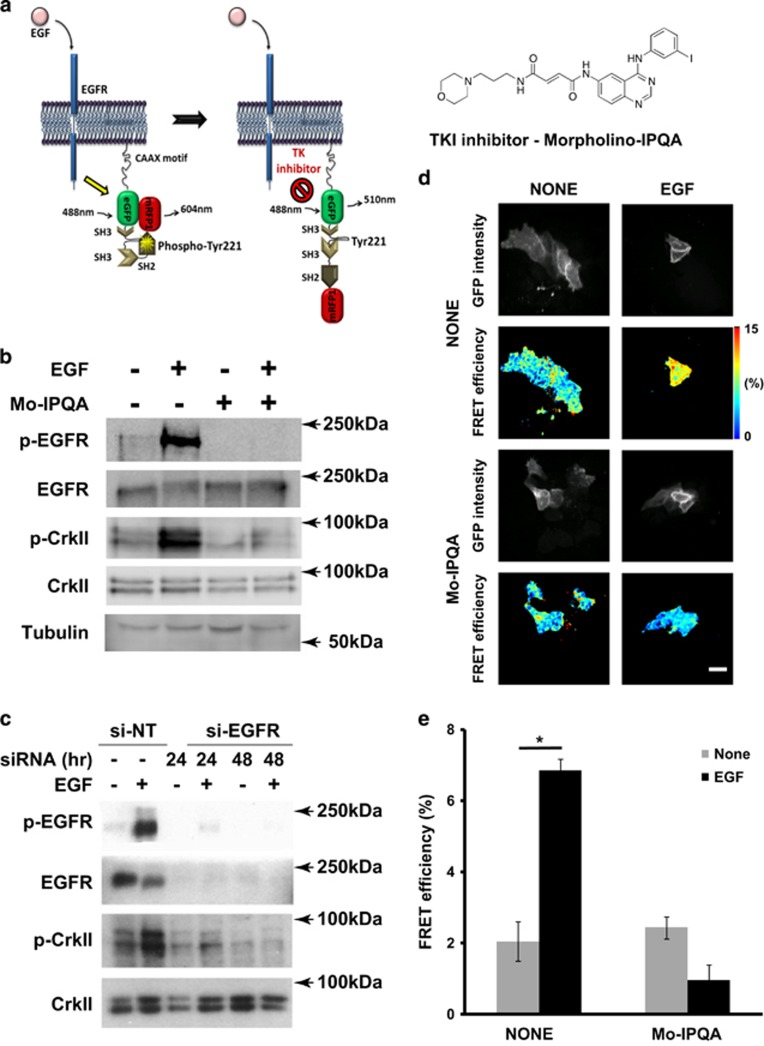
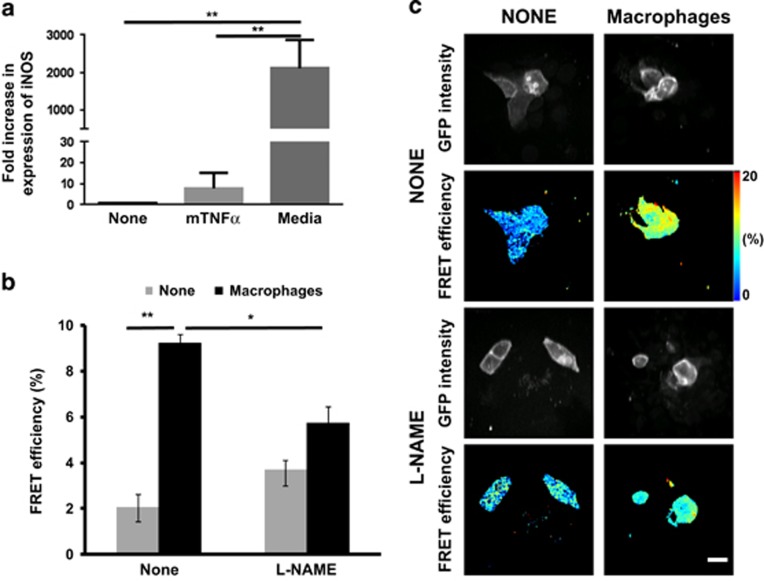
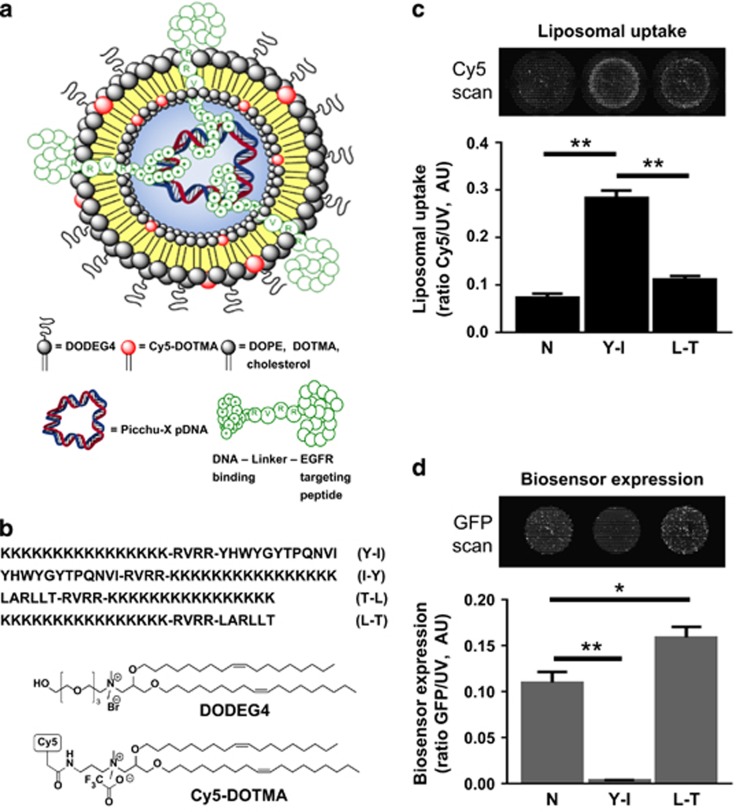
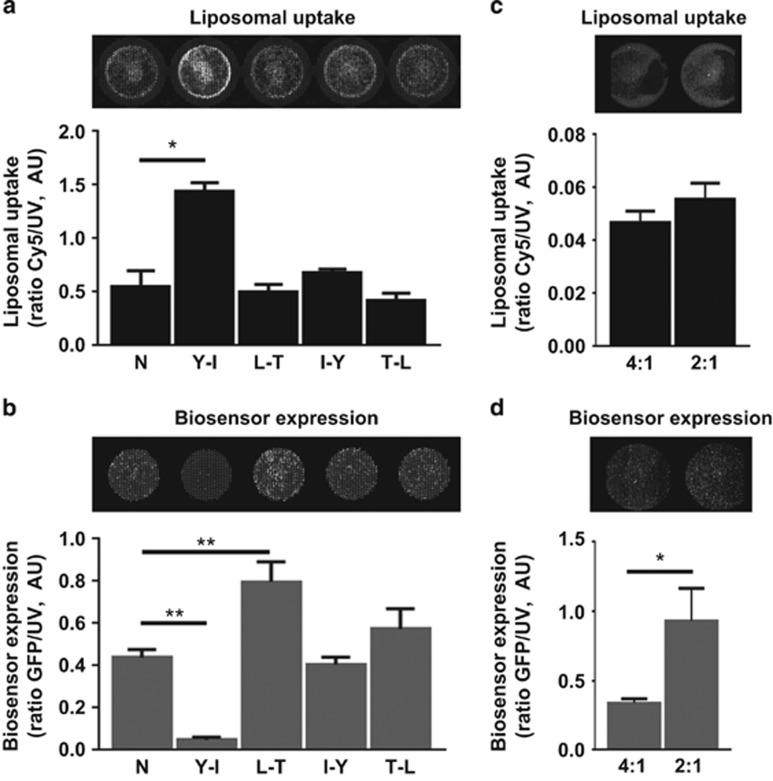
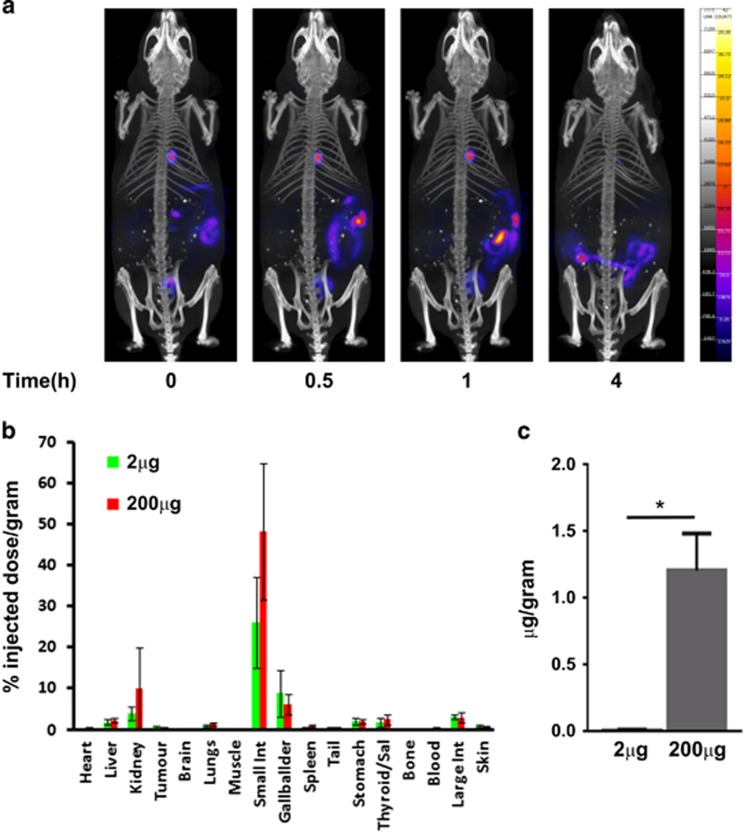
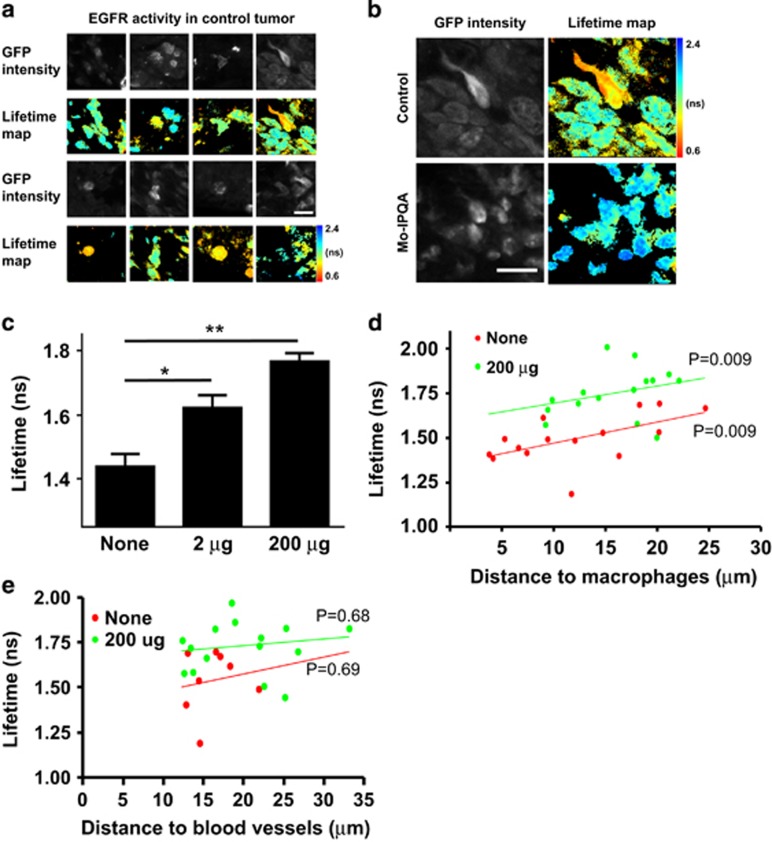
Despite decades of research in the epidermal growth factor receptor (EGFR) signalling field, and many targeted anti-cancer drugs that have been tested clinically, the success rate for these agents in the clinic is low, particularly in terms of the improvement of overall survival. Intratumoral heterogeneity is proposed as a major mechanism underlying treatment failure of these molecule-targeted agents. Here we highlight the application of fluorescence lifetime microscopy (FLIM)-based biosensing to demonstrate intratumoral heterogeneity of EGFR activity. For sensing EGFR activity in cells, we used a genetically encoded CrkII-based biosensor which undergoes conformational changes upon tyrosine-221 phosphorylation by EGFR. We transfected this biosensor into EGFR-positive tumour cells using targeted lipopolyplexes bearing EGFR-binding peptides at their surfaces. In a murine model of basal-like breast cancer, we demonstrated a significant degree of intratumoral heterogeneity in EGFR activity, as well as the pharmacodynamic effect of a radionuclide-labeled EGFR inhibitor in situ. Furthermore, a significant correlation between high EGFR activity in tumour cells and macrophage-tumour cell proximity was found to in part account for the intratumoral heterogeneity in EGFR activity observed. The same effect of macrophage infiltrate on EGFR activation was also seen in a colorectal cancer xenograft. In contrast, a non-small cell lung cancer xenograft expressing a constitutively active EGFR conformational mutant exhibited macrophage proximity-independent EGFR activity. Our study validates the use of this methodology to monitor therapeutic response in terms of EGFR activity. In addition, we found iNOS gene induction in macrophages that are cultured in tumour cell-conditioned media as well as an iNOS activity-dependent increase in EGFR activity in tumour cells. These findings point towards an immune microenvironment-mediated regulation that gives rise to the observed intratumoral heterogeneity of EGFR signalling activity in tumour cells in vivo.
尽管在表皮生长因子受体(EGFR)信号传导领域进行了数十年的研究,并且许多靶向抗癌药物已经在临床上进行了测试,但这些药物在临床上的成功率很低,尤其是在改善总生存期方面。肿瘤内异质性被认为是这些分子靶向药物治疗失败的主要机制。在这里,我们强调基于荧光寿命显微镜(FLIM)的生物传感技术在证明EGFR活性肿瘤内异质性方面的应用。为了检测细胞中的EGFR活性,我们使用了一种基于CrkII的基因编码生物传感器,该传感器在被EGFR磷酸化酪氨酸-221后会发生构象变化。我们使用表面带有EGFR结合肽的靶向脂质多聚体将这种生物传感器转染到EGFR阳性肿瘤细胞中。在基底样乳腺癌的小鼠模型中,我们证明了EGFR活性存在显著程度的肿瘤内异质性,以及放射性核素标记的EGFR抑制剂的原位药效学作用。此外,发现肿瘤细胞中高EGFR活性与巨噬细胞-肿瘤细胞接近度之间存在显著相关性,这部分解释了观察到的EGFR活性肿瘤内异质性。在结直肠癌异种移植模型中也观察到巨噬细胞浸润对EGFR激活的相同作用。相比之下,表达组成型活性EGFR构象突变体的非小细胞肺癌异种移植模型表现出与巨噬细胞接近度无关的EGFR活性。我们的研究验证了使用这种方法来监测EGFR活性方面的治疗反应。此外,我们发现在肿瘤细胞条件培养基中培养的巨噬细胞中诱导了iNOS基因,以及肿瘤细胞中iNOS活性依赖性的EGFR活性增加。这些发现表明存在一种免疫微环境介导的调节机制,导致体内肿瘤细胞中观察到的EGFR信号活性的肿瘤内异质性。