Department of Biochemistry and Molecular Biology, The University of Texas Health Science Center at Houston, Houston, Texas 77030, USA.
Medicity Research Laboratory, University of Turku, 20520 Turku, Finland.
Nat Commun. 2017 Feb 7;8:14108. doi: 10.1038/ncomms14108.
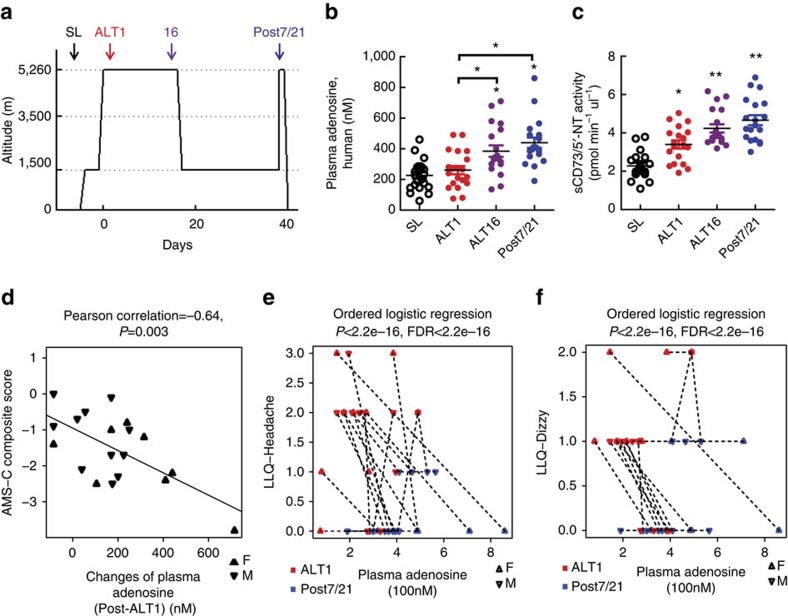
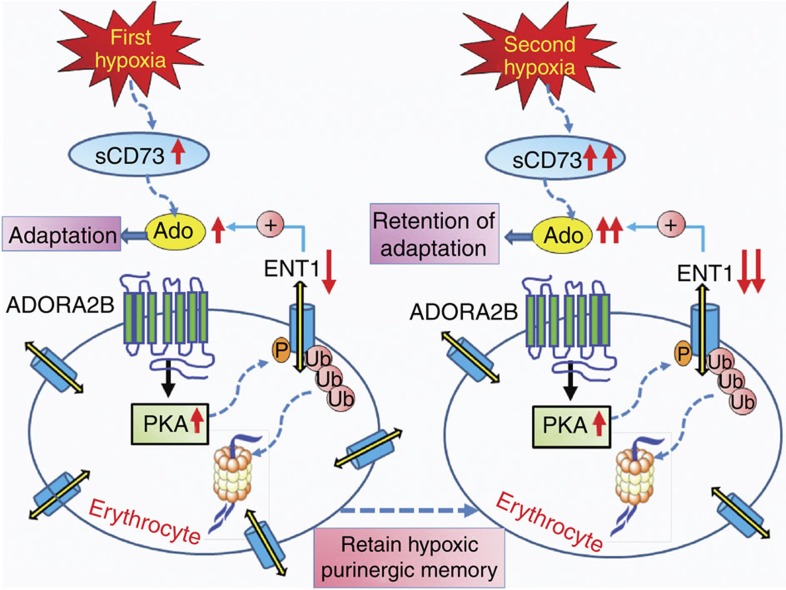
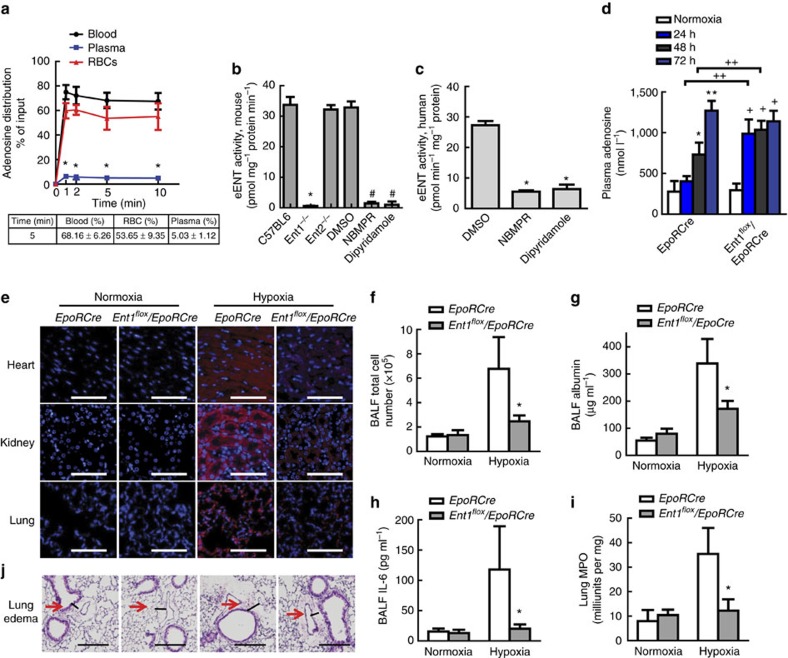
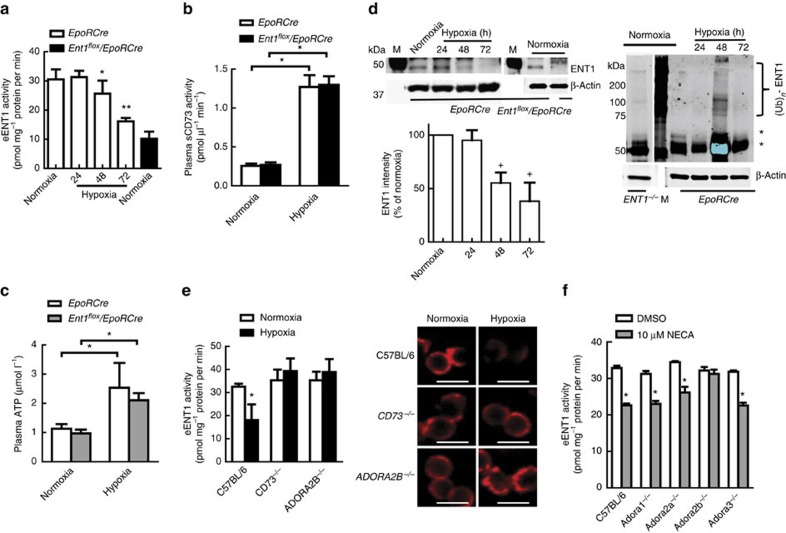
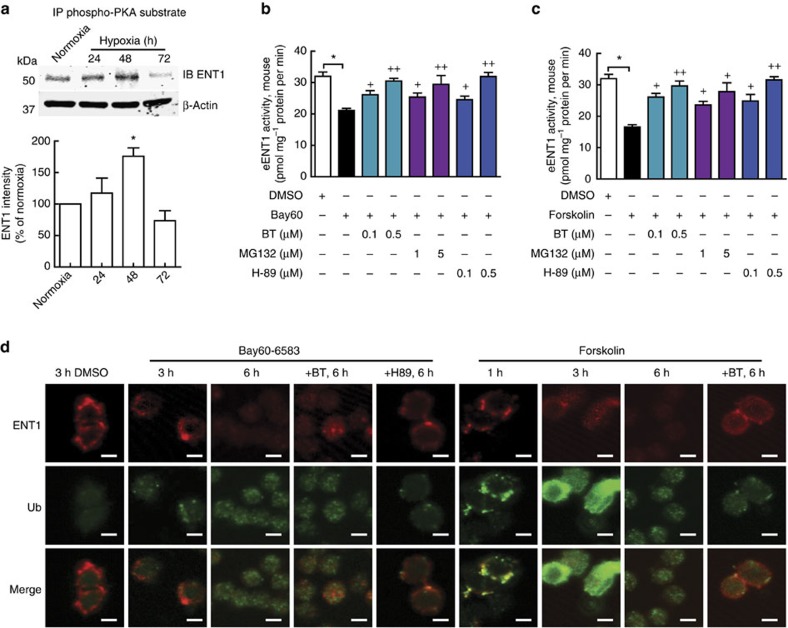
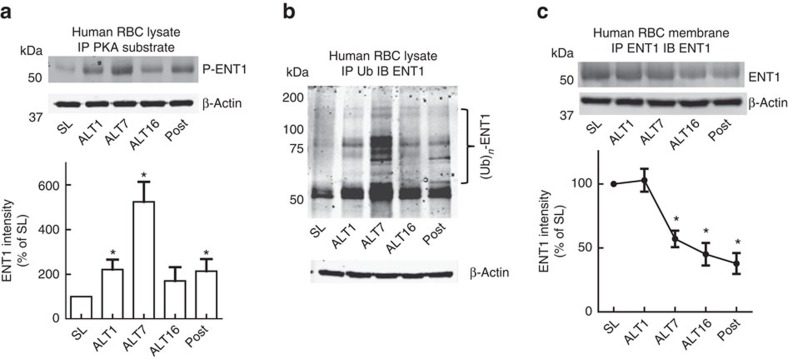
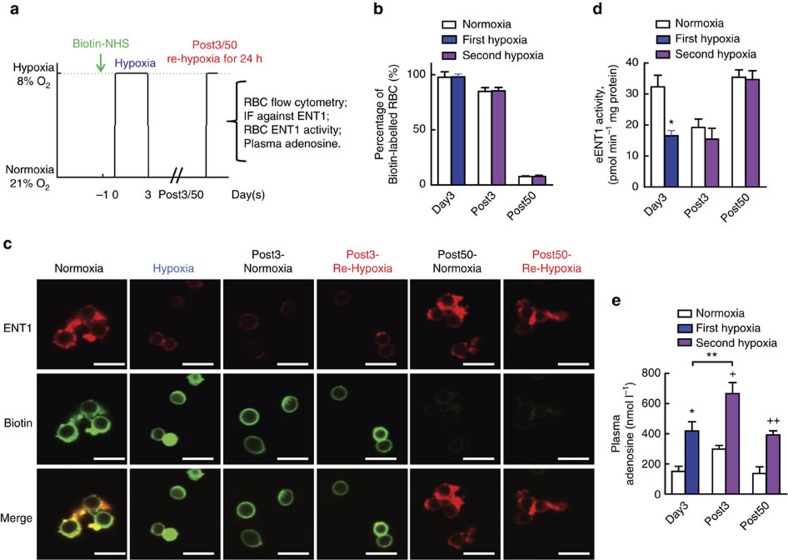
Faster acclimatization to high altitude upon re-ascent is seen in humans; however, the molecular basis for this enhanced adaptive response is unknown. We report that in healthy lowlanders, plasma adenosine levels are rapidly induced by initial ascent to high altitude and achieved even higher levels upon re-ascent, a feature that is positively associated with quicker acclimatization. Erythrocyte equilibrative nucleoside transporter 1 (eENT1) levels are reduced in humans at high altitude and in mice under hypoxia. eENT1 deletion allows rapid accumulation of plasma adenosine to counteract hypoxic tissue damage in mice. Adenosine signalling via erythrocyte ADORA2B induces PKA phosphorylation, ubiquitination and proteasomal degradation of eENT1. Reduced eENT1 resulting from initial hypoxia is maintained upon re-ascent in humans or re-exposure to hypoxia in mice and accounts for erythrocyte hypoxic memory and faster acclimatization. Our findings suggest that targeting identified purinergic-signalling network would enhance the hypoxia adenosine response to counteract hypoxia-induced maladaptation.
人类在重新上升到高海拔时会更快地适应高海拔环境;然而,这种增强的适应性反应的分子基础尚不清楚。我们报告称,在健康的低地人群中,血浆腺苷水平会在最初上升到高海拔时迅速升高,在重新上升时甚至会达到更高的水平,这一特征与更快的适应能力呈正相关。在高海拔环境下,人和小鼠的红细胞核苷转运蛋白 1(eENT1)水平会降低,而在低氧环境下,eENT1 的缺失会导致血浆腺苷的快速积累,从而抵消低氧组织损伤。通过红细胞 ADORA2B 进行的腺苷信号转导会诱导 PKA 磷酸化、泛素化和蛋白酶体降解 eENT1。在人类重新上升到高海拔或在小鼠中重新暴露于低氧环境时,初始低氧导致的 eENT1 减少会持续存在,这解释了红细胞的低氧记忆和更快的适应。我们的发现表明,靶向已确定的嘌呤能信号网络将增强低氧腺苷反应,以对抗低氧诱导的适应不良。