Tataru Paula, Simonsen Maria, Bataillon Thomas, Hobolth Asger
Bioinformatics Research Centre, Aarhus University, Aarhus, Denmark.
Syst Biol. 2017 Jan 1;66(1):e30-e46. doi: 10.1093/sysbio/syw056.
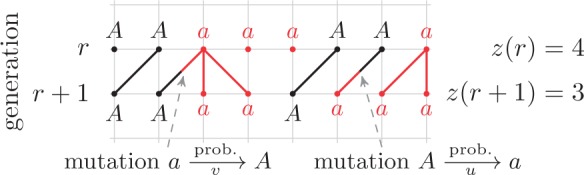
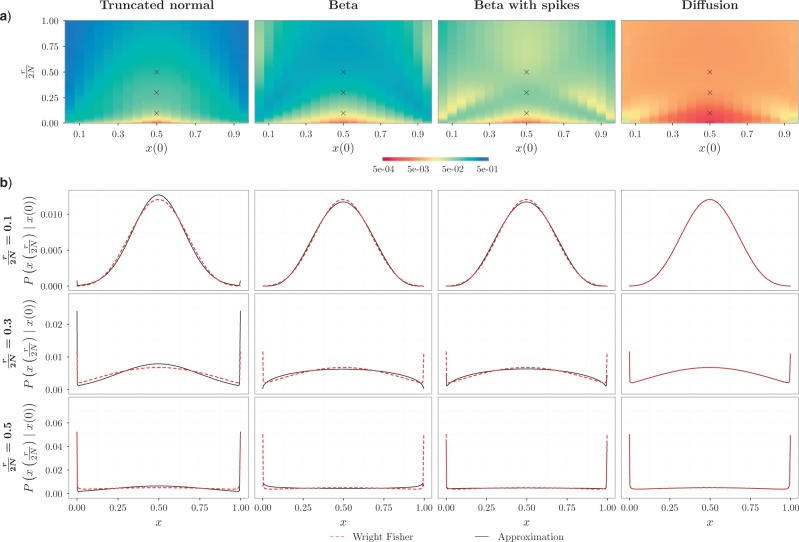
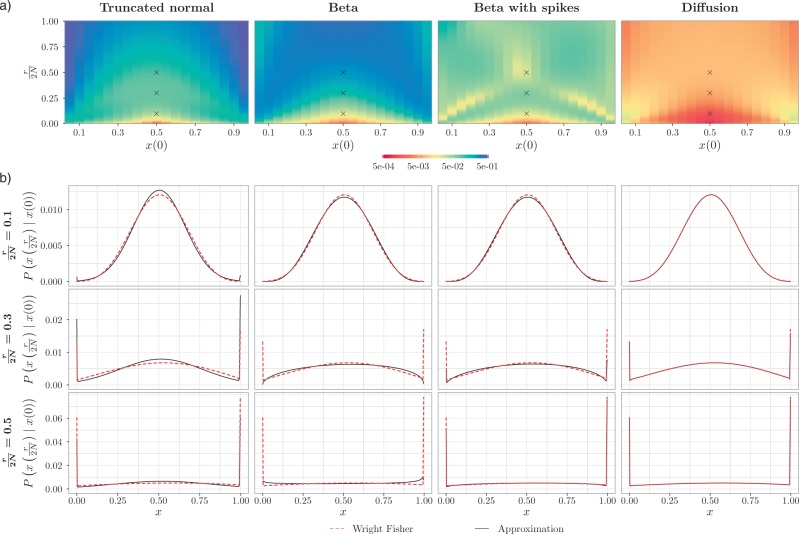
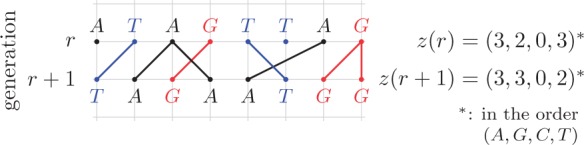
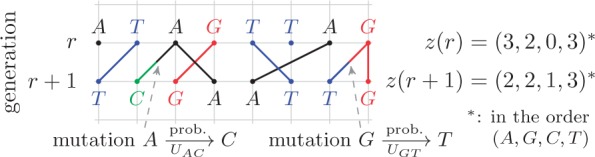
The Wright–Fisher model provides an elegant mathematical framework for understanding allele frequency data. In particular, the model can be used to infer the demographic history of species and identify loci under selection. A crucial quantity for inference under the Wright–Fisher model is the distribution of allele frequencies (DAF). Despite the apparent simplicity of the model, the calculation of the DAF is challenging. We review and discuss strategies for approximating the DAF, and how these are used in methods that perform inference from allele frequency data. Various evolutionary forces can be incorporated in the Wright–Fisher model, and we consider these in turn. We begin our review with the basic bi-allelic Wright–Fisher model where random genetic drift is the only evolutionary force. We then consider mutation, migration, and selection. In particular, we compare diffusion-based and moment-based methods in terms of accuracy, computational efficiency, and analytical tractability. We conclude with a brief overview of the multi-allelic process with a general mutation model.
赖特-费希尔模型为理解等位基因频率数据提供了一个优雅的数学框架。特别地,该模型可用于推断物种的种群历史并识别受选择的基因座。在赖特-费希尔模型下进行推断的一个关键量是等位基因频率分布(DAF)。尽管该模型看似简单,但DAF的计算具有挑战性。我们回顾并讨论了近似DAF的策略,以及这些策略在从等位基因频率数据进行推断的方法中的应用。各种进化力量可以纳入赖特-费希尔模型,我们将依次考虑这些因素。我们从基本的双等位基因赖特-费希尔模型开始回顾,其中随机遗传漂变是唯一的进化力量。然后我们考虑突变、迁移和选择。特别地,我们在准确性、计算效率和分析易处理性方面比较基于扩散和基于矩的方法。我们以具有一般突变模型的多等位基因过程的简要概述作为总结。