Amegah A Kofi, Näyhä Simo, Jaakkola Jouni J K
Public Health Research Group, Department of Biomedical Sciences, School of Allied Health Sciences, University of Cape Coast, Cape Coast, Ghana.
Center for Environmental and Respiratory Health Research, Faculty of Medicine, University of Oulu, Oulu, Finland.
BMJ Open. 2017 Feb 7;7(2):e012348. doi: 10.1136/bmjopen-2016-012348.
Numerous studies have explored the association between educational inequalities and stillbirth but most have failed to elaborate how low educational attainment leads to an increased risk of stillbirth. We hypothesised that use of biomass fuels and consumption of unsafe water related to low educational attainment could explain the stillbirth burden in Ghana attributable to socioeconomic disadvantage.
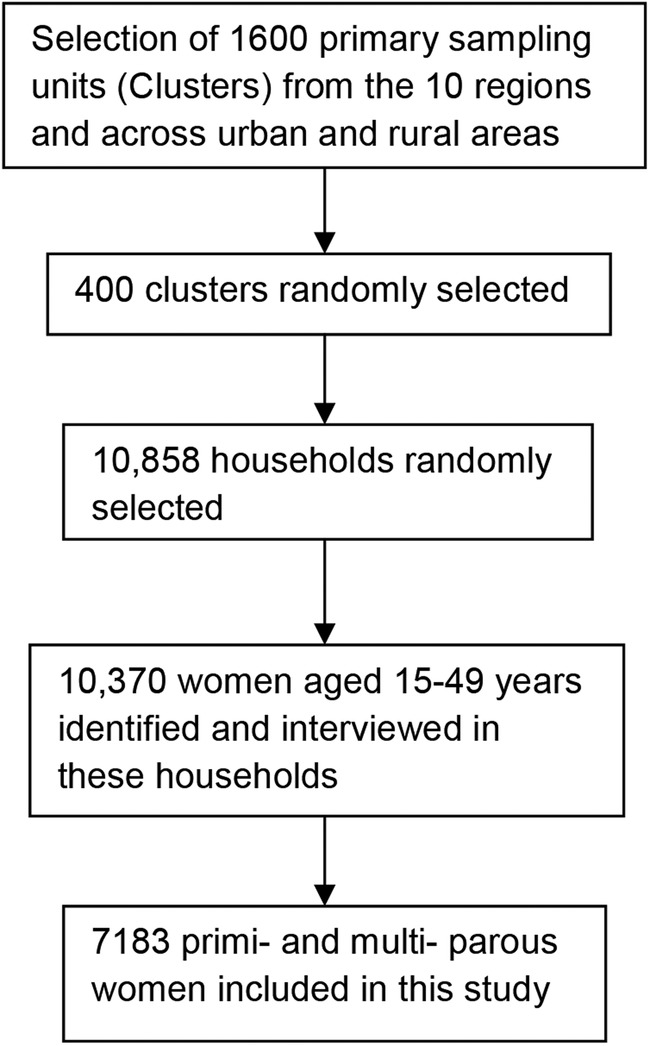
Data from the 2007 Ghana Maternal Health Survey, a nationally representative population-based survey were analysed for this study. Of the10 370 women aged 15-49 years interviewed via structured questionnaires for the survey, 7183 primiparous and multiparous women qualified for inclusion in the present study.
In a logistic regression analysis that adjusted for age, area of residence, marital status and ethnicity of women, lower maternal primary education was associated with a 62% (OR=1.62; 95% CI 1.04 to 2.52) increased lifetime risk of stillbirth. Biomass fuel use and consumption of unsafe water mediated 18% and 8% of the observed effects, respectively. Jointly these two exposures explained 24% of the observed effects. The generalised additive modelling revealed a very flat inverted spoon-shaped smoothed curve which peaked at low levels of schooling (2-3 years) and confirms the findings from the logistic regression analysis.
Our results show that biomass fuel use and unsafe water consumption could be important pathways through which low maternal educational attainment leads to stillbirths in Ghana and similar developing countries. Addressing educational inequalities in developing countries is thus essential for ensuring household choices that curtail environmental exposures and help improve pregnancy outcomes.
众多研究探讨了教育不平等与死产之间的关联,但大多数研究未能详细阐述低教育程度如何导致死产风险增加。我们假设,与低教育程度相关的生物质燃料使用和不安全饮用水消费可以解释加纳因社会经济劣势导致的死产负担。
本研究分析了2007年加纳孕产妇健康调查的数据,该调查是一项具有全国代表性的基于人群的调查。在通过结构化问卷对10370名15 - 49岁女性进行访谈的调查中,有7183名初产妇和经产妇符合纳入本研究的条件。
在对女性的年龄、居住地区、婚姻状况和种族进行调整的逻辑回归分析中,母亲小学教育程度较低与终生死产风险增加62%(比值比=1.62;95%置信区间1.04至2.52)相关。生物质燃料使用和不安全饮用水消费分别介导了观察到的影响的18%和8%。这两种暴露因素共同解释了观察到的影响的24%。广义相加模型显示出一条非常平缓的倒勺形平滑曲线,在低教育水平(2 - 3年)时达到峰值,证实了逻辑回归分析的结果。
我们的结果表明,生物质燃料使用和不安全饮用水消费可能是加纳及类似发展中国家母亲低教育程度导致死产的重要途径。因此,解决发展中国家的教育不平等问题对于确保家庭做出减少环境暴露并有助于改善妊娠结局的选择至关重要。