National Centre for Biological Sciences (TIFR), Bangalore - 560065, India.
Manipal University, Madhav Nagar, Manipal 576104, Karnataka, India.
Sci Rep. 2017 Feb 8;7:42222. doi: 10.1038/srep42222.
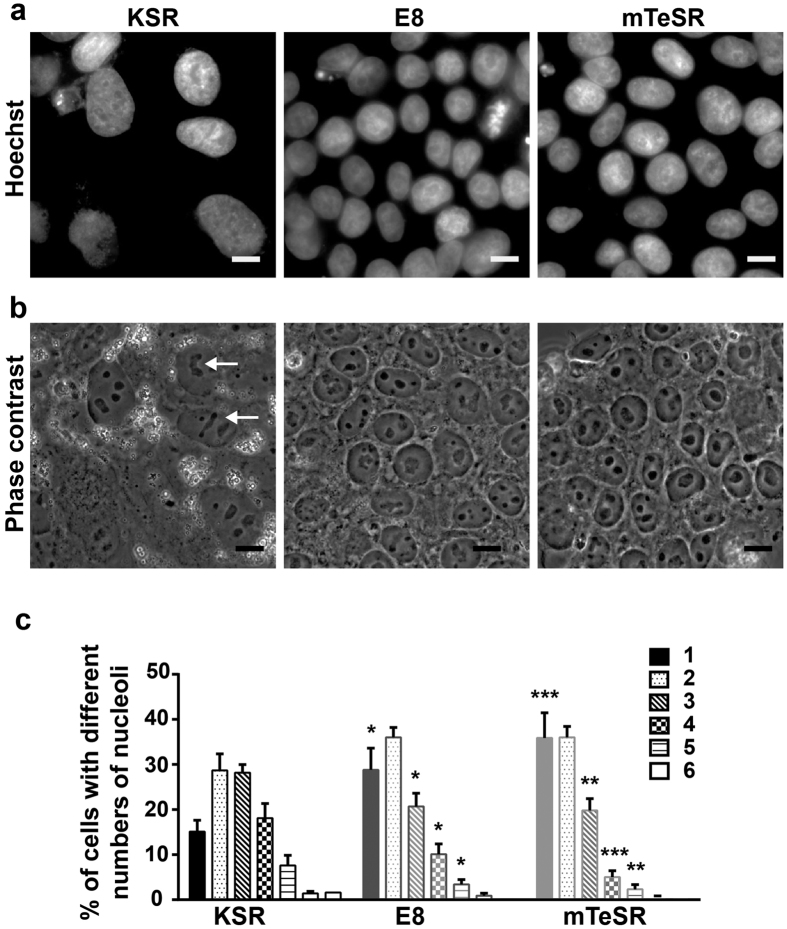
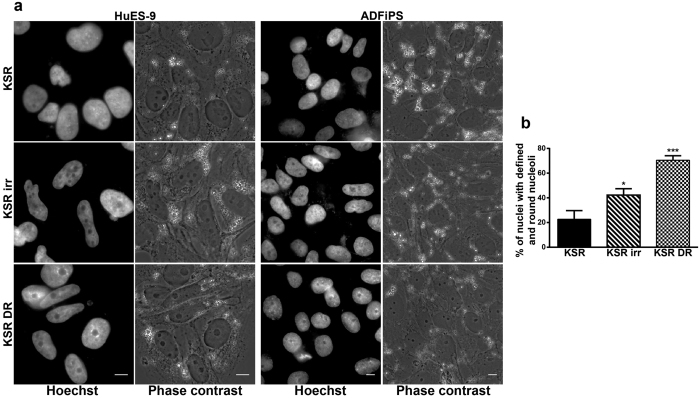
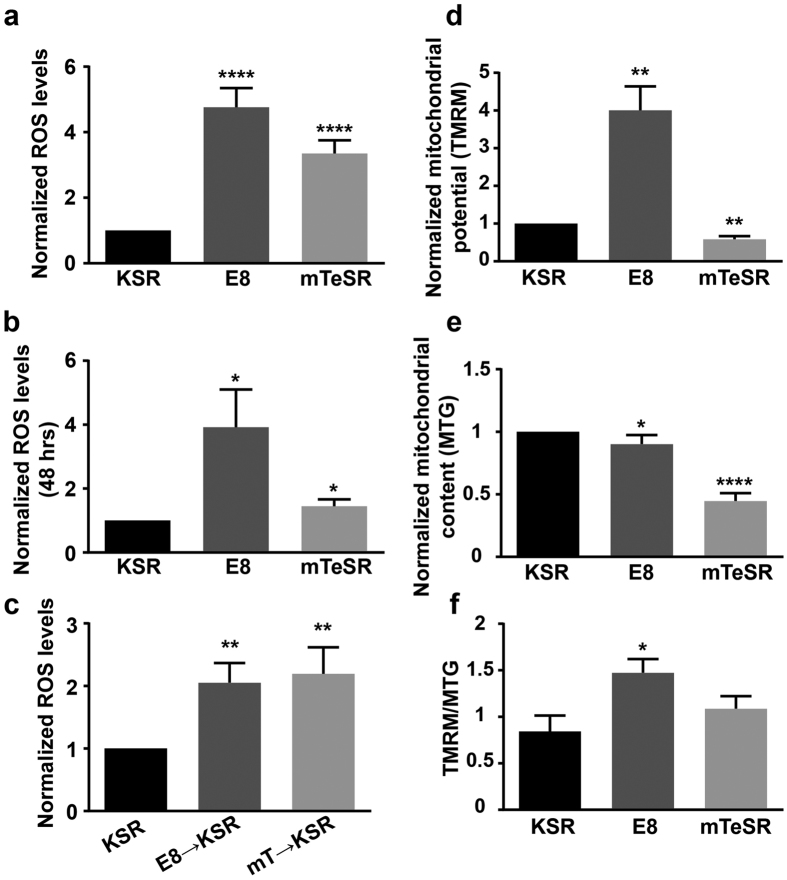
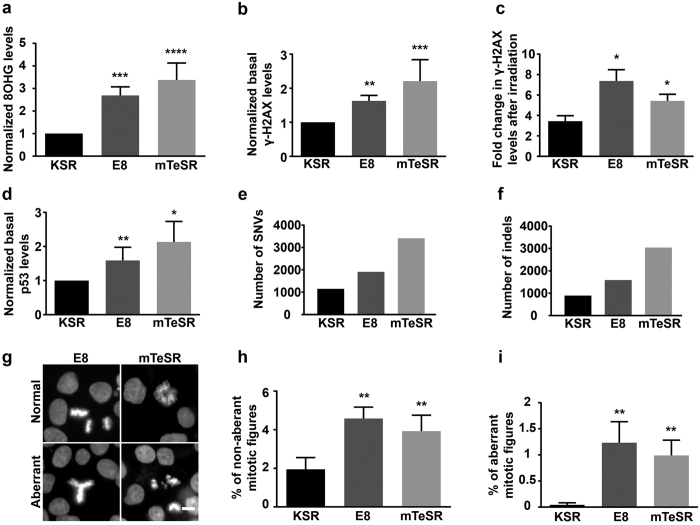
Culture conditions play an important role in regulating the genomic integrity of Human Pluripotent Stem Cells (HPSCs). We report that HPSCs cultured in Essential 8 (E8) and mTeSR, two widely used media for feeder-free culturing of HPSCs, had many fold higher levels of ROS and higher mitochondrial potential than cells cultured in Knockout Serum Replacement containing media (KSR). HPSCs also exhibited increased levels of 8-hydroxyguanosine, phospho-histone-H2a.X and p53, as well as increased sensitivity to γ-irradiation in these two media. HPSCs in E8 and mTeSR had increased incidence of changes in their DNA sequence, indicating genotoxic stress, in addition to changes in nucleolar morphology and number. Addition of antioxidants to E8 and mTeSR provided only partial rescue. Our results suggest that it is essential to determine cellular ROS levels in addition to currently used criteria i.e. pluripotency markers, differentiation into all three germ layers and normal karyotype through multiple passages, in designing culture media.
培养条件在调节人类多能干细胞(HPSCs)的基因组完整性方面起着重要作用。我们报告称,在基本 8(E8)和 mTeSR 中培养的 HPSCs 的 ROS 和线粒体电位水平比在含无血清替代物的培养基(KSR)中培养的细胞高出许多倍。在这两种培养基中,HPSCs 还表现出 8-羟基鸟嘌呤、磷酸组蛋白-H2a.X 和 p53 水平升高,以及对 γ 辐射的敏感性增加。E8 和 mTeSR 中的 HPSCs 发生 DNA 序列改变的发生率增加,表明存在遗传毒性应激,除了核仁形态和数量的改变。向 E8 和 mTeSR 中添加抗氧化剂只能提供部分挽救。我们的结果表明,在设计培养基时,除了目前使用的标准(即多能性标志物、分化为三个胚层和正常核型)外,还必须确定细胞内的 ROS 水平。