Moon Yaejin, McGinnis Ryan S, Seagers Kirsten, Motl Robert W, Sheth Nirav, Wright John A, Ghaffari Roozbeh, Sosnoff Jacob J
Department of Kinesiology and Community Health, University of Illinois at Urbana-Champaign, Urbana, Illinois, United States of America.
Department of Electrical and Biomedical Engineering, University of Vermont, Burlington, Vermont, United States of America.
PLoS One. 2017 Feb 8;12(2):e0171346. doi: 10.1371/journal.pone.0171346. eCollection 2017.
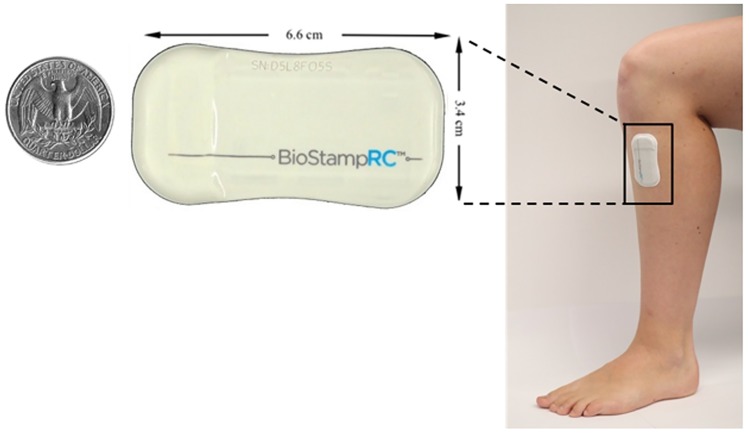
Mobility impairment is common in people with multiple sclerosis (PwMS) and there is a need to assess mobility in remote settings. Here, we apply a novel wireless, skin-mounted, and conformal inertial sensor (BioStampRC, MC10 Inc.) to examine gait characteristics of PwMS under controlled conditions. We determine the accuracy and precision of BioStampRC in measuring gait kinematics by comparing to contemporary research-grade measurement devices.
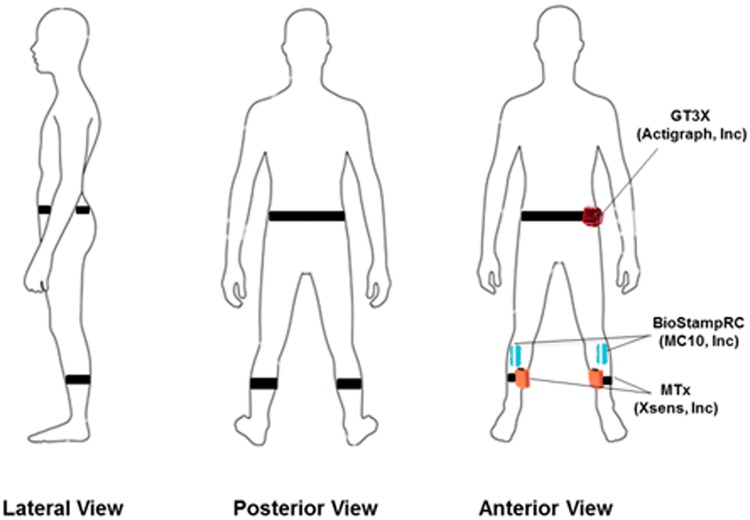
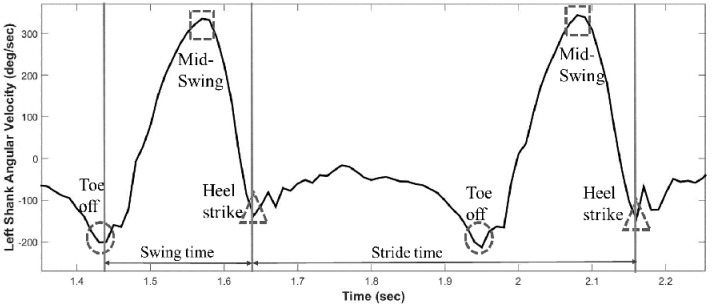
A total of 45 PwMS, who presented with diverse walking impairment (Mild MS = 15, Moderate MS = 15, Severe MS = 15), and 15 healthy control subjects participated in the study. Participants completed a series of clinical walking tests. During the tests participants were instrumented with BioStampRC and MTx (Xsens, Inc.) sensors on their shanks, as well as an activity monitor GT3X (Actigraph, Inc.) on their non-dominant hip. Shank angular velocity was simultaneously measured with the inertial sensors. Step number and temporal gait parameters were calculated from the data recorded by each sensor. Visual inspection and the MTx served as the reference standards for computing the step number and temporal parameters, respectively. Accuracy (error) and precision (variance of error) was assessed based on absolute and relative metrics. Temporal parameters were compared across groups using ANOVA.
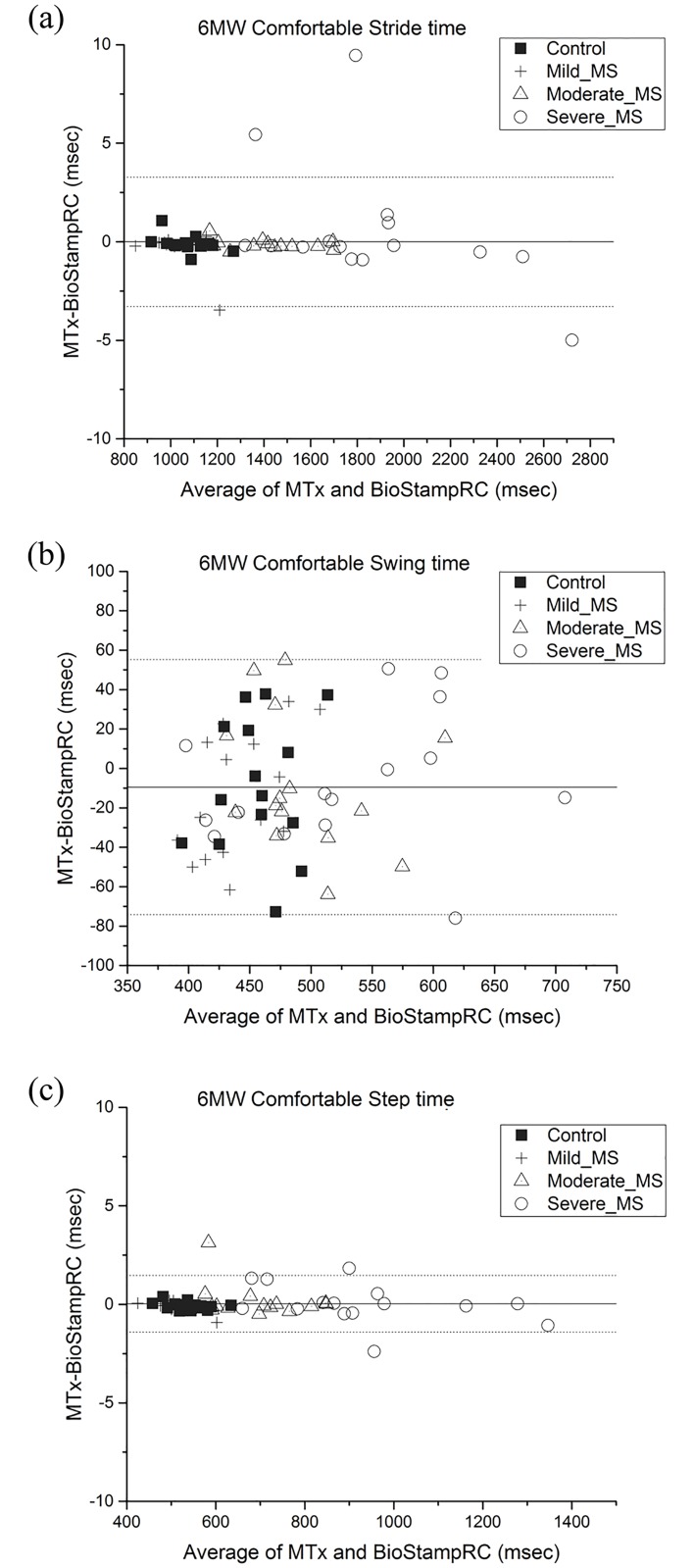
Mean accuracy±precision for the BioStampRC was 2±2 steps error for step number, 6±9ms error for stride time and 6±7ms error for step time (0.6-2.6% relative error). Swing time had the least accuracy±precision (25±19ms error, 5±4% relative error) among the parameters. GT3X had the least accuracy±precision (8±14% relative error) in step number estimate among the devices. Both MTx and BioStampRC detected significantly distinct gait characteristics between PwMS with different disability levels (p<0.01).
BioStampRC sensors accurately and precisely measure gait parameters in PwMS across diverse walking impairment levels and detected differences in gait characteristics by disability level in PwMS. This technology has the potential to provide granular monitoring of gait both inside and outside the clinic.
行动障碍在多发性硬化症患者(PwMS)中很常见,并且需要在远程环境中评估行动能力。在此,我们应用一种新型的无线、可贴合皮肤的共形惯性传感器(BioStampRC,MC10公司),在受控条件下检查PwMS的步态特征。通过与当代研究级测量设备进行比较,我们确定了BioStampRC在测量步态运动学方面的准确性和精确性。
共有45名表现出不同行走障碍的PwMS(轻度多发性硬化症=15例,中度多发性硬化症=15例,重度多发性硬化症=15例)和15名健康对照受试者参与了该研究。参与者完成了一系列临床行走测试。在测试过程中,参与者在小腿上佩戴了BioStampRC和MTx(Xsens公司)传感器,以及在非优势髋部佩戴了活动监测器GT3X(Actigraph公司)。通过惯性传感器同时测量小腿角速度。根据每个传感器记录的数据计算步数和时间步态参数。目视检查和MTx分别作为计算步数和时间参数的参考标准。基于绝对和相对指标评估准确性(误差)和精确性(误差方差)。使用方差分析比较各组之间的时间参数。
BioStampRC的平均准确性±精确性为步数误差2±2步,步幅时间误差6±9毫秒,步长时间误差6±7毫秒(相对误差0.6 - 2.6%)。在这些参数中,摆动时间的准确性±精确性最低(误差25±19毫秒,相对误差5±4%)。在设备中,GT3X在步数估计方面的准确性±精确性最低(相对误差8±14%)。MTx和BioStampRC均检测到不同残疾水平的PwMS之间存在明显不同的步态特征(p<0.01)。
BioStampRC传感器能够准确、精确地测量不同行走障碍水平的PwMS的步态参数,并检测到PwMS中不同残疾水平的步态特征差异。这项技术有潜力在诊所内外提供对步态的精细监测。