Department of Pharmacology, Cardiovascular Research Laboratory, All India Institute of Medical Sciences, New Delhi-110029, India.
Department of Pharmacology, R.C. Patel Institute of Pharmaceutical Education and Research, Shirpur, Maharashtra-425405, India.
Sci Rep. 2017 Feb 9;7:42027. doi: 10.1038/srep42027.
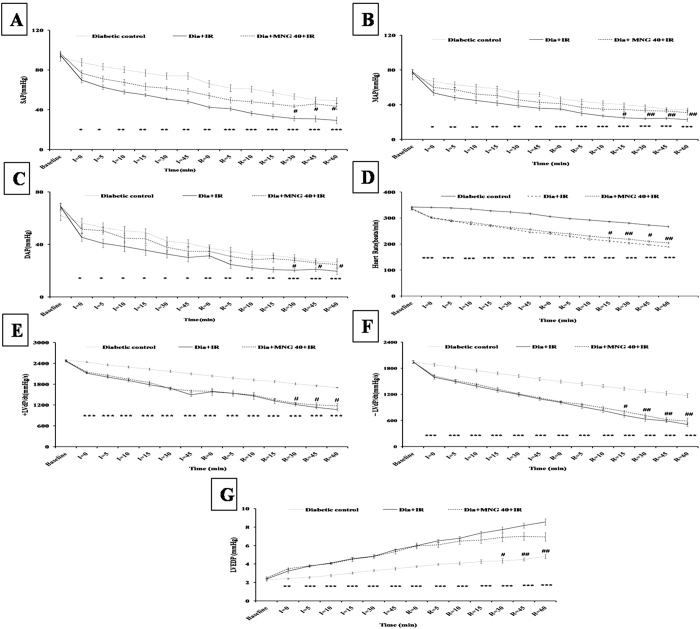
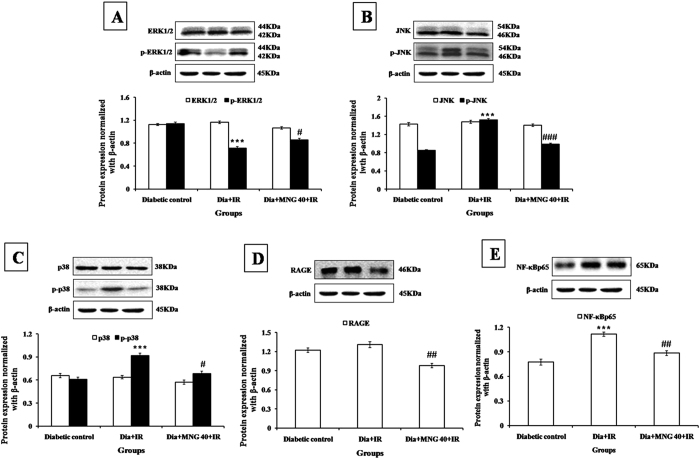
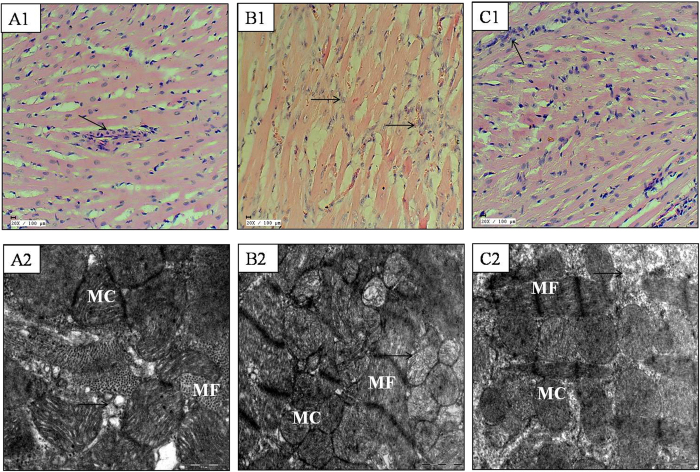
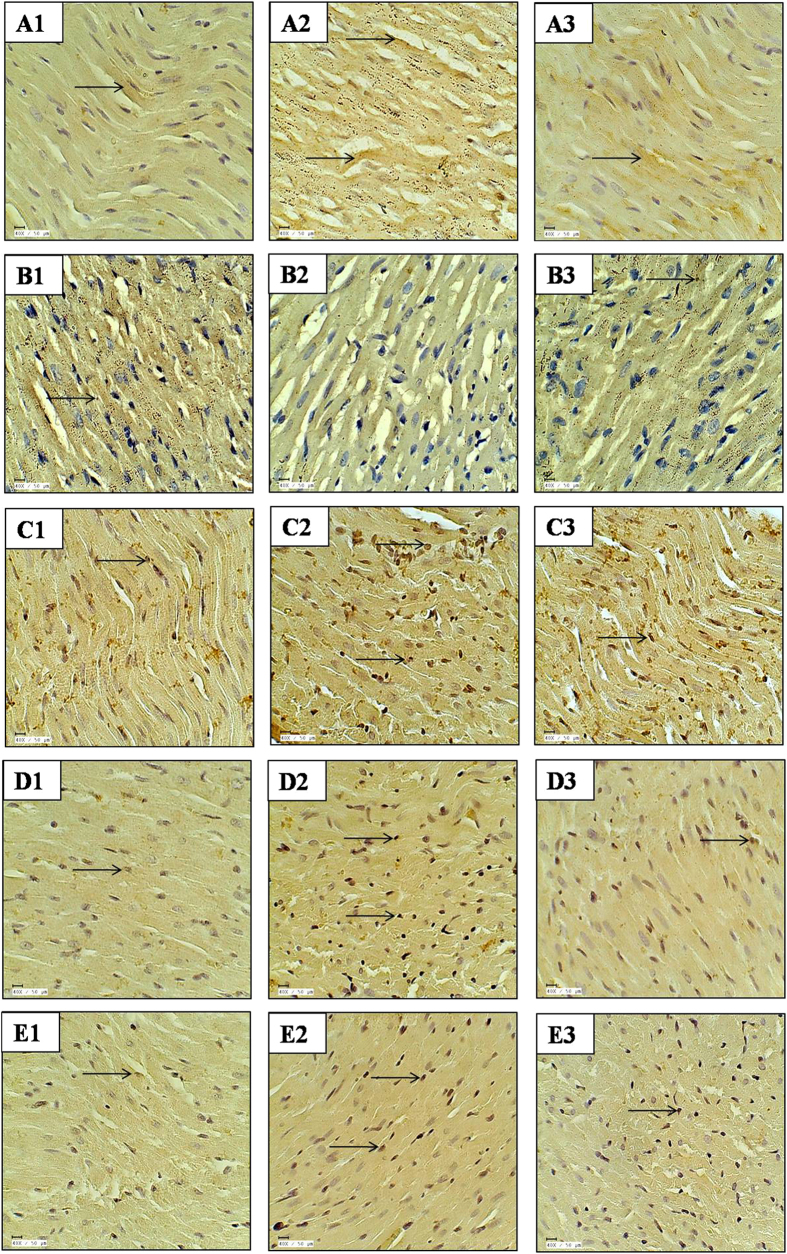
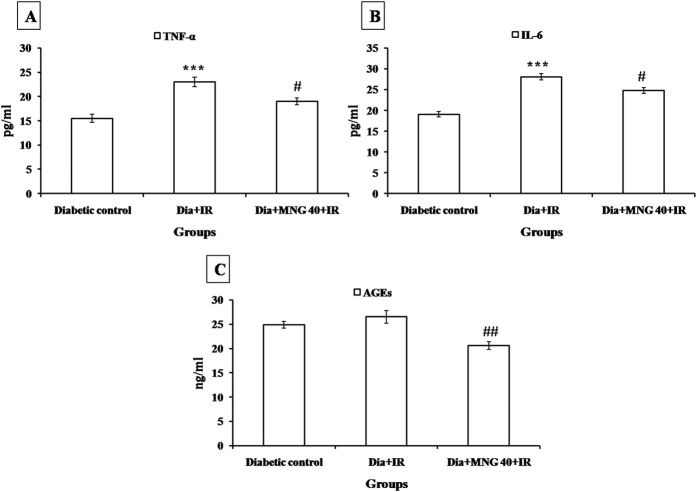
Hyperglycemia induced advanced glycation end products-receptor for advanced glycation end products (AGE-RAGE) activation is thought to involve in the development of cardiovascular disease in diabetics. Activation of AGE-RAGE axis results in the oxidative stress and inflammation. Mangiferin is found in the bark of mango tree and is known to treat diseases owing to its various biological activities. Thus, this study was designed to evaluate the effect of mangiferin in ischemia-reperfusion (IR) induced myocardial injury in diabetic rats. A single injection of STZ (70 mg/kg; i.p.) was injected to male albino Wistar rats to induce diabetes. After confirmation of diabetes, rats were administered vehicle (2 ml/kg; i.p.) and mangiferin (40 mg/kg; i.p.) for 28 days. On 28 day, left anterior descending coronary artery was ligated for 45 min and then reperfused for 60 min. Mangiferin treatment significantly improved cardiac function, restored antioxidant status, reduced inflammation, apoptosis and maintained myocardial architecture. Furthermore, mangiferin significantly inhibited the activation of AGE-RAGE axis, c-Jun N-terminal kinase (JNK) and p38 and increased the expression of extracellular regulated kinase 1/2 (ERK1/2) in the myocardium. Thus, mangiferin attenuated IR injury in diabetic rats by modulation of AGE-RAGE/MAPK pathways which further prevented oxidative stress, inflammation and apoptosis in the myocardium.
高血糖诱导的晚期糖基化终产物-受体(AGE-RAGE)激活被认为与糖尿病患者心血管疾病的发展有关。AGE-RAGE 轴的激活导致氧化应激和炎症。芒果苷存在于芒果树的树皮中,由于其多种生物学活性而被用于治疗疾病。因此,本研究旨在评估芒果苷对糖尿病大鼠缺血再灌注(IR)诱导心肌损伤的影响。雄性白化 Wistar 大鼠单次腹腔注射 STZ(70mg/kg)诱导糖尿病。确认糖尿病后,大鼠给予载体(2ml/kg;腹腔注射)和芒果苷(40mg/kg;腹腔注射)28 天。第 28 天,结扎左前降支冠状动脉 45min,然后再灌注 60min。芒果苷治疗可显著改善心功能,恢复抗氧化状态,减轻炎症、凋亡,维持心肌结构。此外,芒果苷可显著抑制 AGE-RAGE 轴、c-Jun N-末端激酶(JNK)和 p38 的激活,并增加心肌中细胞外调节激酶 1/2(ERK1/2)的表达。因此,芒果苷通过调节 AGE-RAGE/MAPK 通路减轻糖尿病大鼠的 IR 损伤,从而进一步防止心肌中的氧化应激、炎症和凋亡。