Department of Gastrointestinal Surgery, Affiliated Hospital of Nantong University, Nantong 226001, China.
Poochon Scientific, Frederick, Maryland 21701, USA.
Sci Rep. 2017 Feb 9;7:42436. doi: 10.1038/srep42436.
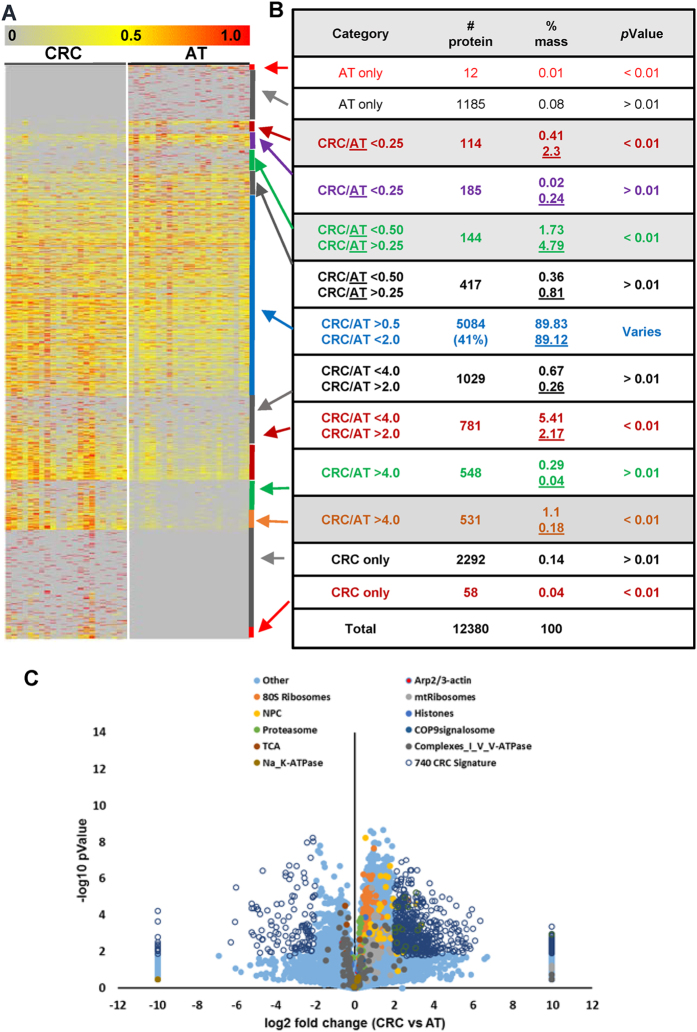
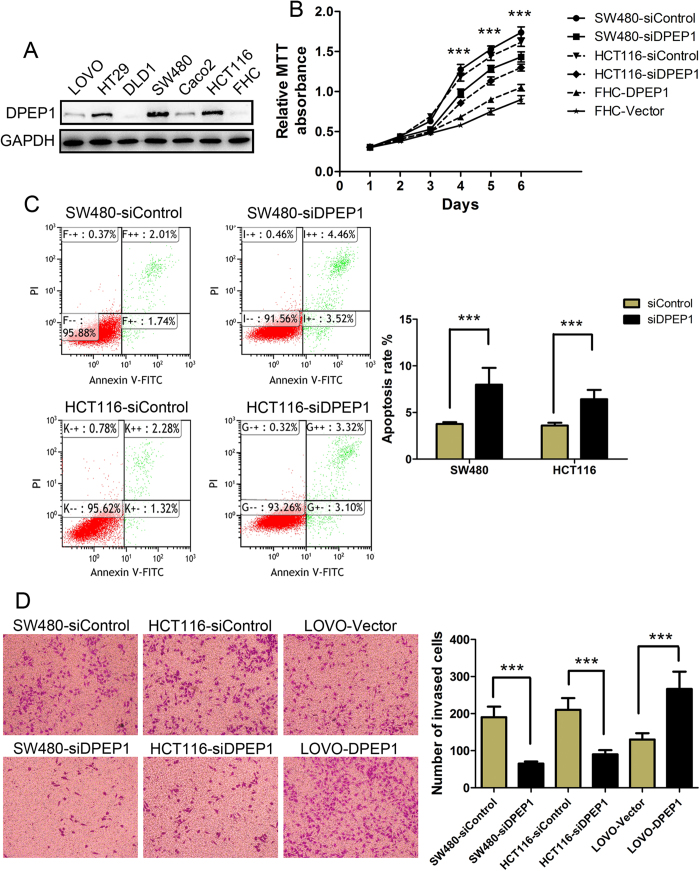
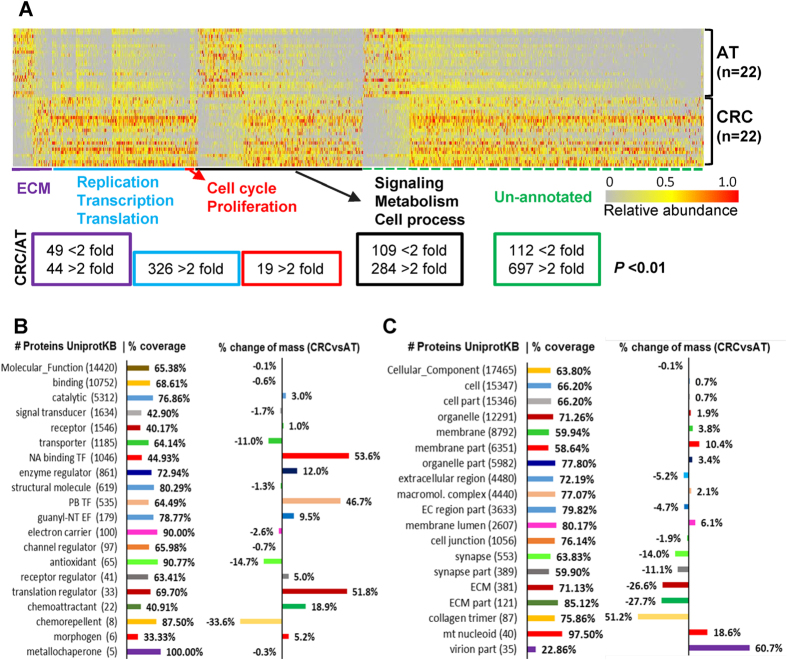
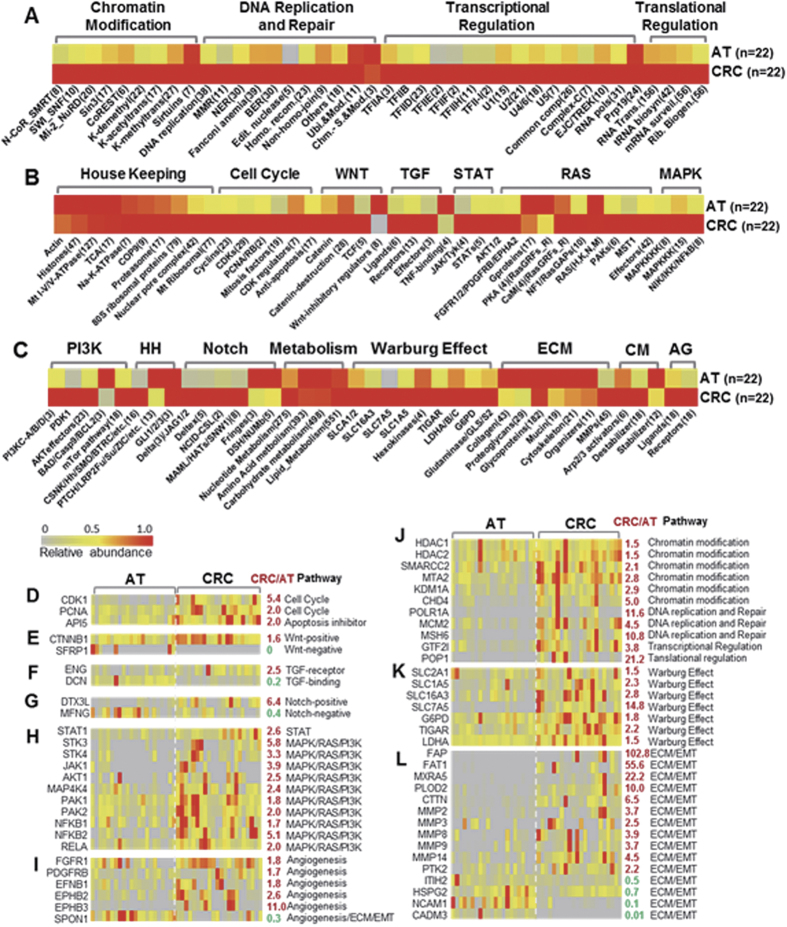
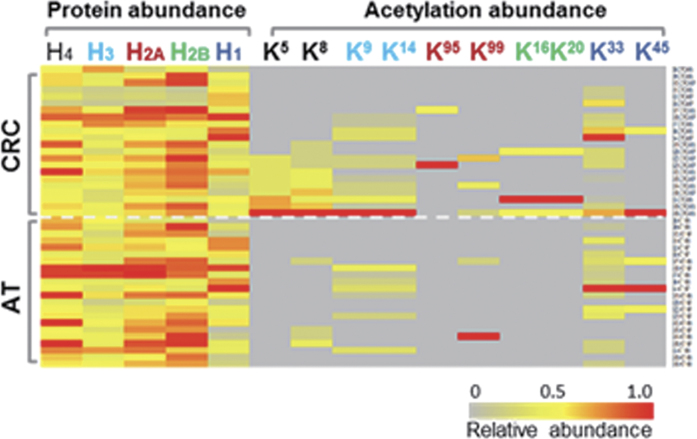
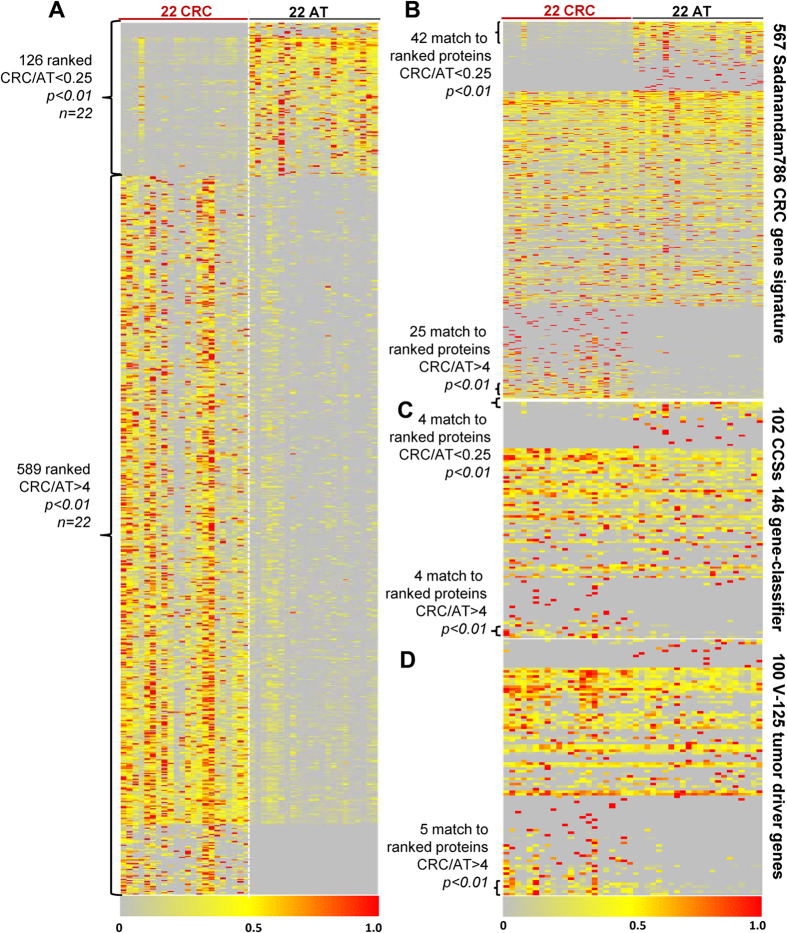
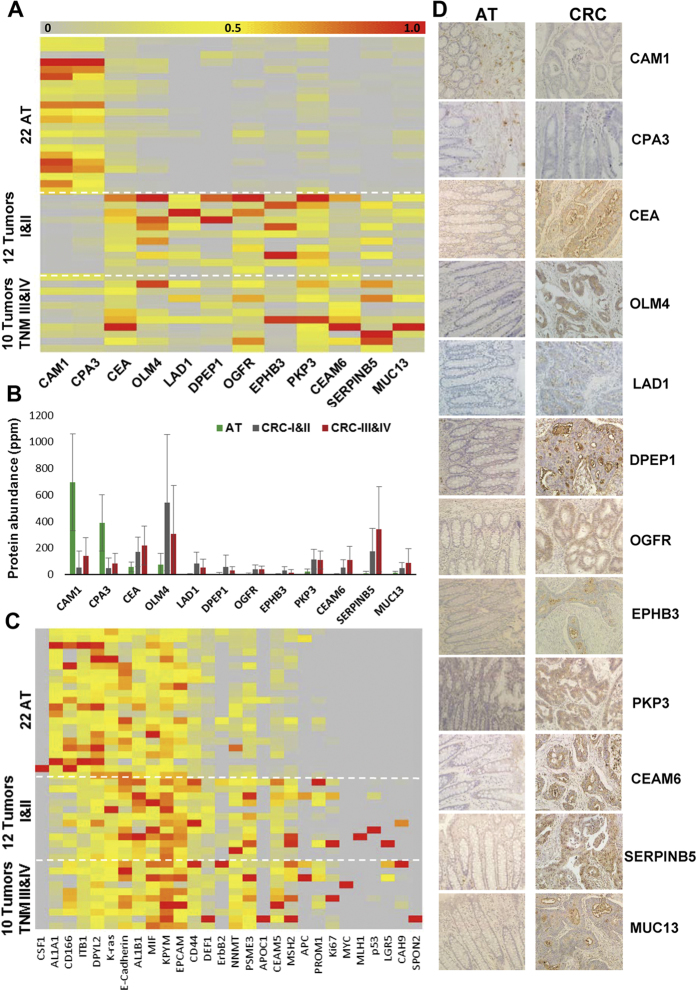
The global change in protein abundance in colorectal cancer (CRC) and its contribution to tumorigenesis have not been comprehensively analyzed. In this study, we conducted a comprehensive proteomic analysis of paired tumors and adjacent tissues (AT) using high-resolution Fourier-transform mass spectrometry and a novel algorithm of quantitative pathway analysis. 12380 proteins were identified and 740 proteins that presented a 4-fold change were considered a CRC proteomic signature. A significant pattern of changes in protein abundance was uncovered which consisted of an imbalance in protein abundance of inhibitory and activating regulators in key signal pathways, a significant elevation of proteins in chromatin modification, gene expression and DNA replication and damage repair, and a decreased expression of proteins responsible for core extracellular matrix architectures. Specifically, based on the relative abundance, we identified a panel of 11 proteins to distinguish CRC from AT. The protein that showed the greatest degree of overexpression in CRC compared to AT was Dipeptidase 1 (DPEP1). Knockdown of DPEP1 in SW480 and HCT116 cells significantly increased cell apoptosis and attenuated cell proliferation and invasion. Together, our results show one of largest dataset in CRC proteomic research and provide a molecular link from genomic abnormalities to the tumor phenotype.
在结直肠癌(CRC)中,蛋白质丰度的全球变化及其对肿瘤发生的贡献尚未得到全面分析。在这项研究中,我们使用高分辨率傅里叶变换质谱和一种新的定量途径分析算法,对配对的肿瘤和相邻组织(AT)进行了全面的蛋白质组学分析。鉴定出 12380 种蛋白质,其中 740 种蛋白质的变化倍数为 4 倍,被认为是 CRC 的蛋白质组特征。揭示了蛋白质丰度变化的显著模式,包括关键信号通路中抑制和激活调节剂的蛋白质丰度失衡,染色质修饰、基因表达和 DNA 复制和损伤修复中蛋白质水平的显著升高,以及负责核心细胞外基质结构的蛋白质表达降低。具体而言,基于相对丰度,我们确定了一组 11 种蛋白质,可以将 CRC 与 AT 区分开来。与 AT 相比,CRC 中表达上调程度最大的蛋白质是二肽酶 1(DPEP1)。在 SW480 和 HCT116 细胞中敲低 DPEP1 显著增加了细胞凋亡,并减弱了细胞增殖和侵袭。总之,我们的研究结果展示了 CRC 蛋白质组学研究中最大的数据集之一,并提供了从基因组异常到肿瘤表型的分子联系。