Wu Liping, Pang Yilin, Qin Guiqi, Xi Gaina, Wu Shengnan, Wang Xiaoping, Chen Tongsheng
MOE Key Laboratory of Laser Life Science & Institute of Laser Life Science, College of Biophotonics, South China Normal University, Guangzhou, Guangdong, PR China.
Department of Pain Management, The First Affiliated Hospital of Jinan University, Guangzhou, Guangdong, PR China.
PLoS One. 2017 Feb 9;12(2):e0171840. doi: 10.1371/journal.pone.0171840. eCollection 2017.
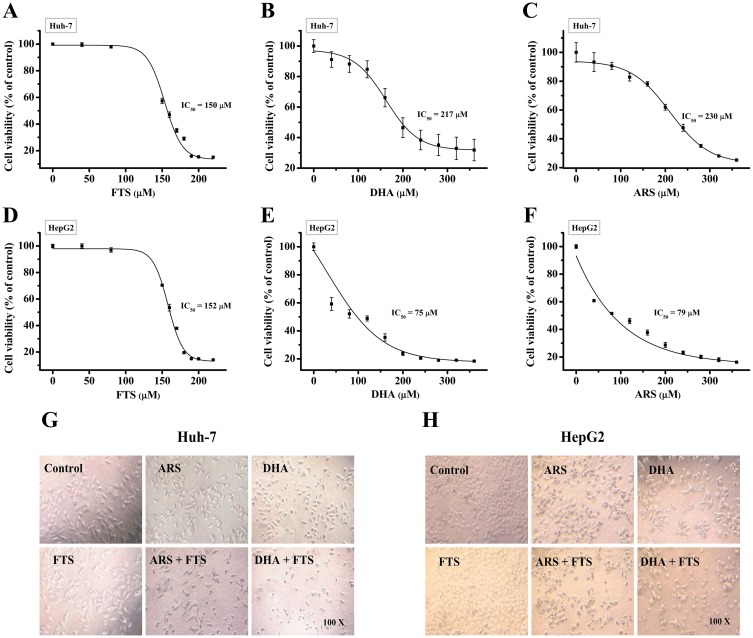
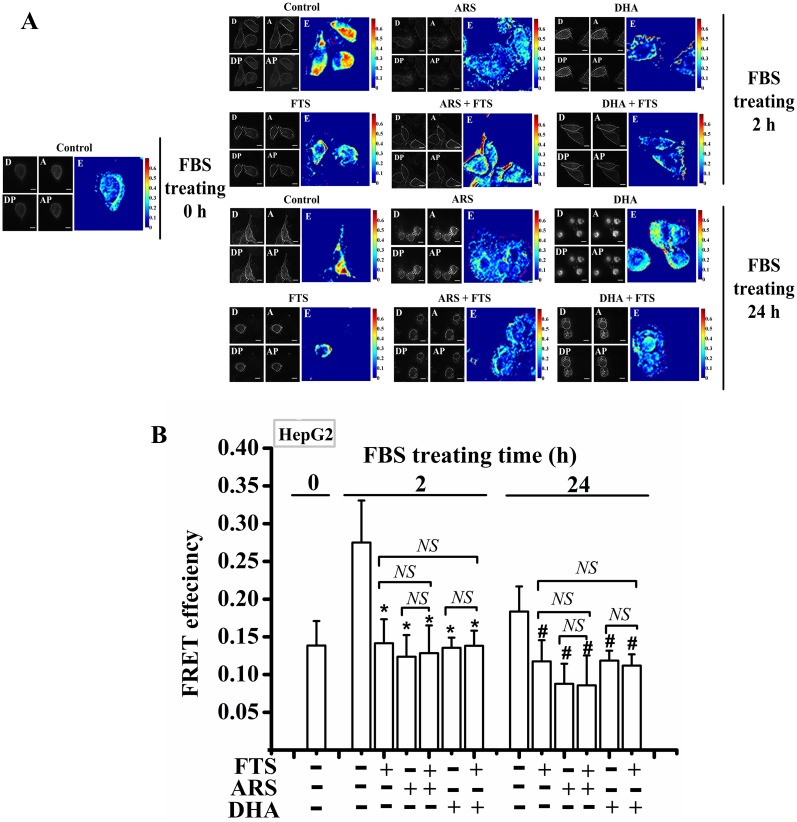
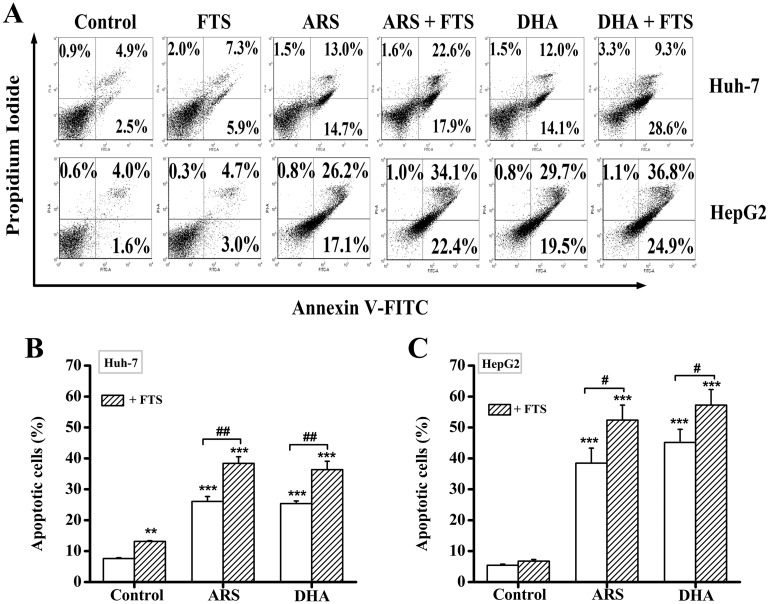
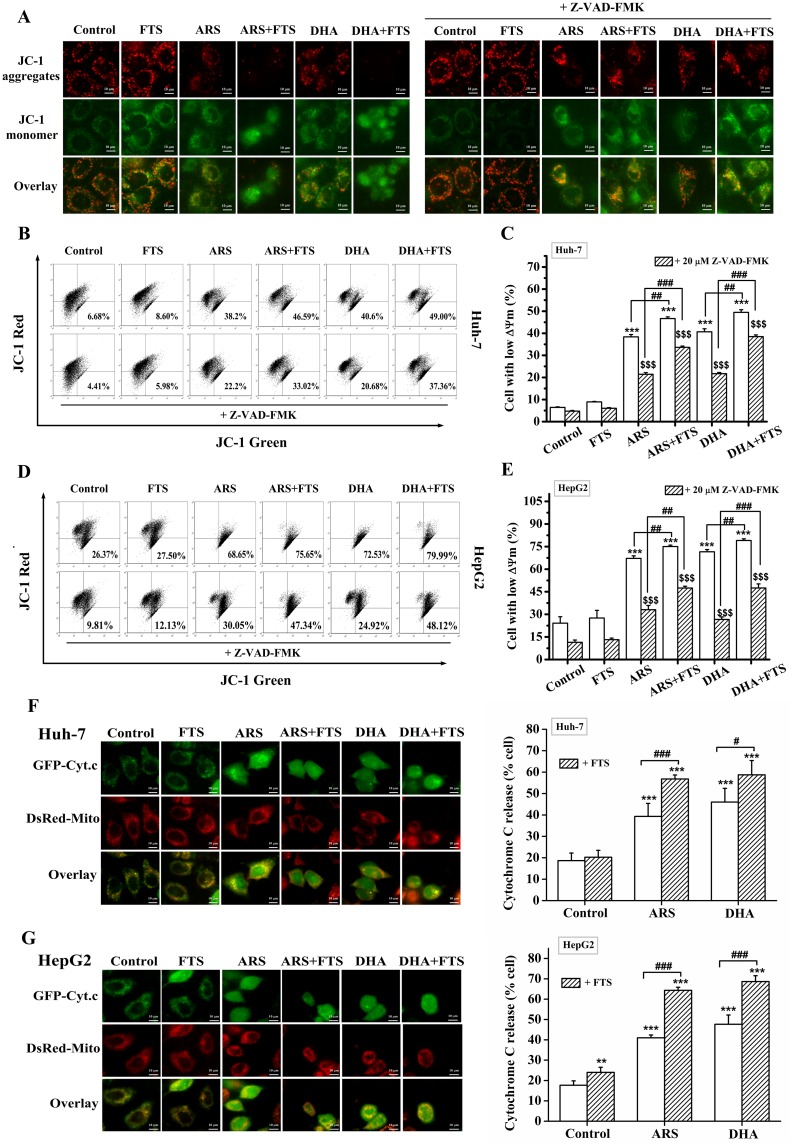
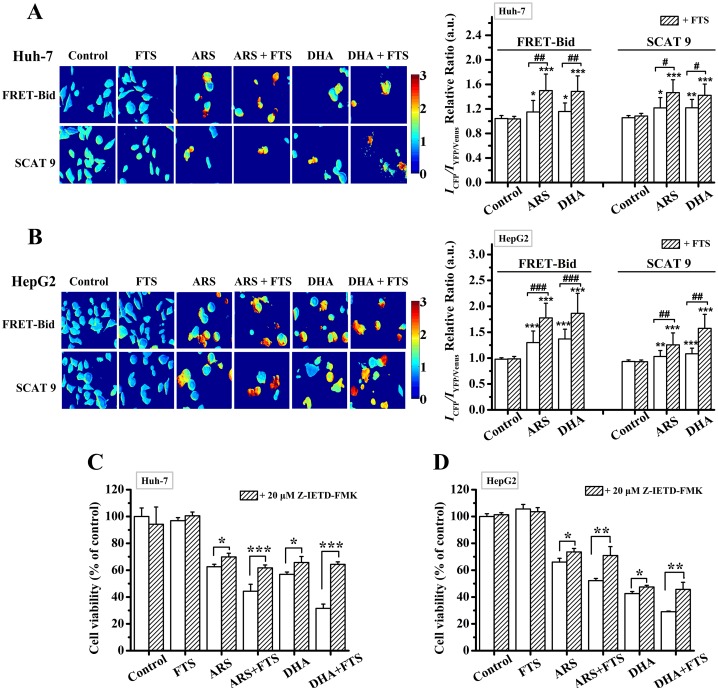
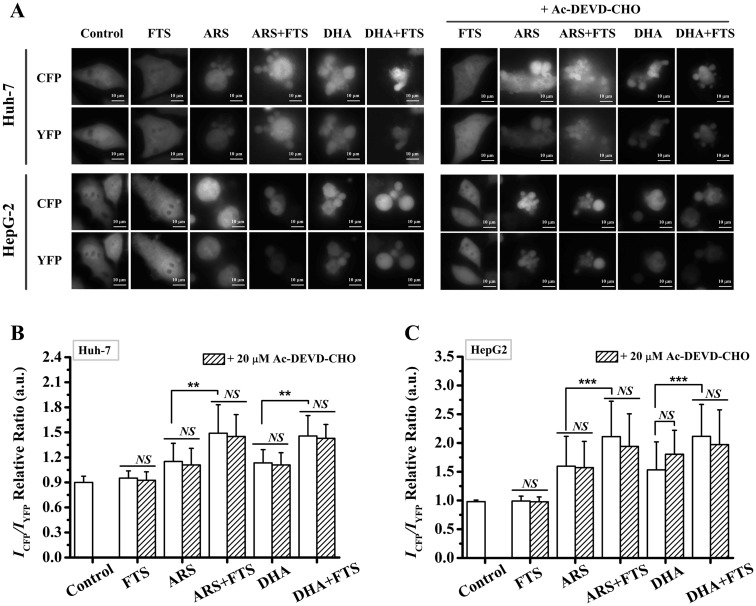
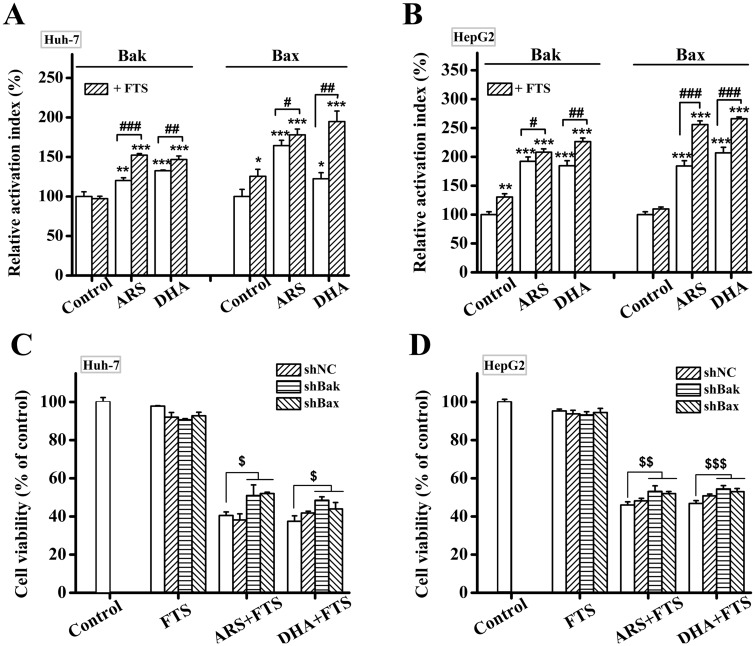
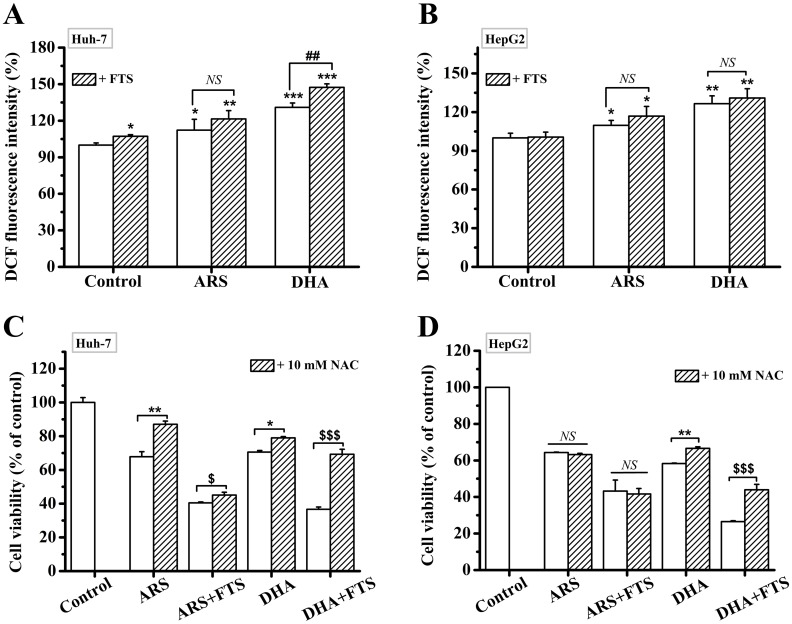
Dihydroartemisinin (DHA) and artesunate (ARS), two artemisinin derivatives, have efficacious anticancer activities against human hepatocarcinoma (HCC) cells. This study aims to study the anticancer action of the combination treatment of DHA/ARS and farnesylthiosalicylic acid (FTS), a Ras inhibitor, in HCC cells (Huh-7 and HepG2 cell lines). FTS pretreatment significantly enhanced DHA/ARS-induced phosphatidylserine (PS) externalization, Bak/Bax activation, mitochondrial membrane depolarization, cytochrome c release, and caspase-8 and -9 activations, characteristics of the extrinsic and intrinsic apoptosis. Pretreatment with Z-IETD-FMK (caspase-8 inhibitor) potently prevented the cytotoxicity of the combination treatment of DHA/ARS and FTS, and pretreatment with Z-VAD-FMK (pan-caspase inhibitor) significantly inhibited the loss of ΔΨm induced by DHA/ARS treatment or the combination treatment of DHA/ARS and FTS in HCC cells. Furthermore, silencing Bak/Bax modestly but significantly inhibited the cytotoxicity of the combination treatment of DHA/ARS and FTS. Interestingly, pretreatment with an antioxidant N-Acetyle-Cysteine (NAC) significantly prevented the cytotoxicity of the combination treatment of DHA and FTS instead of the combination treatment of ARS and FTS, suggesting that reactive oxygen species (ROS) played a key role in the anticancer action of the combination treatment of DHA and FTS. Similar to FTS, DHA/ARS also significantly prevented Ras activation. Collectively, our data demonstrate that FTS potently sensitizes Huh-7 and HepG2 cells to artemisinin derivatives via accelerating the extrinsic and intrinsic apoptotic pathways.
双氢青蒿素(DHA)和青蒿琥酯(ARS)这两种青蒿素衍生物对人肝癌(HCC)细胞具有有效的抗癌活性。本研究旨在探讨DHA/ARS与法尼基硫代水杨酸(FTS,一种Ras抑制剂)联合治疗对肝癌细胞(Huh-7和HepG2细胞系)的抗癌作用。FTS预处理显著增强了DHA/ARS诱导的磷脂酰丝氨酸(PS)外化、Bak/Bax激活、线粒体膜去极化、细胞色素c释放以及半胱天冬酶-8和-9激活,这些都是外源性和内源性凋亡的特征。用Z-IETD-FMK(半胱天冬酶-8抑制剂)预处理可有效预防DHA/ARS与FTS联合治疗的细胞毒性,用Z-VAD-FMK(泛半胱天冬酶抑制剂)预处理可显著抑制DHA/ARS治疗或DHA/ARS与FTS联合治疗诱导的肝癌细胞线粒体膜电位(ΔΨm)丧失。此外,沉默Bak/Bax可适度但显著抑制DHA/ARS与FTS联合治疗的细胞毒性。有趣的是,用抗氧化剂N-乙酰半胱氨酸(NAC)预处理可显著预防DHA与FTS联合治疗而非ARS与FTS联合治疗的细胞毒性,这表明活性氧(ROS)在DHA与FTS联合治疗的抗癌作用中起关键作用。与FTS类似,DHA/ARS也显著抑制Ras激活。总体而言,我们的数据表明,FTS通过加速外源性和内源性凋亡途径,使Huh-7和HepG2细胞对青蒿素衍生物高度敏感。