
关节角度松动术(一种关节松动术的新概念)对肩周炎患者疼痛、活动范围及功能障碍的即时影响:一例报告
Immediate Effects of Angular Joint Mobilization (a New Concept of Joint Mobilization) on Pain, Range of Motion, and Disability in a Patient with Shoulder Adhesive Capsulitis: A Case Report.
作者信息
Kim Younghoon, Lee GyuChang
机构信息
Kim Institute, Lancaster, CA, USA.
Department of Physical Therapy, Kyungnam University, Changwon, Gyeongsangnam-do, South Korea.
出版信息
Am J Case Rep. 2017 Feb 10;18:148-156. doi: 10.12659/ajcr.900858.
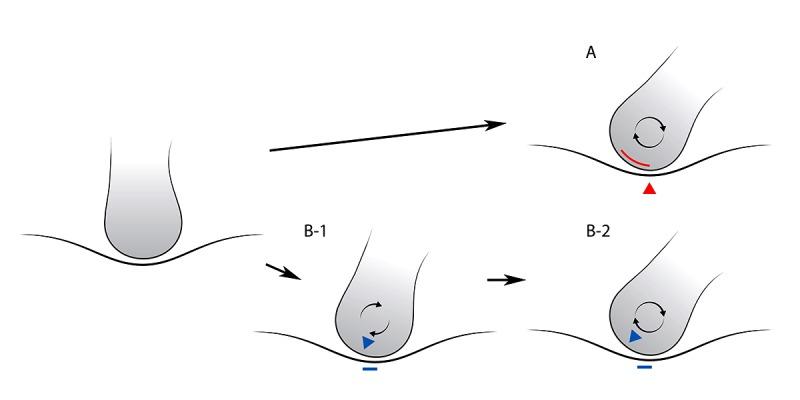
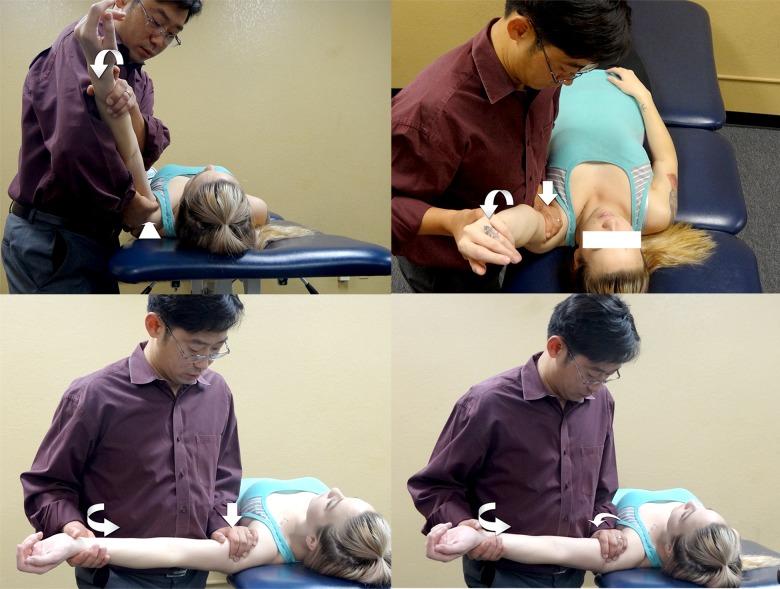
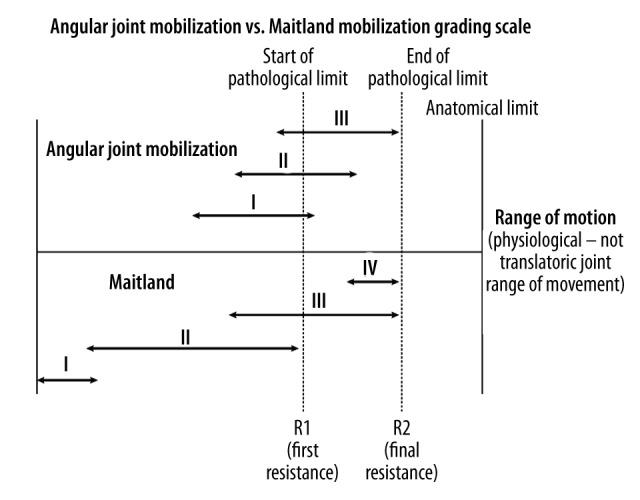
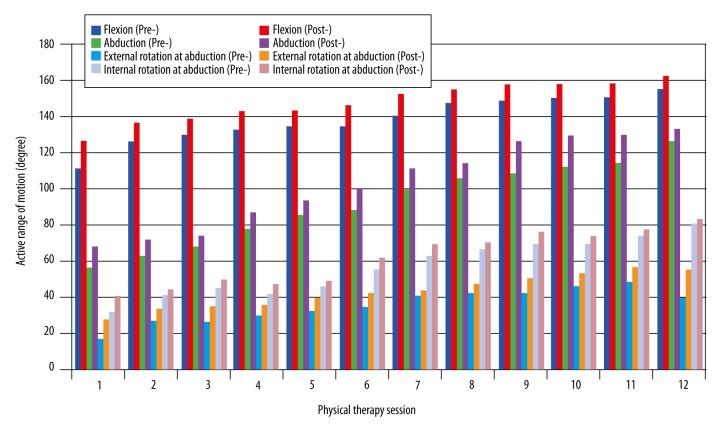
BACKGROUND Adhesive capsulitis is a common disabling condition, with reviews reporting up to 5.3% of the population being affected, the burden placed upon individuals and healthcare services may therefore be considered substantial. For recovering the normal extensibility of the capsule in individuals with adhesive capsulitis of the shoulder, passive stretching of the capsule through end-range mobilization has been suggested. Recently, the concept of joint mobilization into angular joint mobilization (AJM), which is rotational joint mobilization with joint axis shift, was proposed. This case report aimed to investigate the immediate effect of AJM on pain, range of motion (ROM), and disability in a patient with shoulder adhesive capsulitis. CASE REPORT The patient was a 53-year-old woman who was diagnosed with left shoulder adhesive capsulitis. Her left shoulder gradually stiffened, affecting functional activity. The patient attended 12 joint mobilization sessions over a period of six weeks (two times per week). The intervention consisted of rotary oscillations of the left shoulder, which were applied with overpressure and stops before the end of the pathological limit. After intervention, the patient reported 3/100 pain intensity on the visual analogue scale (VAS) (before versus after: 58 versus 3). Active ROM improved by 51° in flexion, 76.4° in abduction, 38.7° in external rotation, and 51.4° in active internal rotation. Passive ROM improved by 49° in flexion, 74.6° in abduction, 39.4° in external rotation, 51.4° in internal rotation. The total shoulder, pain and disability index (SPADI) score improved by 53.9%. CONCLUSIONS The patient reacted positively to AJM, resulting in improved shoulder pain, ROM, and disability, and the results suggest that AJM allow consideration in the management of individuals with adhesive capsulitis.
背景
粘连性关节囊炎是一种常见的致残性疾病,综述报告称高达5.3%的人群受其影响,因此个人和医疗服务所承受的负担可能被认为是巨大的。为恢复肩部粘连性关节囊炎患者关节囊的正常伸展性,有人建议通过终末活动度松动术对关节囊进行被动拉伸。最近,提出了关节松动术向角向关节松动术(AJM)的概念,即伴有关节轴移位的旋转关节松动术。本病例报告旨在研究AJM对一名肩部粘连性关节囊炎患者疼痛、活动范围(ROM)和功能障碍的即时影响。病例报告:患者为一名53岁女性,被诊断为左肩粘连性关节囊炎。她的左肩逐渐僵硬,影响了功能活动。患者在六周内参加了12次关节松动术治疗(每周两次)。干预措施包括对左肩进行旋转摆动,施加超压并在病理极限结束前停止。干预后,患者在视觉模拟量表(VAS)上报告的疼痛强度为3/100(治疗前与治疗后:58与3)。主动活动范围在屈曲时改善了51°,外展时改善了76.4°,外旋时改善了38.7°,主动内旋时改善了51.4°。被动活动范围在屈曲时改善了49°,外展时改善了74.6°,外旋时改善了39.4°,内旋时改善了51.4°。肩部、疼痛和功能障碍指数(SPADI)总分改善了53.9%。结论:患者对AJM反应积极,导致肩部疼痛、ROM和功能障碍得到改善,结果表明AJM可考虑用于粘连性关节囊炎患者的治疗。


 Zotero 插件