Tao Tao, Chen Ming, Jiang Ranran, Guan Han, Huang Yeqing, Su Huan, Hu Qiang, Han Xu, Xiao Jun
Department of Urology, Anhui Provincial Hospital, Anhui Medical University, Hefei, Anhui 230001, P.R. China.
Department of Urology, Zhongda Hospital, Medical School, Southeast University, Nanjing, Jiangsu 210009, P.R. China.
Oncol Rep. 2017 Mar;37(3):1430-1436. doi: 10.3892/or.2017.5430. Epub 2017 Feb 7.
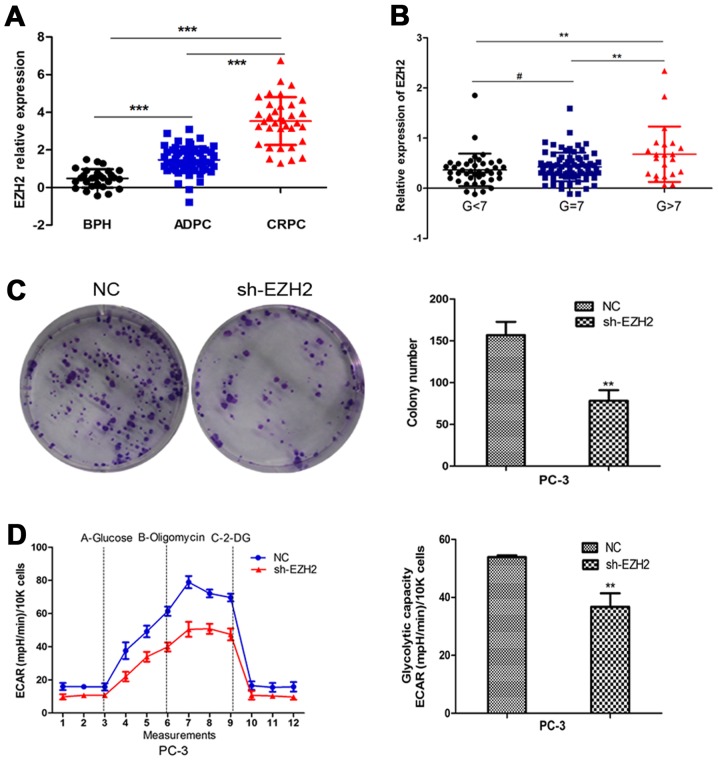
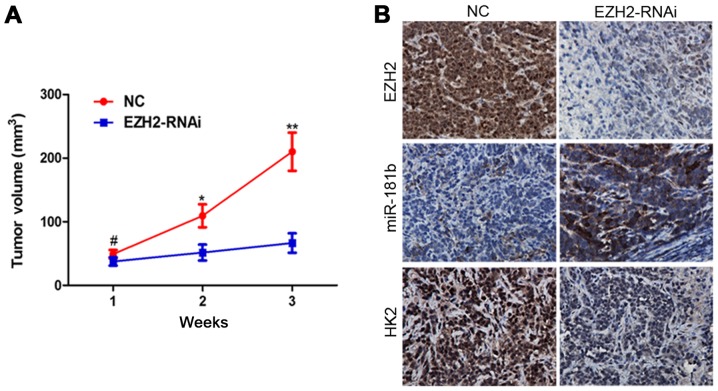
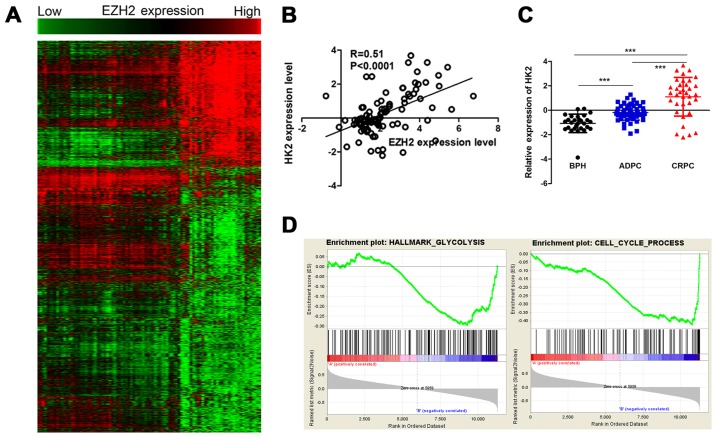
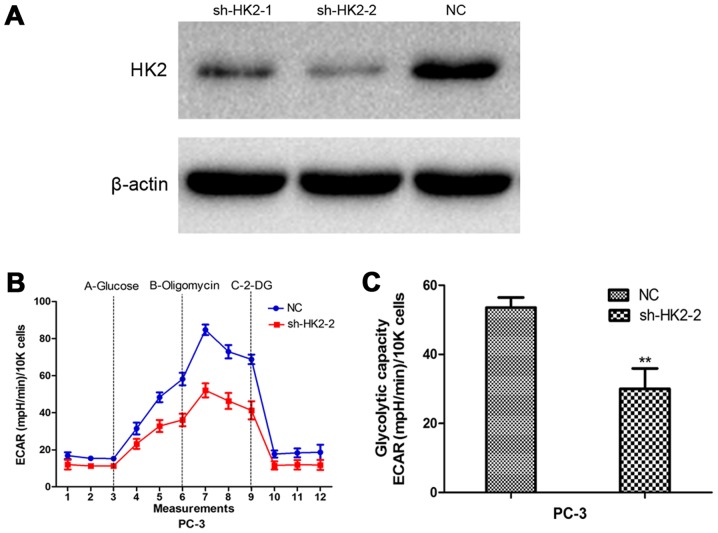
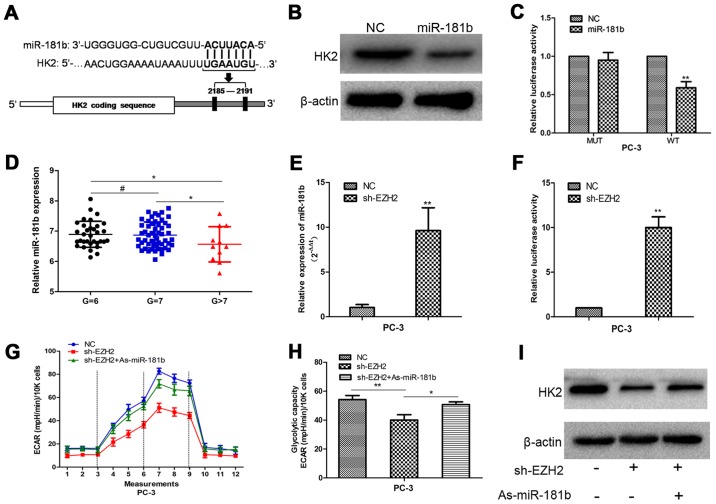
Recent studies suggest that several types of tumors preferentially metabolize glucose through aerobic glycolysis, a phenomenon known as the Warburg effect. However, it remains largely unexplored whether metabolic reprogramming is involved in prostate cancer (PCa) progression. In this study, we found that histone methyltransferase enhancer of zeste homolog 2 (EZH2) dysregulated in PCa development regulated cellular growth and aerobic glycolysis through miR-181b/hexokinase 2 (HK2) axis. Aberrant expression profiles of coding RNA and microRNA were examined by two large, independent clinical prostate cancer data sets. The results indicated that EZH2 expression was elevated followed by PCa development. A set of glycometabolism-related genes were positively correlated with EZH2 expression such as HK2.The depletion of EZH2 in cell experiments inhibited PCa cell growth and aerobic glycolysis accompanying the up-regulation of miR-181b. Western blot and luciferase reporter assays showed that miR-181b inversely modulated HK2 by directly targeting the binding site within 3'-untranslated regions. Moreover, decreased miR-181b expression largely abrogated the effect of sh-EZH2 on HK2 expression and HK2-induced glucose metabolism process. Immunohistochemistry (IHC) and in situ hybridisation (ISH) analysis further revealed a significant correlation in EZH2, miR-181b and HK2 expression in nude mouse tumor xenograft. Taken together, these findings provide the first evidence that EZH2/miR-181b/HK2 pathway plays a positive role in PCa development. Targeting this aberrantly activated pathway may provide a new therapeutic strategy against PCa.
近期研究表明,几种类型的肿瘤通过有氧糖酵解优先代谢葡萄糖,这一现象被称为瓦伯格效应。然而,代谢重编程是否参与前列腺癌(PCa)进展在很大程度上仍未得到探索。在本研究中,我们发现,在PCa发生过程中失调的组蛋白甲基转移酶zeste同源物2增强子(EZH2)通过miR-181b/己糖激酶2(HK2)轴调控细胞生长和有氧糖酵解。通过两个大型、独立的临床前列腺癌数据集检测了编码RNA和微小RNA的异常表达谱。结果表明,EZH2表达随PCa发生而升高。一组糖代谢相关基因与EZH2表达呈正相关,如HK2。细胞实验中EZH2的缺失抑制了PCa细胞生长和有氧糖酵解,同时miR-181b上调。蛋白质免疫印迹和荧光素酶报告基因检测表明,miR-181b通过直接靶向3'-非翻译区内的结合位点反向调节HK2。此外,miR-181b表达降低在很大程度上消除了sh-EZH2对HK2表达和HK2诱导的葡萄糖代谢过程的影响。免疫组织化学(IHC)和原位杂交(ISH)分析进一步揭示了裸鼠肿瘤异种移植中EZH2、miR-181b和HK2表达之间存在显著相关性。综上所述,这些发现首次证明EZH2/miR-181b/HK2通路在PCa发生中起积极作用。靶向这一异常激活的通路可能为PCa提供一种新的治疗策略。