Mathan Till S M, Textor Johannes, Sköld Annette E, Reinieren-Beeren Inge, van Oorschot Tom, Brüning Mareke, Figdor Carl G, Buschow Sonja I, Bakdash Ghaith, de Vries I Jolanda M
Department of Tumor Immunology, Radboud Institute for Molecular Life Sciences, Radboud University Medical Centre, Nijmegen, The Netherlands.
Department of Oncology and Pathology, Karolinska University Hospital Solna, Karolinska Institute, Stockholm, Sweden.
Oncotarget. 2017 Mar 21;8(12):19879-19893. doi: 10.18632/oncotarget.15190.
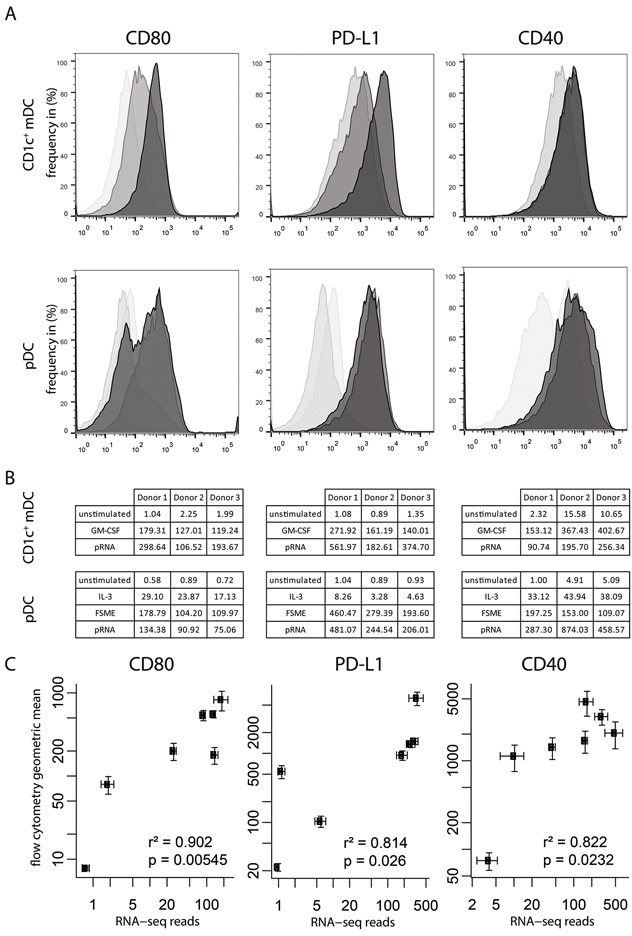
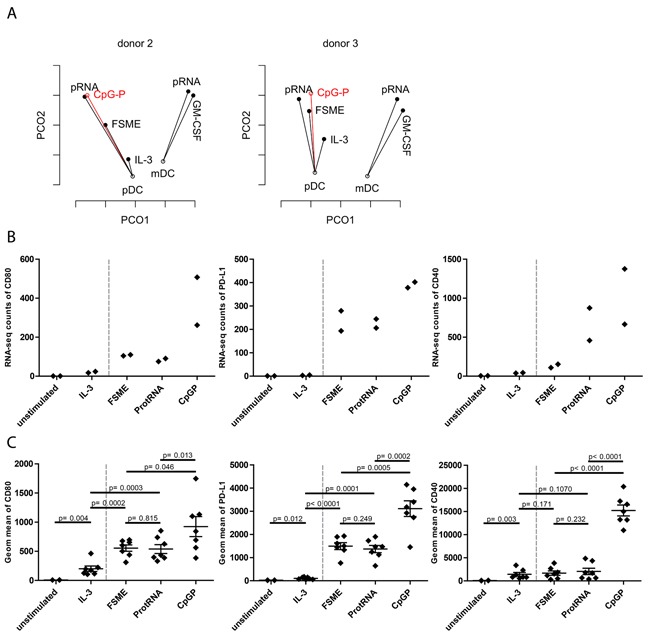
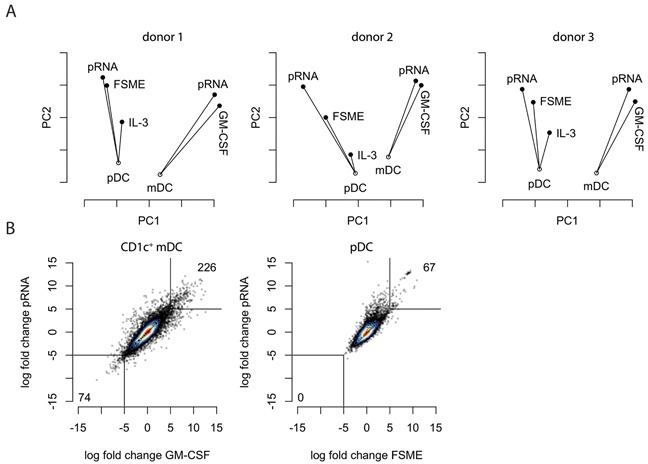
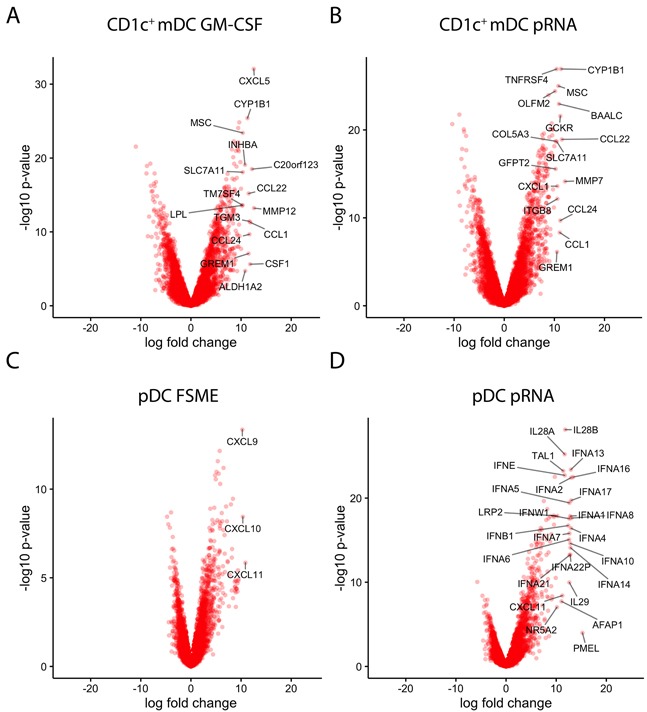
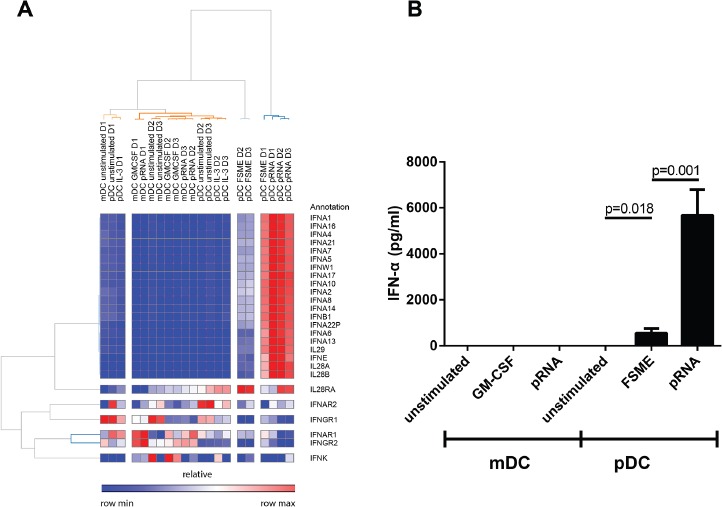
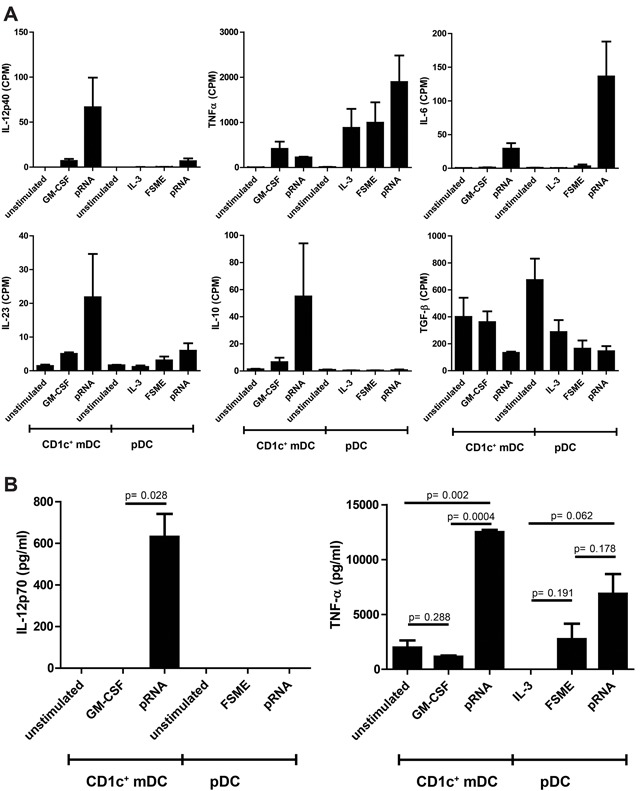
Effective stimulation of immune cells is crucial for the success of cancer immunotherapies. Current approaches to evaluate the efficiency of stimuli are mainly defined by known flow cytometry-based cell activation or cell maturation markers. This method however does not give a complete overview of the achieved activation state and may leave important side effects unnoticed. Here, we used an unbiased RNA sequencing (RNA-seq)-based approach to compare the capacity of four clinical-grade dendritic cell (DC) activation stimuli used to prepare DC-vaccines composed of various types of DC subsets; the already clinically applied GM-CSF and Frühsommer meningoencephalitis (FSME) prophylactic vaccine and the novel clinical grade adjuvants protamine-RNA complexes (pRNA) and CpG-P. We found that GM-CSF and pRNA had similar effects on their target cells, whereas pRNA and CpG-P induced stronger type I interferon (IFN) expression than FSME. In general, the pathways most affected by all stimuli were related to immune activity and cell migration. GM-CSF stimulation, however, also induced a significant increase of genes related to nonsense-mediated decay, indicating a possible deleterious effect of this stimulus. Taken together, the two novel stimuli appear to be promising alternatives. Our study demonstrates how RNA-seq based investigation of changes in a large number of genes and gene groups can be exploited for fast and unbiased, global evaluation of clinical-grade stimuli, as opposed to the general limited evaluation of a pre-specified set of genes, by which one might miss important biological effects that are detrimental for vaccine efficacy.
有效刺激免疫细胞对癌症免疫疗法的成功至关重要。目前评估刺激效率的方法主要由基于已知流式细胞术的细胞激活或细胞成熟标志物来定义。然而,这种方法并不能全面概述所达到的激活状态,可能会忽略重要的副作用。在此,我们采用了一种基于无偏RNA测序(RNA-seq)的方法,来比较四种临床级树突状细胞(DC)激活刺激物的能力,这些刺激物用于制备由各种类型DC亚群组成的DC疫苗;即已临床应用的GM-CSF和森林脑炎(FSME)预防性疫苗,以及新型临床级佐剂鱼精蛋白-RNA复合物(pRNA)和CpG-P。我们发现GM-CSF和pRNA对其靶细胞有相似的作用,而pRNA和CpG-P诱导的I型干扰素(IFN)表达比FSME更强。总体而言,所有刺激物影响最大的途径都与免疫活性和细胞迁移有关。然而,GM-CSF刺激也导致与无义介导的衰变相关的基因显著增加,表明这种刺激可能具有有害作用。综上所述,这两种新型刺激物似乎是很有前景的替代物。我们的研究表明,与通常对预先指定的一组基因进行有限评估相反,基于RNA-seq对大量基因和基因组变化进行研究,可用于快速、无偏地全面评估临床级刺激物,否则可能会错过对疫苗效力有害的重要生物学效应。