Elsoe Rasmus, Kold Søren, Larsen Peter, Petruskevicius Juozas
Department of Orthopaedic Surgery, Aalborg University Hospital, Aalborg University, 18-22 Hobrovej, 9000, Aalborg, Denmark.
Department of Occupational Therapy and Physiotherapy, Aalborg University Hospital, Aalborg University, 18-22 Hobrovej, 9000, Aalborg, Denmark.
Strategies Trauma Limb Reconstr. 2017 Apr;12(1):35-44. doi: 10.1007/s11751-017-0275-9. Epub 2017 Feb 10.
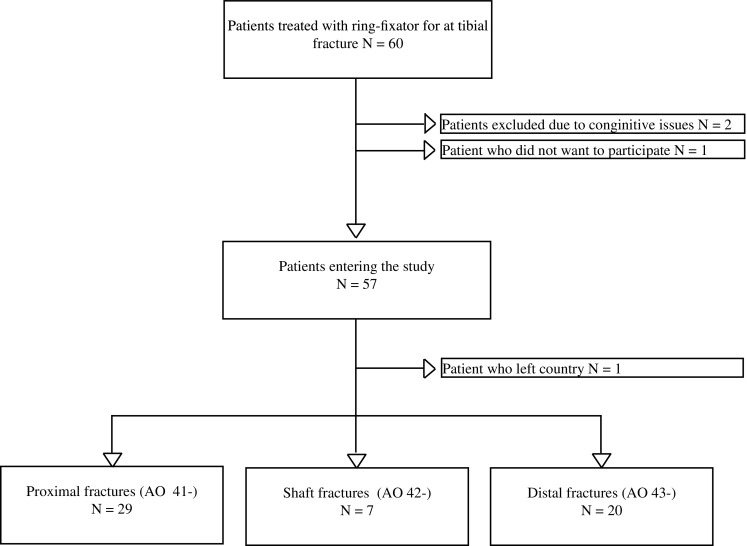
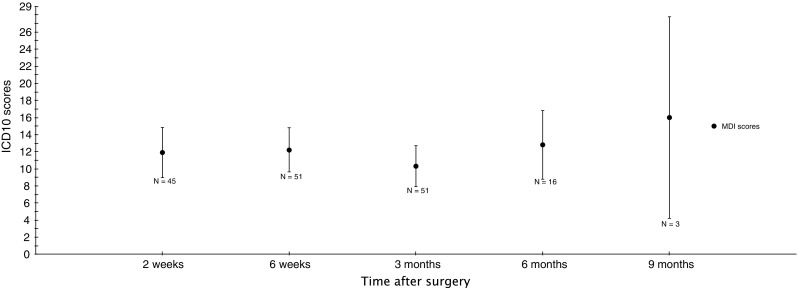
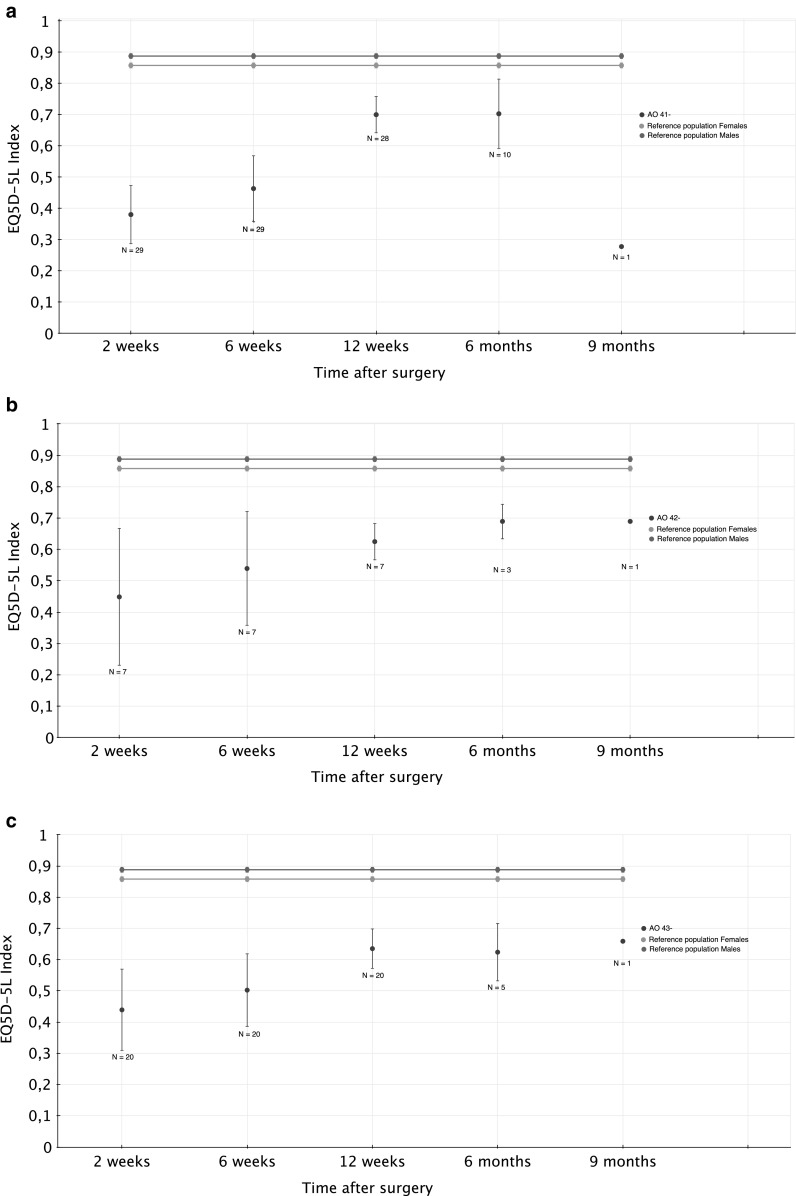
The objective of this prospective study was to evaluate the patient-reported outcomes for patients with complex tibial fractures treated with a ring fixator. The secondary aim was to analyse the variables affecting patient-reported outcomes and time to union. Fifty-six patients participated in the study. The mean age at the time of fracture was 56.5 years (range 30-86). All fractures united during the study period. The ring fixator was removed at an average of 25.3 weeks (range 9-53). During treatment, the function and QOL increased with time. Compared with an established reference population, the study population showed a significantly worse EQ5D-5L index both throughout the treatment period and 8 weeks after frame removal. 18% of patients reported mild to severe depression 8 weeks after frame removal.
这项前瞻性研究的目的是评估采用环形固定器治疗的复杂胫骨骨折患者的患者报告结局。次要目的是分析影响患者报告结局和骨折愈合时间的变量。56名患者参与了该研究。骨折时的平均年龄为56.5岁(范围30 - 86岁)。在研究期间所有骨折均愈合。环形固定器平均在25.3周(范围9 - 53周)时拆除。治疗期间,功能和生活质量随时间提高。与既定的参考人群相比,研究人群在整个治疗期间以及拆除固定架后8周的EQ5D - 5L指数均显著更差。18%的患者在拆除固定架后8周报告有轻度至重度抑郁。