Canetti Daphna, Snider Keren L G, Pedersen Anne, Hall Brian J
University of Haifa, Israel.
Curtin University and Murdoch University, Australia.
J Refug Stud. 2016 Dec;29(4):583-606. doi: 10.1093/jrs/few012. Epub 2016 Jul 23.
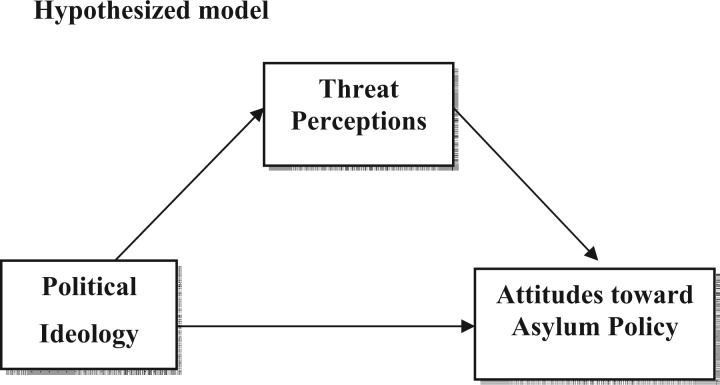
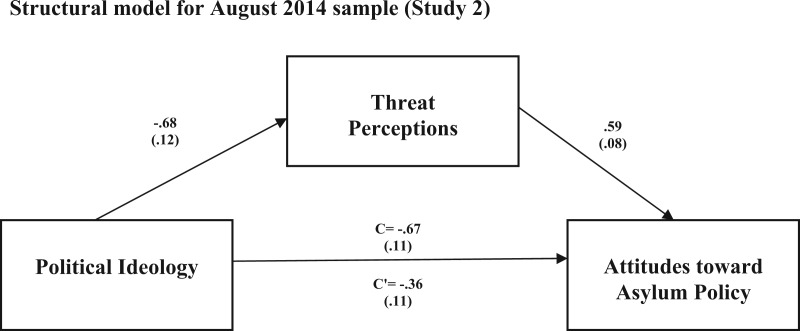
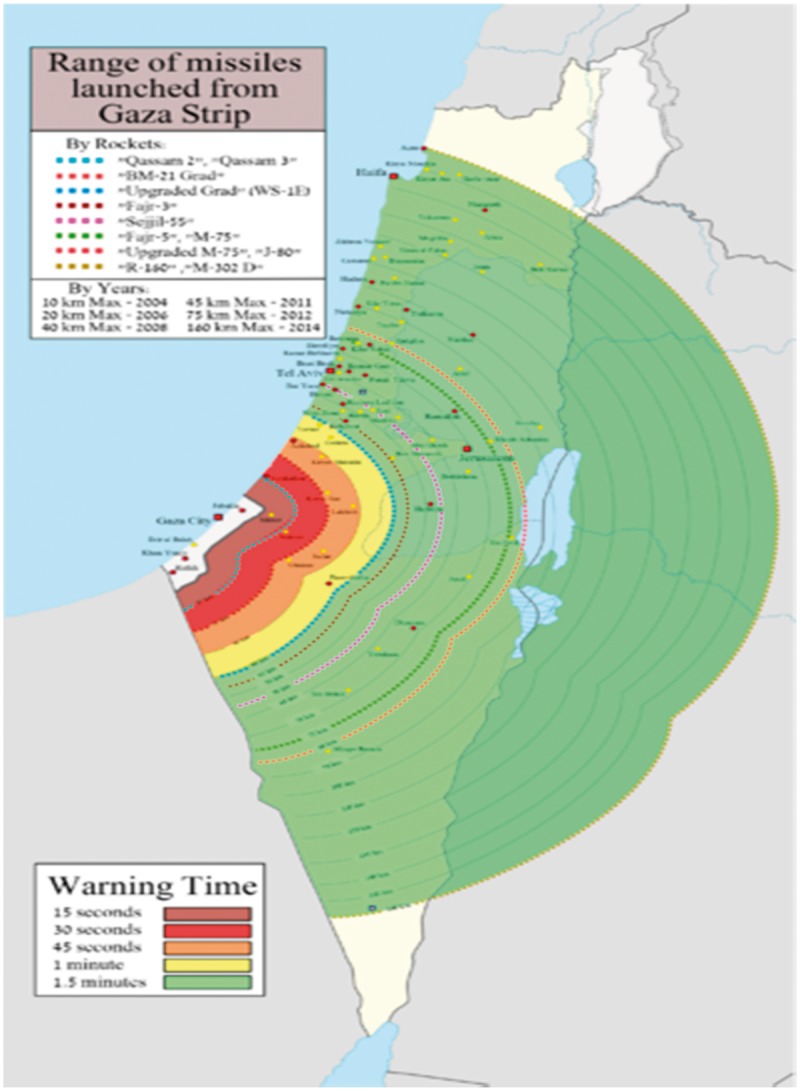
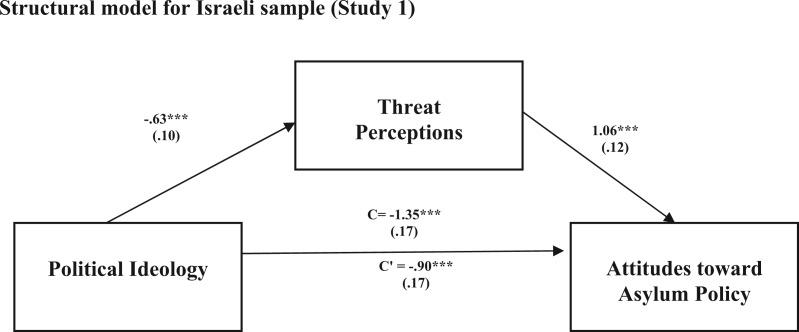
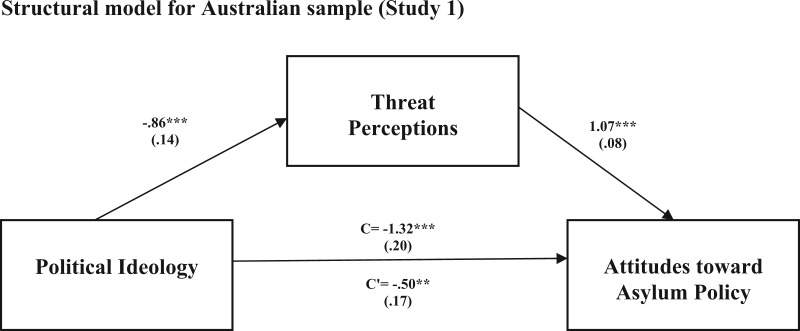
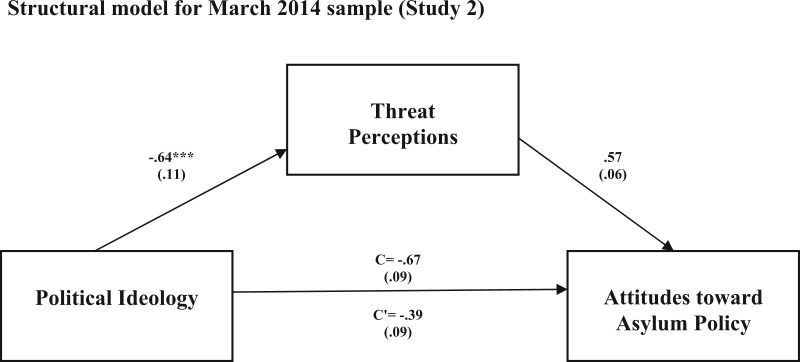
Can different political ideologies explain policy preferences regarding asylum seekers? We focus on attitudes regarding governmental policy towards out-group members and suggest that perceptions of threat help to shape these policy attitudes. Study 1 compared public opinion regarding asylum policy in Israel ( = 137) and Australia ( = 138), two countries with restrictive asylum policies and who host a large number of asylum seekers; Study 2, a longitudinal study, was conducted during two different time periods in Israel-before and during the Gaza conflict. Results of both studies showed that threat perceptions of out-group members drive the relationship between conservative political ideologies and support for exclusionary asylum policies among citizens. Perceptions of threat held by members of the host country (the in-group) towards asylum seekers (the out-group) may influence policy formation. The effect of these out-groups threats needs to be critically weighed when considering Israeli and Australian policies towards asylum seekers.
不同的政治意识形态能否解释有关寻求庇护者的政策偏好?我们关注对政府对待外群体成员政策的态度,并认为对威胁的认知有助于塑造这些政策态度。研究1比较了以色列(n = 137)和澳大利亚(n = 138)两国公众对庇护政策的看法,这两个国家都实行限制性庇护政策且接收大量寻求庇护者;研究2是一项纵向研究,在以色列加沙冲突之前和冲突期间的两个不同时间段进行。两项研究的结果均表明,对外群体成员的威胁认知推动了保守政治意识形态与公民对排他性庇护政策支持之间的关系。东道国(内群体)成员对寻求庇护者(外群体)的威胁认知可能会影响政策形成。在考虑以色列和澳大利亚对寻求庇护者的政策时,需要审慎权衡这些外群体威胁的影响。