Federal University of Minas Gerais (UFMG-ICB), Av. Antônio Carlos, 6627, CP 486, Belo Horizonte, MG, 31270-901, Brazil.
Micalis Institute, INRA, AgroParisTech, Université Paris-Saclay, 78350, Jouy-En-Josas, France.
Microb Cell Fact. 2017 Feb 13;16(1):27. doi: 10.1186/s12934-017-0624-x.
Mucositis is one of the most relevant gastrointestinal inflammatory conditions in humans, generated by the use of chemotherapy drugs, such as 5-fluoracil (5-FU). 5-FU-induced mucositis affects 80% of patients undergoing oncological treatment causing mucosal gut dysfunctions and great discomfort. As current therapy drugs presents limitations in alleviating mucositis symptoms, alternative strategies are being pursued. Recent studies have shown that the antimicrobial pancreatitis-associated protein (PAP) has a protective role in intestinal inflammatory processes. Indeed, it was demonstrated that a recombinant strain of Lactococcus lactis expressing human PAP (LL-PAP) could prevent and improve murine DNBS-induced colitis, an inflammatory bowel disease (IBD) that causes severe inflammation of the colon. Hence, in this study we sought to evaluate the protective effects of LL-PAP on 5-FU-induced experimental mucositis in BALB/c mice as a novel approach to treat the disease.
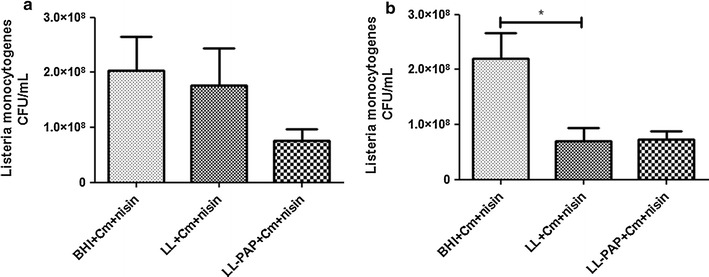
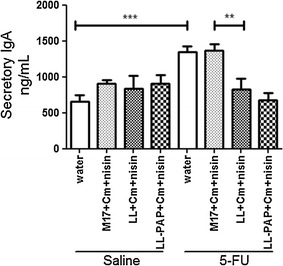
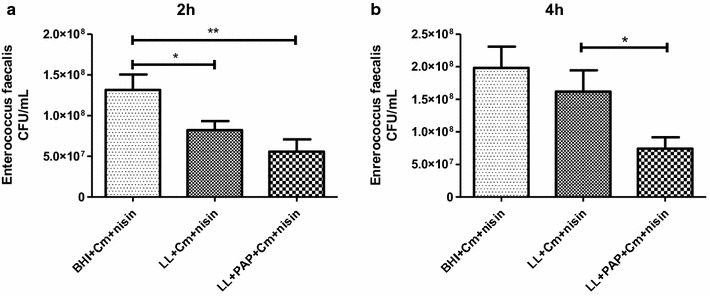
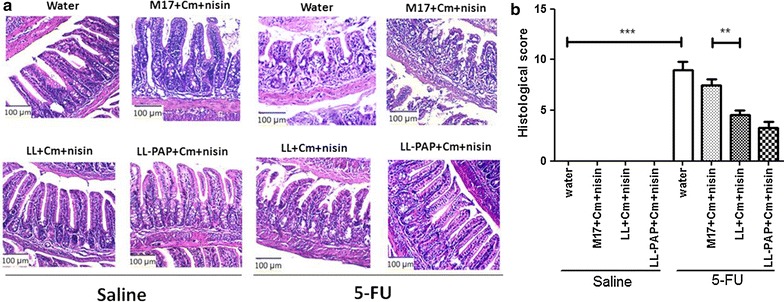
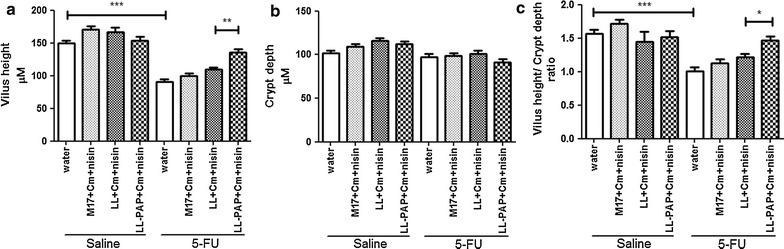
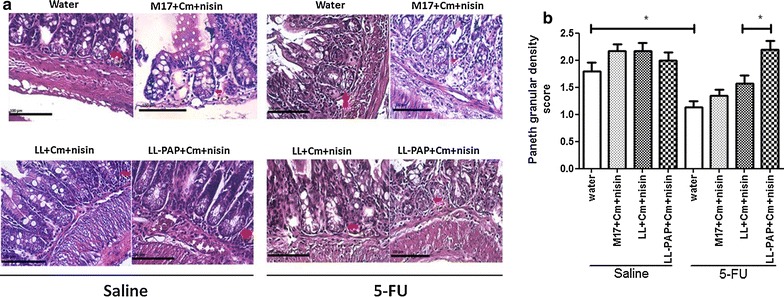
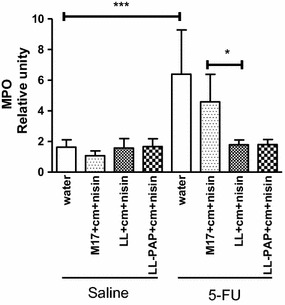
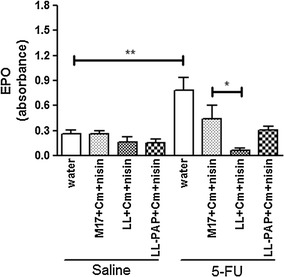
Our results show that non-recombinant L. lactis NZ9000 have antagonistic activity, in vitro, against the enteroinvasive gastrointestinal pathogen L. monocytogenes and confirmed PAP inhibitory effect against Opportunistic E. faecalis. Moreover, L. lactis was able to prevent histological damage, reduce neutrophil and eosinophil infiltration and secretory Immunoglobulin-A in mice injected with 5-FU. Recombinant lactococci carrying antimicrobial PAP did not improve those markers of inflammation, although its expression was associated with villous architecture preservation and increased secretory granules density inside Paneth cells in response to 5-FU inflammation.
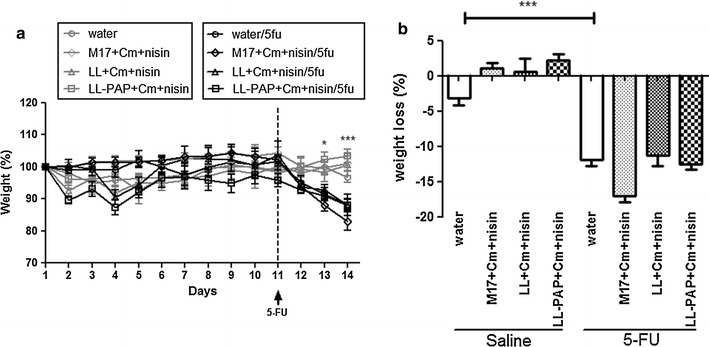
We have demonstrated for the first time that L. lactis NZ9000 by itself, is able to prevent 5-FU-induced intestinal inflammation in BALB/c mice. Moreover, PAP delivered by recombinant L. lactis strain showed additional protective effects in mice epithelium, revealing to be a promising strategy to treat intestinal mucositis.
黏膜炎是人类最相关的胃肠道炎症之一,由化疗药物如 5-氟尿嘧啶(5-FU)引起。5-FU 诱导的黏膜炎影响 80%接受肿瘤治疗的患者,导致黏膜肠道功能障碍和极大不适。由于目前的治疗药物在缓解黏膜炎症状方面存在局限性,因此正在寻求替代策略。最近的研究表明,抗菌性胰腺炎相关蛋白(PAP)在肠道炎症过程中具有保护作用。事实上,已经证明表达人 PAP 的重组乳球菌 Lactococcus lactis(LL-PAP)菌株可以预防和改善小鼠二硝基苯磺酸(DNBS)诱导的结肠炎,这是一种炎症性肠病(IBD),可导致结肠严重炎症。因此,在这项研究中,我们试图评估 LL-PAP 对 BALB/c 小鼠 5-FU 诱导的实验性黏膜炎的保护作用,作为治疗该疾病的新方法。
我们的结果表明,非重组乳球菌 NZ9000 在体外对肠侵袭性胃肠道病原体单核细胞增生李斯特菌具有拮抗活性,并证实了 PAP 对机会性粪肠球菌的抑制作用。此外,L. lactis 能够预防组织学损伤,减少注射 5-FU 的小鼠中性粒细胞和嗜酸性粒细胞浸润和分泌免疫球蛋白 A。携带抗菌性 PAP 的重组乳球菌虽然与绒毛结构的保存和对 5-FU 炎症的潘氏细胞分泌颗粒密度增加相关,但并没有改善这些炎症标志物。
我们首次证明,L. lactis NZ9000 本身能够预防 BALB/c 小鼠的 5-FU 诱导的肠道炎症。此外,由重组乳球菌菌株递送的 PAP 在小鼠上皮中显示出额外的保护作用,这揭示了一种治疗肠道黏膜炎的有前途的策略。