Division of Cell Signalling and Immunology, School of Life Sciences, University of Dundee, Dundee DD1 5EH, UK.
Division of Biomedical and Life Sciences, Faculty of Health and Medicine, Lancaster University, Lancaster LA1 4YQ, UK.
Nat Commun. 2017 Feb 13;8:14392. doi: 10.1038/ncomms14392.
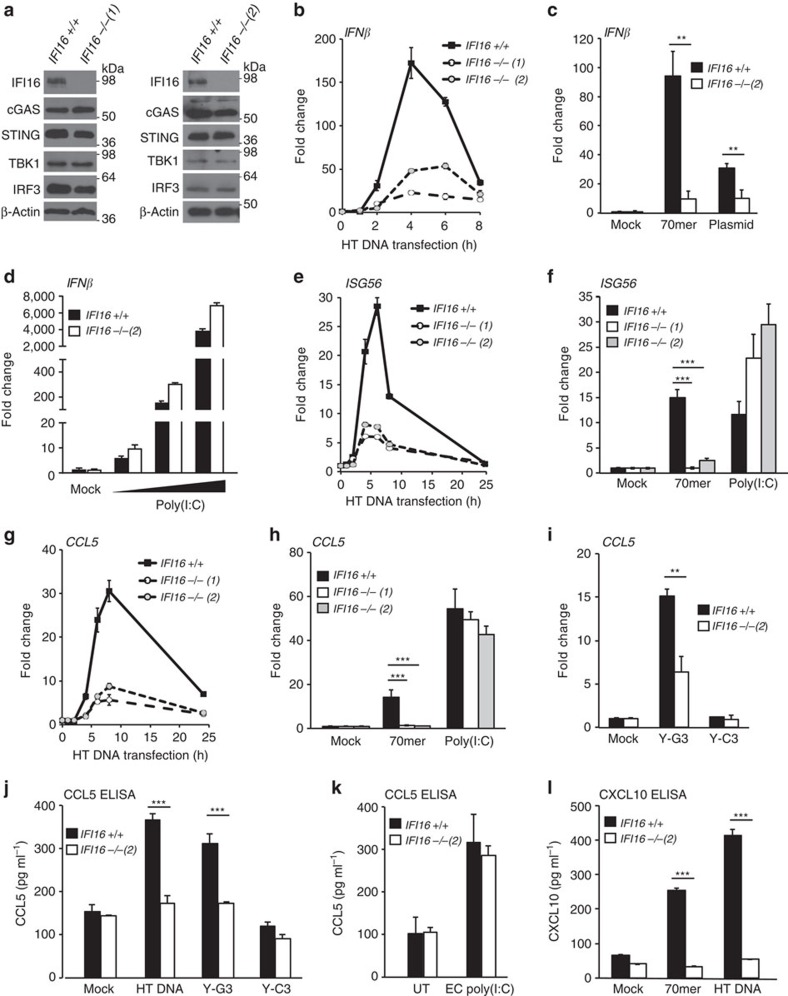
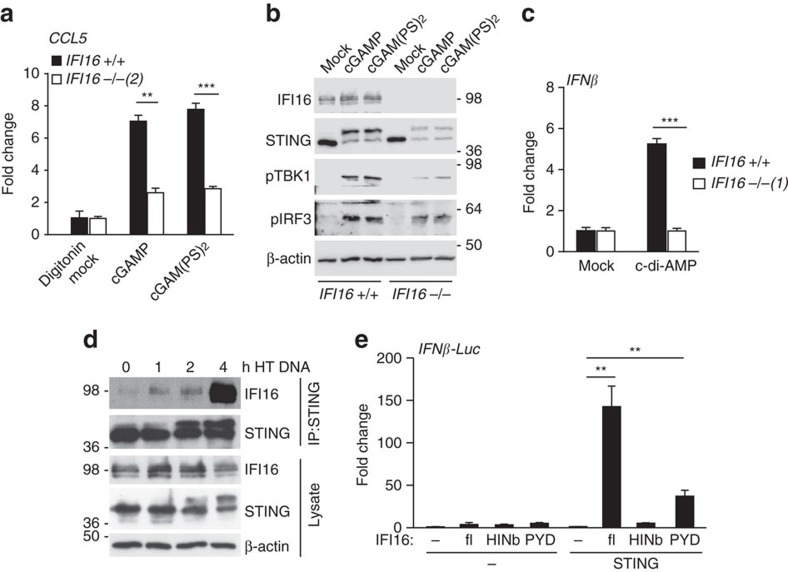
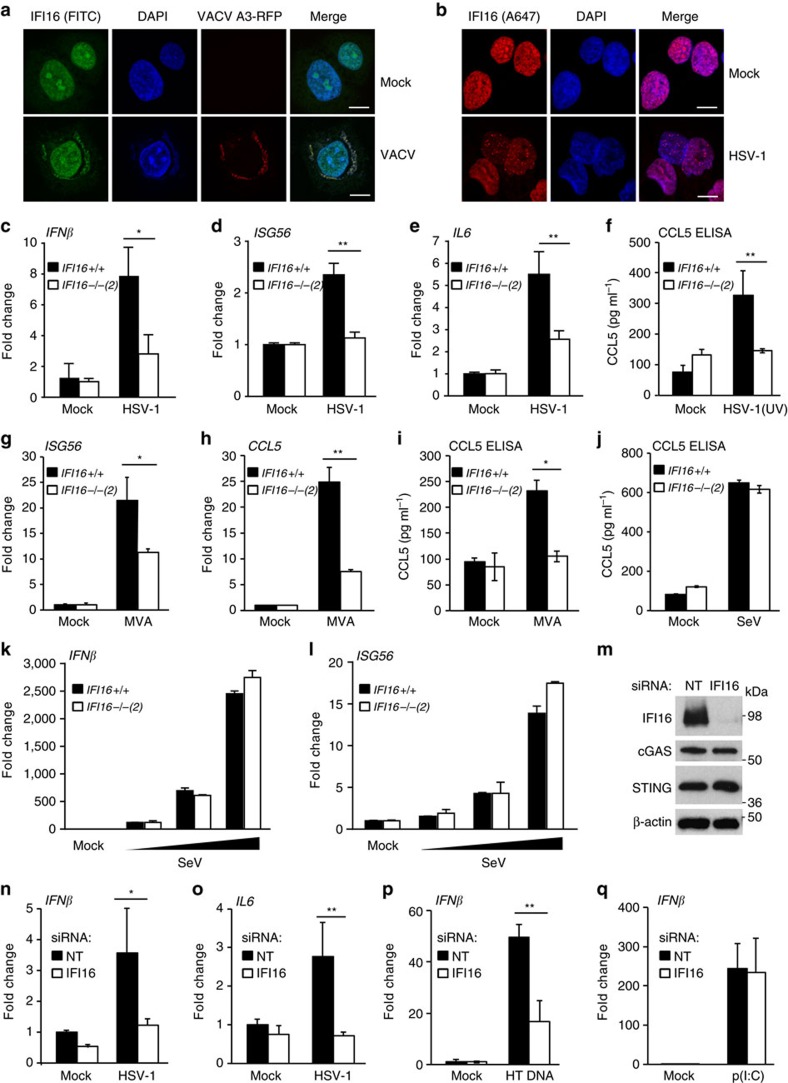
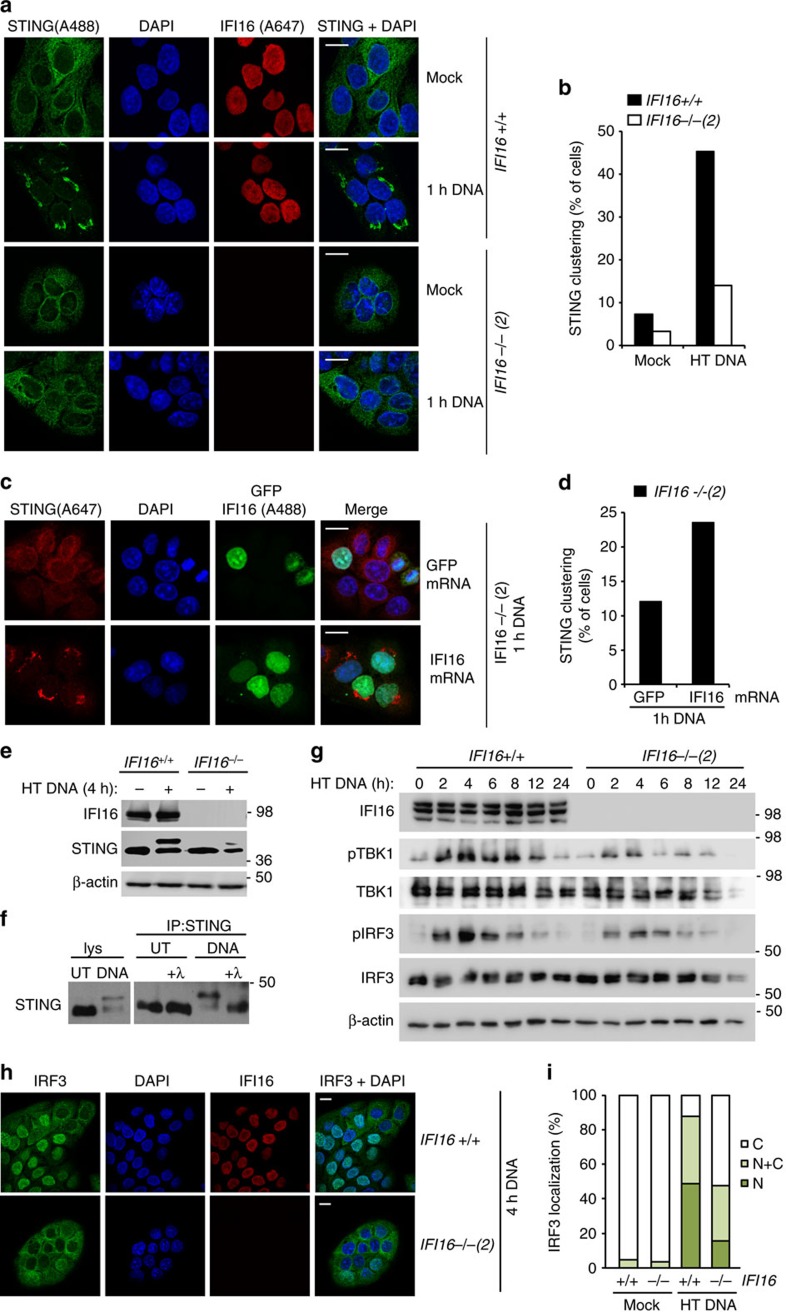
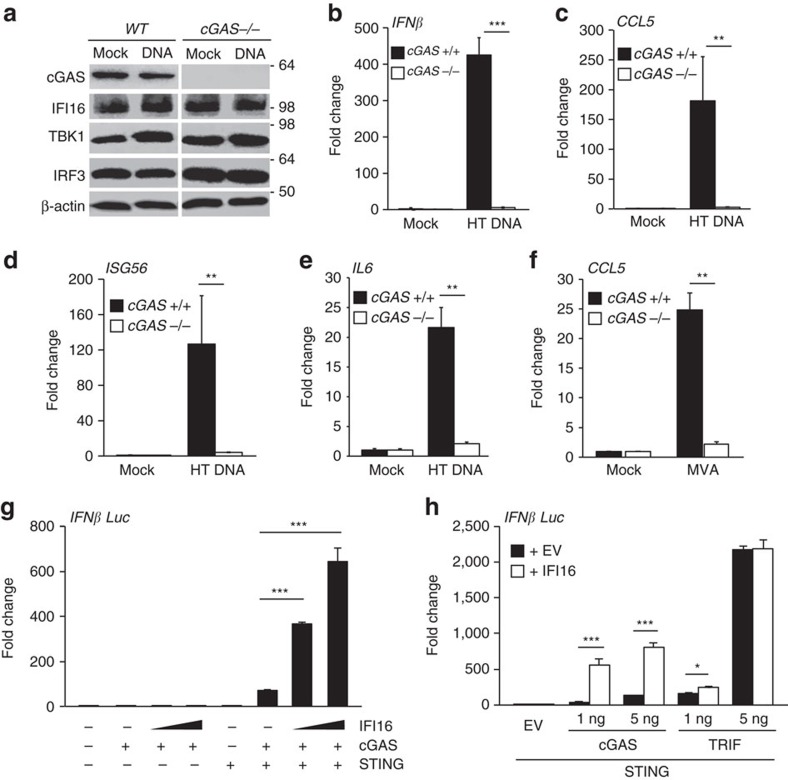
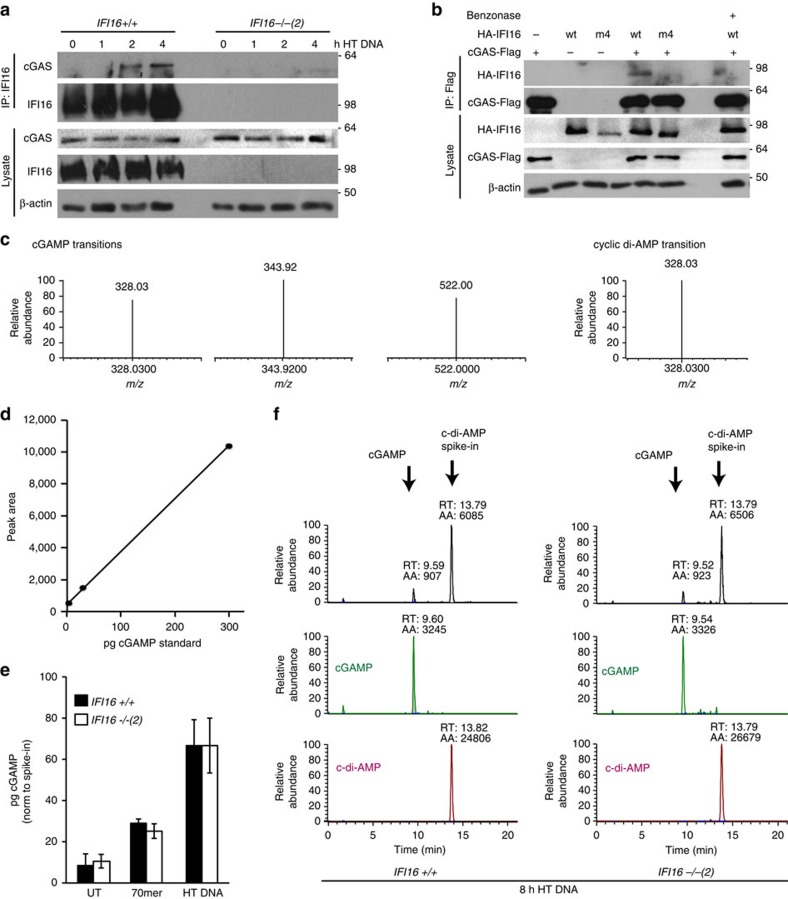
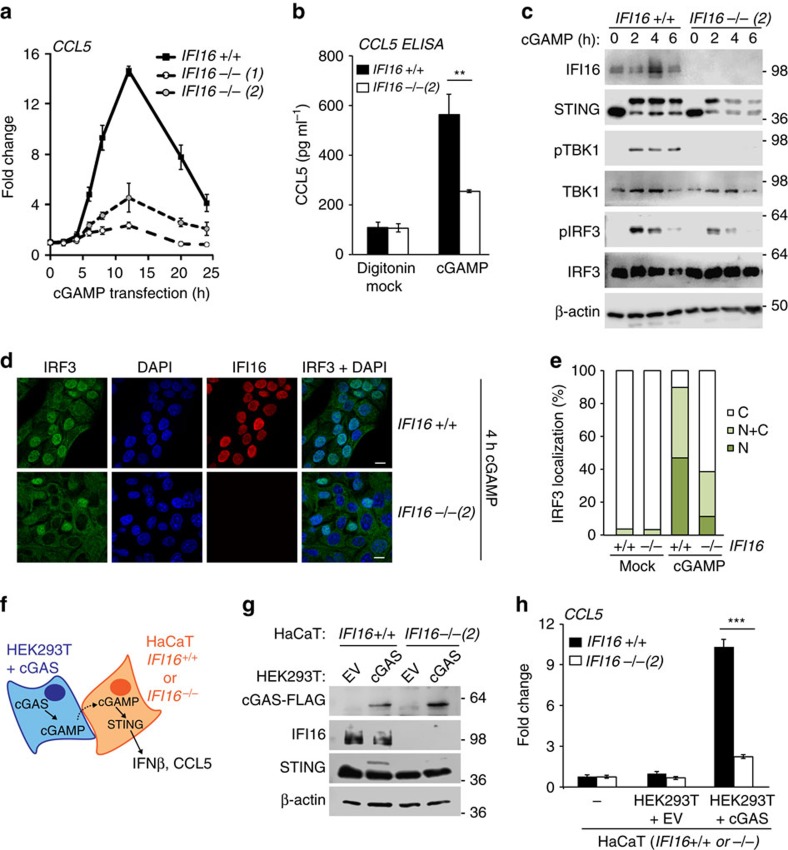
Many human cells can sense the presence of exogenous DNA during infection though the cytosolic DNA receptor cyclic GMP-AMP synthase (cGAS), which produces the second messenger cyclic GMP-AMP (cGAMP). Other putative DNA receptors have been described, but whether their functions are redundant, tissue-specific or integrated in the cGAS-cGAMP pathway is unclear. Here we show that interferon-γ inducible protein 16 (IFI16) cooperates with cGAS during DNA sensing in human keratinocytes, as both cGAS and IFI16 are required for the full activation of an innate immune response to exogenous DNA and DNA viruses. IFI16 is also required for the cGAMP-induced activation of STING, and interacts with STING to promote STING phosphorylation and translocation. We propose that the two DNA sensors IFI16 and cGAS cooperate to prevent the spurious activation of the type I interferon response.
许多人类细胞在感染过程中可以感知外源 DNA 的存在,这要归功于细胞质 DNA 受体环鸟苷酸-腺苷酸合酶 (cGAS),它产生第二信使环鸟苷酸-腺苷酸 (cGAMP)。已经描述了其他假定的 DNA 受体,但它们的功能是否冗余、组织特异性或整合到 cGAS-cGAMP 途径中尚不清楚。在这里,我们表明干扰素-γ诱导蛋白 16 (IFI16) 在人类角质形成细胞的 DNA 感应过程中与 cGAS 合作,因为 cGAS 和 IFI16 都需要对外源 DNA 和 DNA 病毒的先天免疫反应进行完全激活。IFI16 也需要 cGAMP 诱导的 STING 激活,并且与 STING 相互作用以促进 STING 磷酸化和易位。我们提出,两种 DNA 传感器 IFI16 和 cGAS 合作以防止 I 型干扰素反应的虚假激活。