Meharry Medical College, Center for AIDS Health Disparities Research, Department of Microbiology and Immunology, Nashville, TN, 37208, USA.
Department of Internal Medicine, 1005 D. B. Todd Blvd, Nashville, TN, 37208, USA.
Sci Rep. 2019 Oct 29;9(1):15485. doi: 10.1038/s41598-019-51998-w.
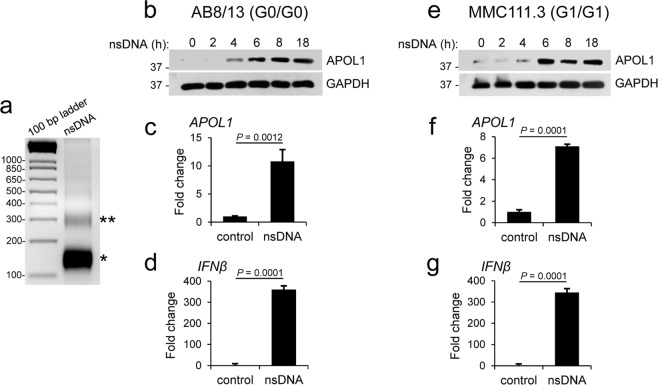
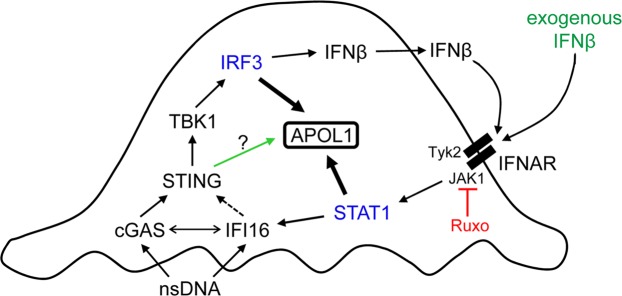
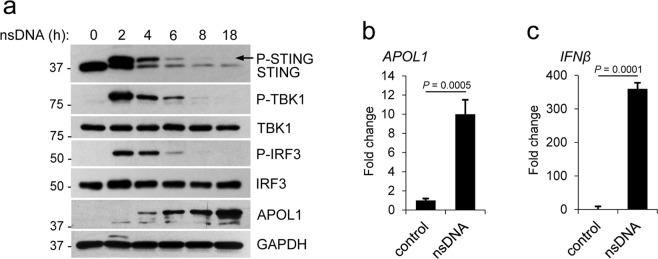
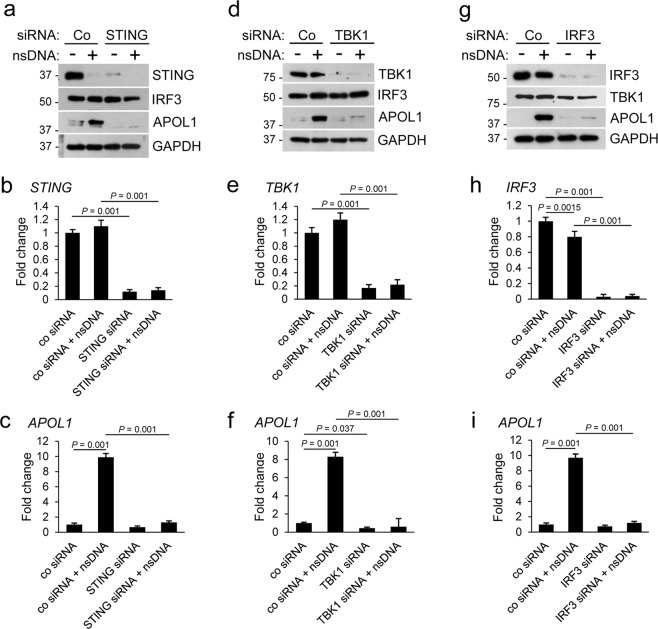
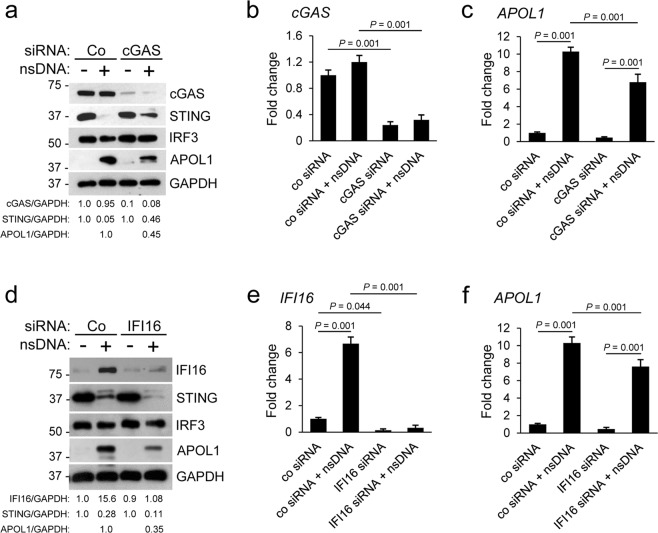
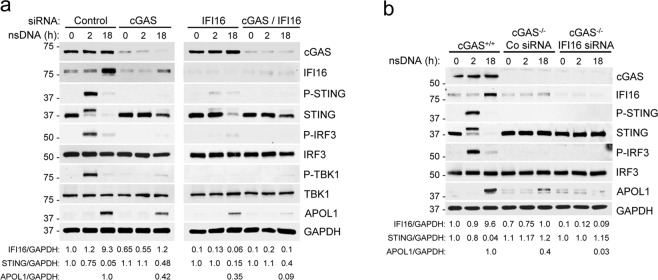
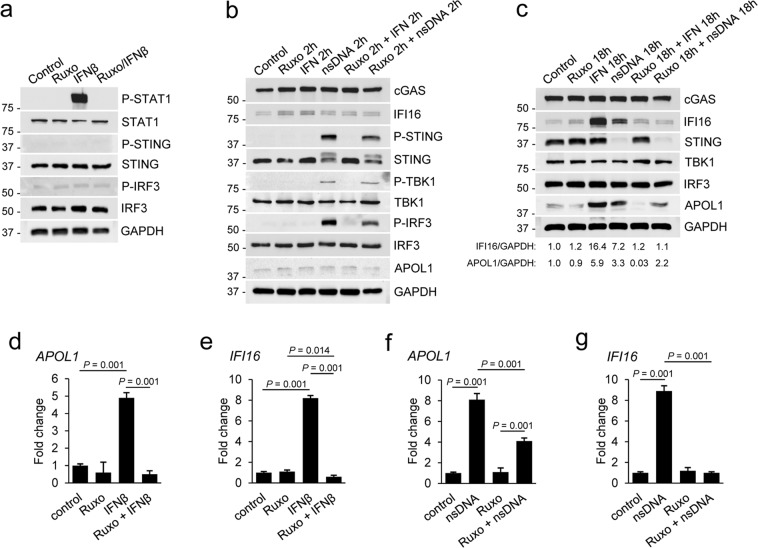
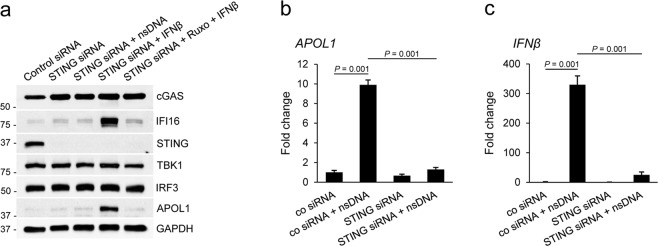
APOL1 alleles G1 and G2 are associated with faster progression to lupus nephritis (LN)-associated end-stage renal disease (LN-ESRD) in African Americans. Increased levels of type I interferons (IFNs) and nucleosome-associated double-stranded DNA (dsDNA) fragments (nsDNA) are the hallmark of this disease. Here, we identify cyclic GMP-AMP synthase (cGAS) and interferon-inducible protein 16 (IFI16) as the major DNA sensors in human immortalized podocytes. We also show that nsDNA triggers the expression of APOL1 and IFNβ via IRF3 activation through the cGAS/IFI16-STING pathway. We demonstrate that maximal APOL1 expression also requires the activation of type I IFN receptor (IFNAR) and STAT1 signaling triggered by IFNβ produced in response to nsDNA, or by exogenous IFNβ. Finally, we show that STAT1 activation is sufficient to upregulate IFI16, subsequently boosting APOL1 expression through a positive feedback mechanism. Collectively, we find that nsDNA-induced APOL1 expression is mediated by both IFNβ-independent and dependent signaling pathways triggered by activation of the cGAS/IFI16-STING pathway. We propose that simultaneous inhibition of STING and the IFNAR-STAT1 pathway may attenuate IFI16 expression, reduce IFI16-cGAS cross-talk, and prevent excessive APOL1 expression in human podocytes in response to nsDNA.
APOL1 等位基因 G1 和 G2 与非裔美国人狼疮肾炎(LN)相关终末期肾病(LN-ESRD)的快速进展相关。I 型干扰素(IFN)和核小体相关双链 DNA(dsDNA)片段(nsDNA)水平升高是这种疾病的标志。在这里,我们确定环鸟苷酸-腺苷酸合酶(cGAS)和干扰素诱导蛋白 16(IFI16)是人类永生化足细胞中的主要 DNA 传感器。我们还表明,nsDNA 通过 cGAS/IFI16-STING 途径激活 IRF3 触发 APOL1 和 IFNβ 的表达。我们证明,APOL1 的最大表达还需要通过对 nsDNA 或外源性 IFNβ 产生的 IFNβ 触发的 I 型 IFN 受体(IFNAR)和 STAT1 信号的激活。最后,我们表明 STAT1 激活足以上调 IFI16,随后通过正反馈机制增强 APOL1 的表达。总的来说,我们发现 nsDNA 诱导的 APOL1 表达是由 cGAS/IFI16-STING 途径激活触发的 IFNβ 非依赖性和依赖性信号通路介导的。我们提出同时抑制 STING 和 IFNAR-STAT1 途径可能会减弱 IFI16 的表达,减少 IFI16-cGAS 串扰,并防止人足细胞中针对 nsDNA 的 APOL1 过度表达。