Beqiri Arian, Price Anthony N, Padormo Francesco, Hajnal Joseph V, Malik Shaihan J
Division of Imaging Sciences and Biomedical Engineering, King's College London, London, UK.
Centre for the Developing Brain, King's College London, London, UK.
NMR Biomed. 2017 Jun;30(6). doi: 10.1002/nbm.3701. Epub 2017 Feb 14.
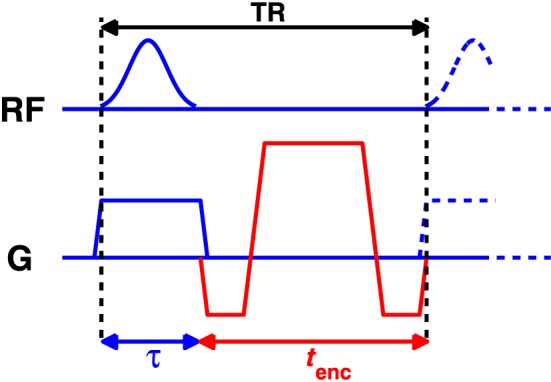
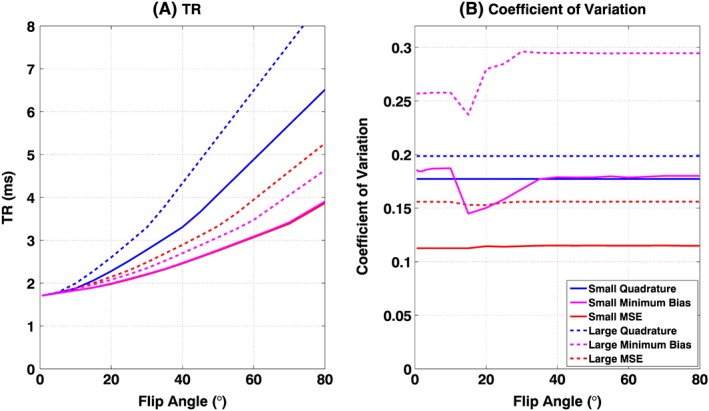
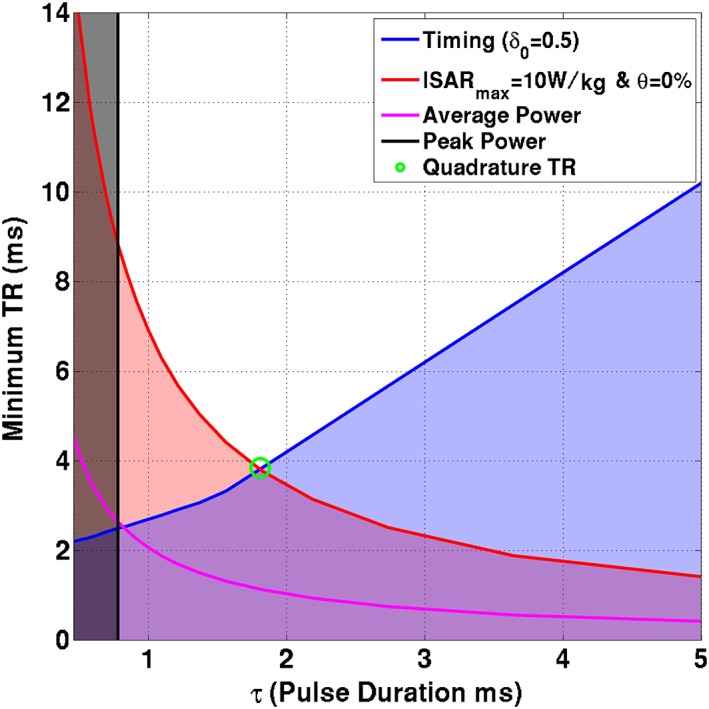
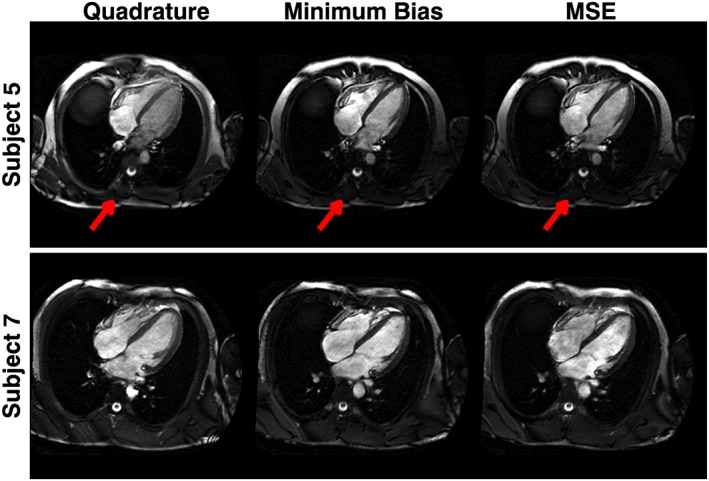
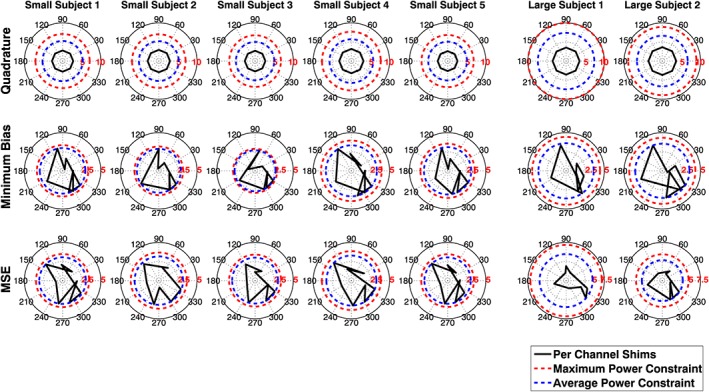
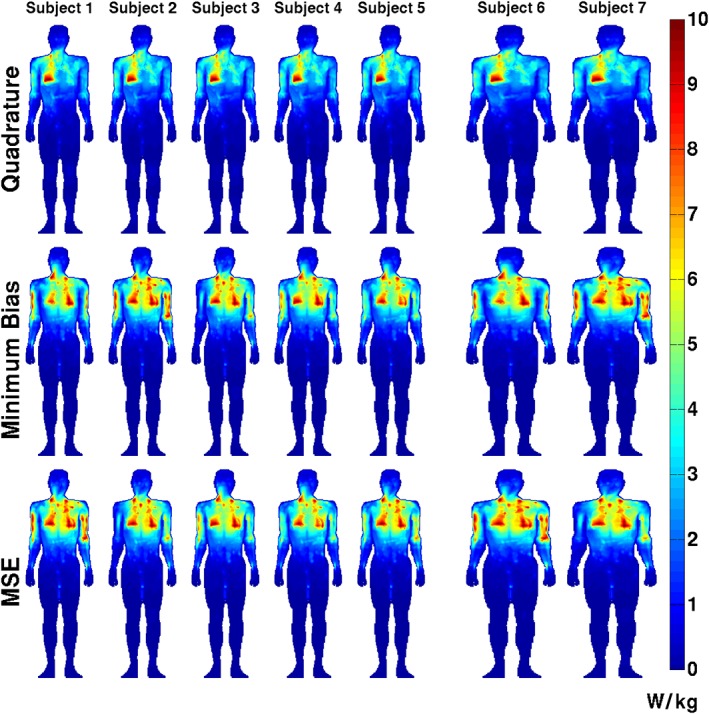
Cardiac magnetic resonance imaging (MRI) at high field presents challenges because of the high specific absorption rate and significant transmit field (B ) inhomogeneities. Parallel transmission MRI offers the ability to correct for both issues at the level of individual radiofrequency (RF) pulses, but must operate within strict hardware and safety constraints. The constraints are themselves affected by sequence parameters, such as the RF pulse duration and TR, meaning that an overall optimal operating point exists for a given sequence. This work seeks to obtain optimal performance by performing a 'sequence-level' optimization in which pulse sequence parameters are included as part of an RF shimming calculation. The method is applied to balanced steady-state free precession cardiac MRI with the objective of minimizing TR, hence reducing the imaging duration. Results are demonstrated using an eight-channel parallel transmit system operating at 3 T, with an in vivo study carried out on seven male subjects of varying body mass index (BMI). Compared with single-channel operation, a mean-squared-error shimming approach leads to reduced imaging durations of 32 ± 3% with simultaneous improvement in flip angle homogeneity of 32 ± 8% within the myocardium.
高场强心脏磁共振成像(MRI)存在挑战,这是由于高比吸收率以及显著的发射场(B)不均匀性。并行发射MRI能够在单个射频(RF)脉冲层面校正这两个问题,但必须在严格的硬件和安全限制条件下运行。这些限制本身会受到序列参数的影响,比如RF脉冲持续时间和TR,这意味着对于给定序列存在一个整体最优工作点。这项工作旨在通过执行“序列级”优化来获得最佳性能,其中脉冲序列参数被纳入RF匀场计算的一部分。该方法应用于平衡稳态自由进动心脏MRI,目标是最小化TR,从而缩短成像时间。使用一个在3T运行的八通道并行发射系统展示了结果,并对七名体重指数(BMI)各异的男性受试者进行了体内研究。与单通道操作相比,均方误差匀场方法使成像时间缩短了32±3%,同时心肌内翻转角均匀性提高了32±8%。