Ghimire Saruna, Baral Binaya Kumar, Callahan Karen
Department of Environmental and Occupational Health, School of Community Health Sciences, University of Nevada, Las Vegas, Nevada, United States of America.
Department of Biochemistry, Nepal Medical College and Teaching Hospital, Kathmandu, Nepal.
PLoS One. 2017 Feb 14;12(2):e0172052. doi: 10.1371/journal.pone.0172052. eCollection 2017.
Demographic transition in Nepal, like in many developing countries, has resulted in a burgeoning elderly population whose health status is not currently monitored. One pillar of health is adequate nutrition. Yet, little is known about the nutritional health status of the elderly in Nepal. The financial, material, and personnel limitations in Nepal's health delivery services necessitate health screening instruments that require minimal clinical staff and resources. To our knowledge, no such nutritional assessment tool has been validated in Nepal. Therefore, our aims are two-fold: To assess the nutritional status of the elderly population in one typical Nepali village, Okharpauwa, in Nuwakot District, Nepal; and concurrently, to validate the Mini Nutritional Assessment (MNA) tool.
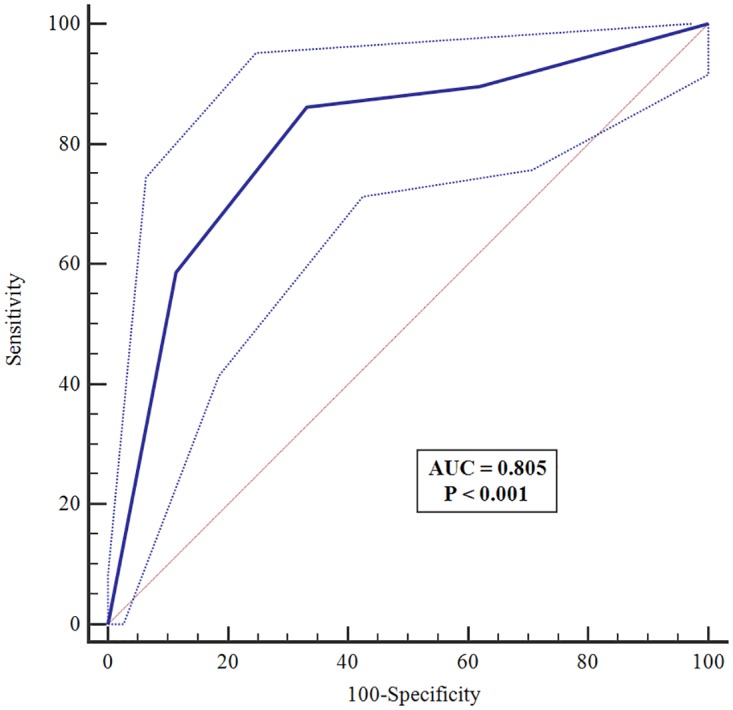
A cross-sectional field study was conducted with a sample of 242 elderly people in Okharpauwa, Nepal to obtain prevalence of malnutrition. Differences in demographic and lifestyle factors between these who were malnourished, those at risk of malnourishment, and those who had adequate nutritional status were analyzed. The MNA tool was evaluated using receiver operating characteristic (ROC) curve analysis; sensitivity, specificity, and diagnostic accuracy were calculated.
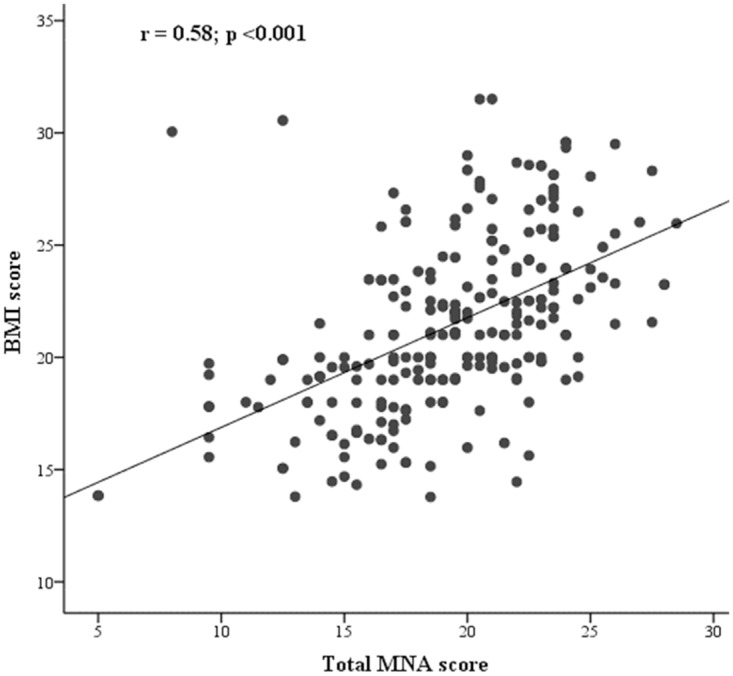
111 males and 131 females, with a mean age of 69.8±7.4 years, participated in this study. The mean BMI of the participants was 21.4±3.9 kg/m2; the mean MNA score was 19.3±4.2. BMI was significantly correlated with the total MNA score (r = 0.58; p<0.001). The diagnostic accuracy, sensitivity and specificity of MNA were 81%, 86% and 67% respectively. Of the 242 elderly sampled, 24% were malnourished and 65% were at risk of malnutrition. Malnutrition was more prevalent among females (29%) than males (18%), and most prevalent among the marginalized Dalit ethnic group (40%). Elderly persons who were married and literate had better nutritional health than their counterparts.
The MNA appears to be a valid and sensitive tool for rapid nutritional screening of the elderly in Nepal. The prevalence of malnutrition was high among Nepalese elderly in the Okharpauwa VDC, which requires urgent health monitoring and management attention.
与许多发展中国家一样,尼泊尔的人口转变导致老年人口迅速增长,而目前其健康状况未得到监测。健康的一个支柱是充足的营养。然而,对于尼泊尔老年人的营养健康状况知之甚少。尼泊尔卫生服务在资金、物资和人员方面的限制,使得需要最少临床工作人员和资源的健康筛查工具成为必要。据我们所知,尚无此类营养评估工具在尼泊尔得到验证。因此,我们有两个目标:评估尼泊尔努瓦科特地区一个典型尼泊尔村庄奥卡尔保瓦的老年人口的营养状况;同时,验证简易营养评估(MNA)工具。
在尼泊尔奥卡尔保瓦对242名老年人进行了横断面现场研究,以获取营养不良的患病率。分析了营养不良者、有营养不良风险者和营养状况良好者在人口统计学和生活方式因素方面的差异。使用受试者工作特征(ROC)曲线分析对MNA工具进行评估;计算敏感性、特异性和诊断准确性。
111名男性和131名女性参与了本研究,平均年龄为69.8±7.4岁。参与者的平均体重指数为21.4±3.9kg/m²;平均MNA评分为19.3±4.2。体重指数与MNA总分显著相关(r = 0.58;p<0.001)。MNA的诊断准确性、敏感性和特异性分别为81%、86%和67%。在抽样的242名老年人中,24%营养不良,65%有营养不良风险。女性(29%)的营养不良比男性(18%)更普遍,在边缘化的达利特族裔中最为普遍(40%)。已婚和识字的老年人营养健康状况优于同龄人。
MNA似乎是尼泊尔老年人快速营养筛查的有效且敏感的工具。奥卡尔保瓦乡村发展委员会中尼泊尔老年人的营养不良患病率很高,这需要紧急的健康监测和管理关注。