Department of Environmental Microbiology, Eawag, Überlandstrasse 133, 8600, Dübendorf, Switzerland.
Department of Environmental Systems Science, ETH Zürich, Zürich, Switzerland.
BMC Evol Biol. 2017 Feb 14;17(1):52. doi: 10.1186/s12862-017-0906-2.
The production of toxic metabolites has shaped the spatial and temporal arrangement of metabolic processes within microbial cells. While diverse solutions to mitigate metabolite toxicity have evolved, less is known about how evolution itself is affected by metabolite toxicity. We hypothesized that the pace of molecular evolution should increase as metabolite toxicity increases. At least two mechanisms could cause this. First, metabolite toxicity could increase the mutation rate. Second, metabolite toxicity could increase the number of available mutations with large beneficial effects that selection could act upon (e.g., mutations that provide tolerance to toxicity), which consequently would increase the rate at which those mutations increase in frequency.
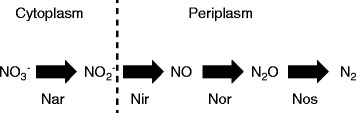
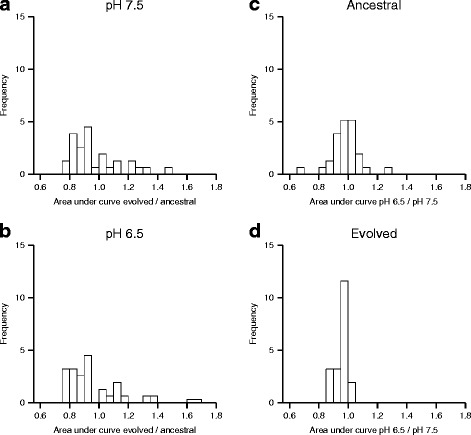
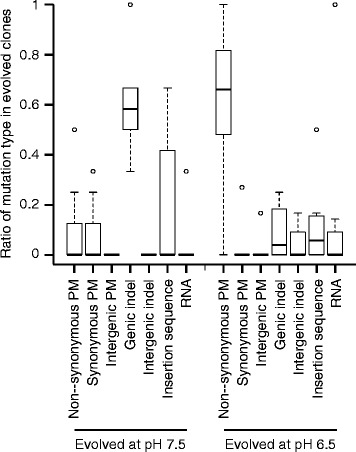
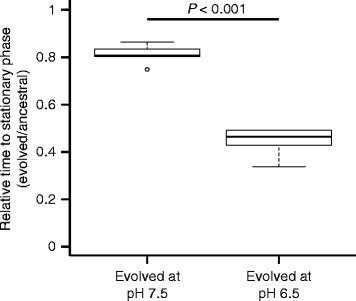
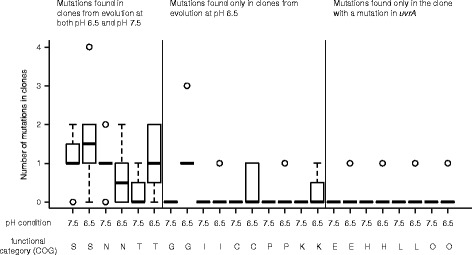
We tested this hypothesis by experimentally evolving the bacterium Pseudomonas stutzeri under denitrifying conditions. The metabolite nitrite accumulates during denitrification and has pH-dependent toxic effects, which allowed us to evolve P. stutzeri at different magnitudes of nitrite toxicity. We demonstrate that increased nitrite toxicity results in an increased pace of molecular evolution. We further demonstrate that this increase is generally due to an increased number of available mutations with large beneficial effects and not to an increased mutation rate.
Our results demonstrate that the production of toxic metabolites can have important impacts on the evolutionary processes of microbial cells. Given the ubiquity of toxic metabolites, they could also have implications for understanding the evolutionary histories of biological organisms.
有毒代谢物的产生塑造了微生物细胞内代谢过程的时空排列。虽然已经进化出了多种减轻代谢物毒性的方法,但对于代谢物毒性如何影响进化本身知之甚少。我们假设,随着代谢物毒性的增加,分子进化的速度应该会加快。至少有两种机制可以导致这种情况。首先,代谢物毒性可能会增加突变率。其次,代谢物毒性可能会增加具有大有益效应的可用突变数量,选择可以对其起作用(例如,提供对毒性的耐受性的突变),这将增加那些突变增加频率的速度。
我们通过在反硝化条件下对细菌恶臭假单胞菌进行实验进化来检验这一假设。在反硝化过程中,亚硝酸盐积累,具有 pH 依赖性的毒性作用,这使我们能够在不同程度的亚硝酸盐毒性下进化恶臭假单胞菌。我们证明,增加的亚硝酸盐毒性导致分子进化的速度加快。我们进一步证明,这种增加通常是由于具有大有益效应的可用突变数量增加,而不是突变率增加所致。
我们的结果表明,有毒代谢物的产生可能对微生物细胞的进化过程产生重要影响。鉴于有毒代谢物的普遍性,它们也可能对理解生物有机体的进化历史具有意义。