Center for iPS Cell Research and Application (CiRA), Kyoto University, Kyoto, 606-8507, Japan.
Department of Clinical Neuroscience, Institute of Biomedical Sciences, Tokushima University Graduate School, Tokushima, 770-8503, Japan.
Mol Brain. 2017 Feb 15;10(1):7. doi: 10.1186/s13041-017-0286-y.
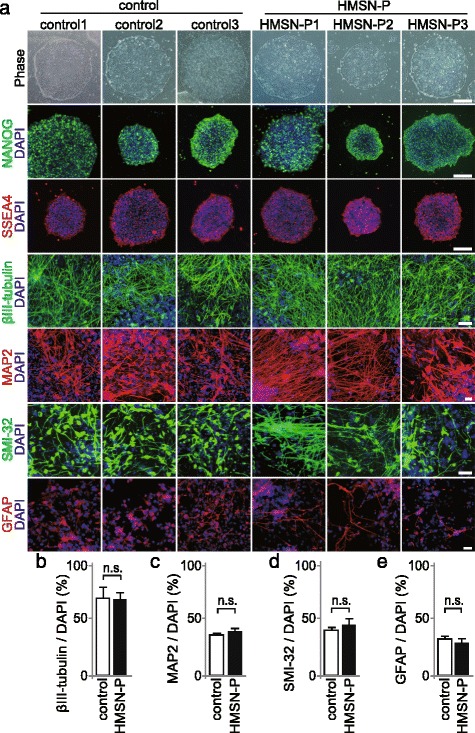
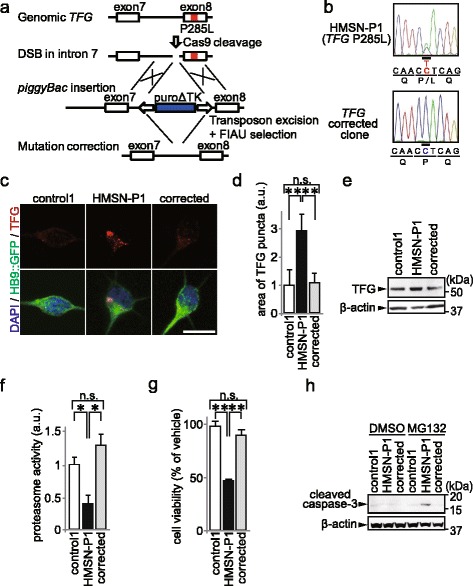
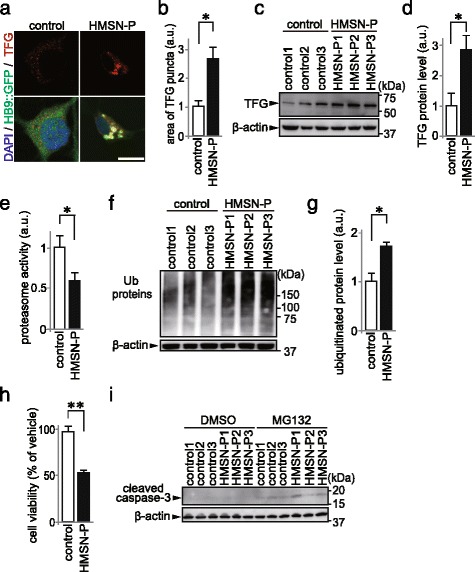
Hereditary motor and sensory neuropathy with proximal dominant involvement (HMSN-P) is caused by a heterozygous mutation (P285L) in Tropomyosin-receptor kinase Fused Gene (TFG), histopathologically characterized by progressive spinal motor neuron loss with TFG cytosolic aggregates. Although the TFG protein, found as a type of fusion oncoprotein, is known to facilitate vesicle transport from endoplasmic reticulum (ER) to Golgi apparatus at ER exit site, it is unclear how mutant TFG causes motor neuron degeneration. Here we generated induced pluripotent stem cells (iPSCs) from HMSN-P patients, and differentiated the iPSCs into neural cells with spinal motor neurons (iPS-MNs). We found that HMSN-P patient iPS-MNs exhibited ubiquitin proteasome system (UPS) impairment, and HMSN-P patient iPS-MNs were vulnerable to UPS inhibitory stress. Gene correction of the mutation in TFG using the CRISPR-Cas9 system reverted the cellular phenotypes of HMSN-P patient iPS-MNs. Collectively, these results suggest that our cellular model with defects in cellular integrity including UPS impairments may lead to identification of pathomechanisms and a therapeutic target for HMSN-P.
遗传性运动感觉神经病伴近端优势受累(HMSN-P)是由原肌球蛋白受体激酶融合基因(TFG)的杂合突变(P285L)引起的,组织病理学特征为进行性脊髓运动神经元丧失伴 TFG 胞质聚集。虽然 TFG 蛋白作为一种融合癌蛋白,已知可促进内质网(ER)到高尔基体的囊泡运输在 ER 出口位点,但突变 TFG 如何导致运动神经元变性尚不清楚。在这里,我们从 HMSN-P 患者中生成诱导多能干细胞(iPSCs),并将 iPSCs 分化为具有脊髓运动神经元的神经细胞(iPS-MNs)。我们发现 HMSN-P 患者的 iPS-MNs 表现出泛素蛋白酶体系统(UPS)受损,并且 HMSN-P 患者的 iPS-MNs 易受 UPS 抑制应激。使用 CRISPR-Cas9 系统对 TFG 中的突变进行基因纠正,使 HMSN-P 患者的 iPS-MNs 恢复了细胞表型。总的来说,这些结果表明,我们的细胞模型存在细胞完整性缺陷,包括 UPS 受损,这可能导致鉴定 HMSN-P 的发病机制和治疗靶点。