Johnson Sarah A, Spollen William G, Manshack Lindsey K, Bivens Nathan J, Givan Scott A, Rosenfeld Cheryl S
Bond Life Sciences Center, University of Missouri, Columbia, Missouri.
Biomedical Sciences, University of Missouri, Columbia, Missouri.
Physiol Rep. 2017 Feb;5(3). doi: 10.14814/phy2.13133.
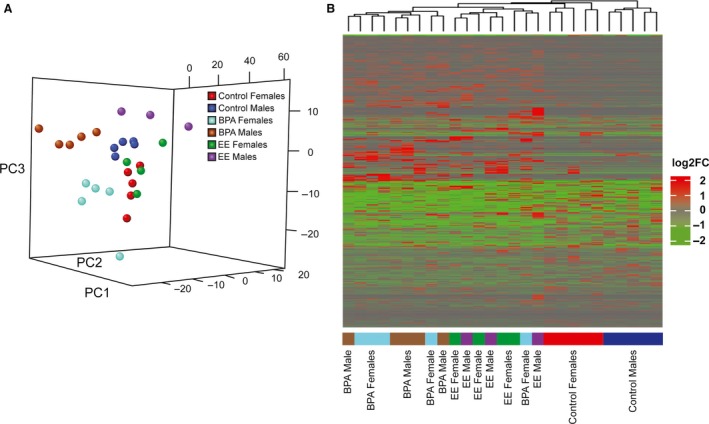
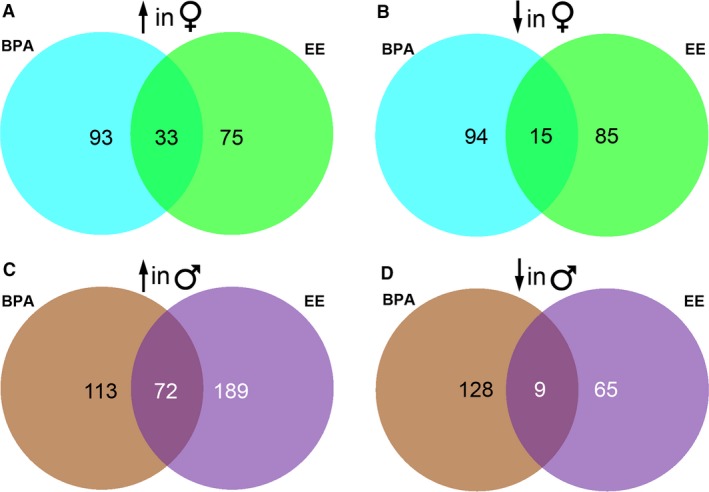
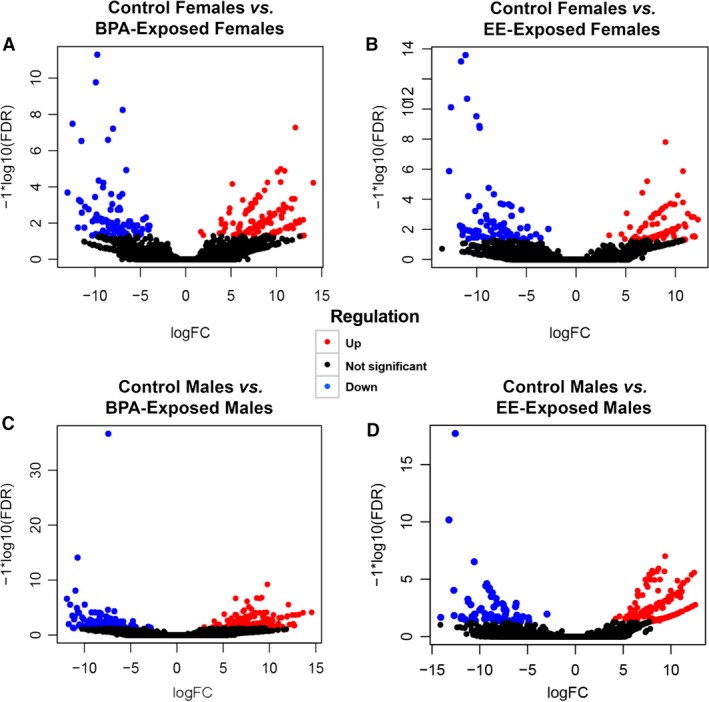
Bisphenol A (BPA) is an endocrine-disrupting chemical (EDC) prevalent in many household items. Rodent models and human epidemiological studies have linked this chemical to neurobehavior impairments. In California mice, developmental exposure to BPA results in sociosexual disorders at adulthood, including communication and biparental care deficits, behaviors that are primarily regulated by the hypothalamus. Thus, we sought to examine the transcriptomic profile in this brain region of juvenile male and female California mice offspring exposed from periconception through lactation to BPA or ethinyl estradiol (EE, estrogen present in birth control pills and considered a positive estrogen control for BPA studies). Two weeks prior to breeding, P females were fed a control diet, or this diet supplemented with 50 mg BPA/kg feed weight or 0.1 ppb EE, and continued on the diets through lactation. At weaning, brains from male and female offspring were collected, hypothalamic RNA isolated, and RNA-seq analysis performed. Results indicate that BPA and EE groups clustered separately from controls with BPA and EE exposure leading to unique set of signature gene profiles. was downregulated in the hypothalamus of BPA- and EE-exposed females, whereas , , , and were upregulated in these groups. Comparison of transcripts differentially expressed in BPA and EE groups revealed significant enrichment of gene ontology terms associated with microtubule-based processes. Current results show that perinatal exposure to BPA or EE can result in several transcriptomic alterations, including those associated with microtubule functions, in the hypothalamus of California mice. It remains to be determined whether these genes mediate BPA-induced behavioral disruptions.
双酚A(BPA)是一种普遍存在于许多家居用品中的内分泌干扰化学物质(EDC)。啮齿动物模型和人类流行病学研究已将这种化学物质与神经行为损伤联系起来。在加利福尼亚小鼠中,发育过程中暴露于双酚A会导致成年后出现社会性行为障碍,包括交流和双亲照料缺陷,这些行为主要由下丘脑调节。因此,我们试图研究从受孕前到哺乳期暴露于双酚A或乙炔雌二醇(EE,避孕药中含有的雌激素,被认为是双酚A研究的阳性雌激素对照)的幼年雄性和雌性加利福尼亚小鼠后代该脑区的转录组概况。在繁殖前两周,将P雌性小鼠分为三组,分别喂食对照饮食,或添加50毫克双酚A/千克饲料重量的该饮食,或0.1 ppb EE,并在哺乳期持续喂食这些饮食。断奶时,收集雄性和雌性后代的大脑,分离下丘脑RNA,并进行RNA测序分析。结果表明,双酚A组和EE组与对照组分开聚类,双酚A和EE暴露导致独特的一组特征基因谱。在暴露于双酚A和EE的雌性小鼠下丘脑中下调,而在这些组中上调。对双酚A组和EE组中差异表达的转录本进行比较,发现与基于微管的过程相关的基因本体术语有显著富集。目前的结果表明,围产期暴露于双酚A或EE可导致加利福尼亚小鼠下丘脑出现多种转录组改变,包括与微管功能相关的改变。这些基因是否介导双酚A诱导的行为破坏还有待确定。