Christopher S Bond Life Sciences Center, University of Missouri, Columbia, MO, 65211, USA.
Biomedical Sciences, University of Missouri, Columbia, MO, 65211, USA.
Sci Rep. 2020 Jul 2;10(1):10902. doi: 10.1038/s41598-020-67709-9.
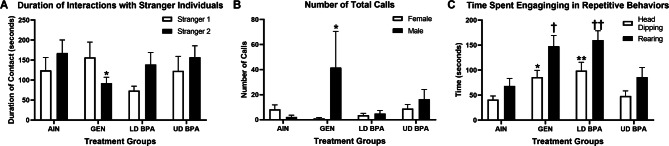
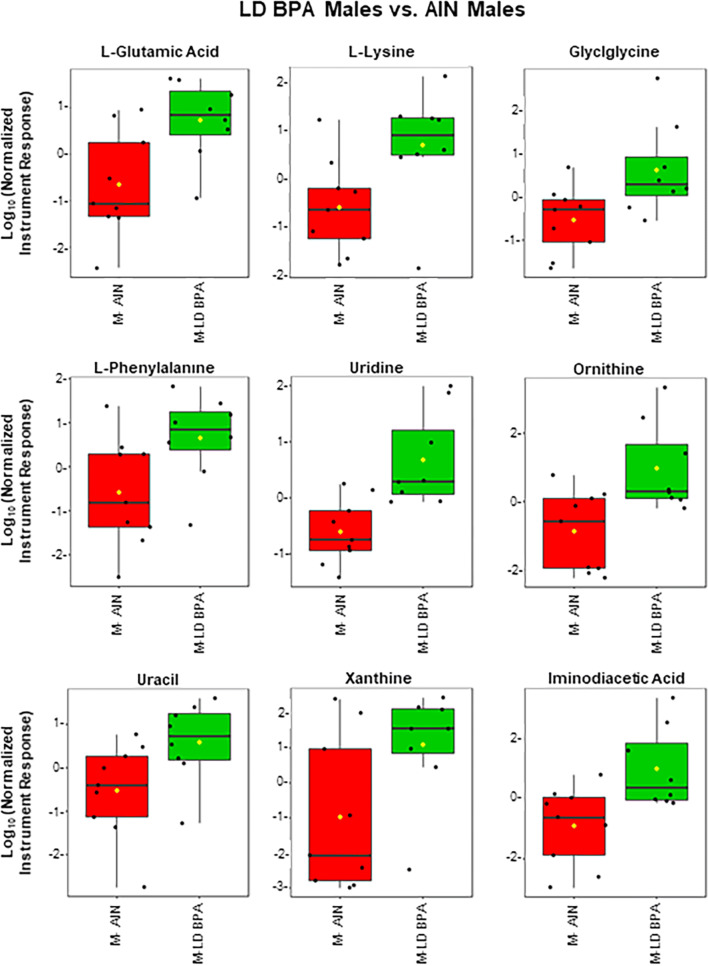
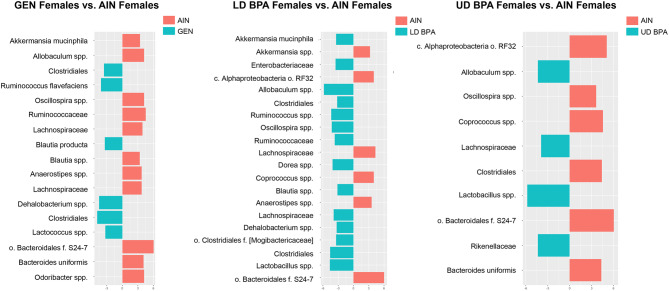
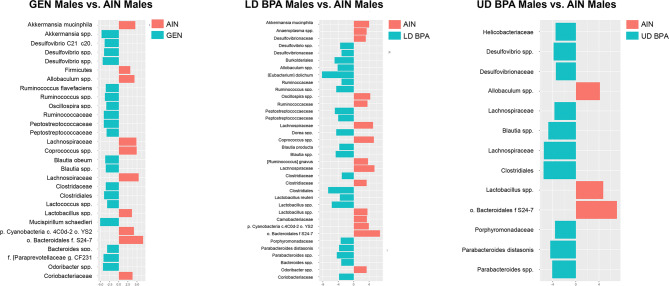
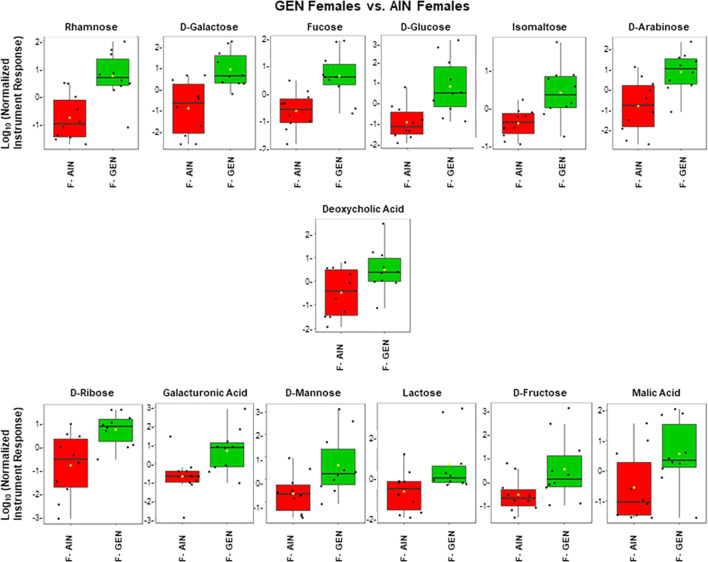
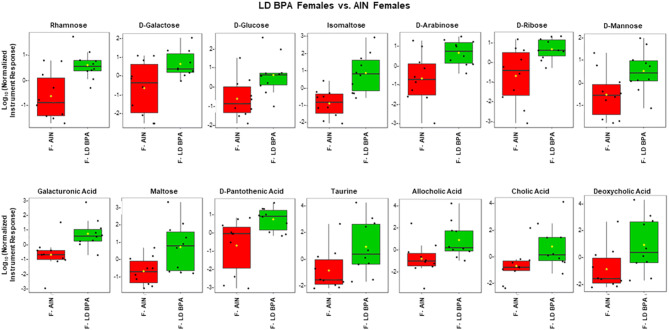
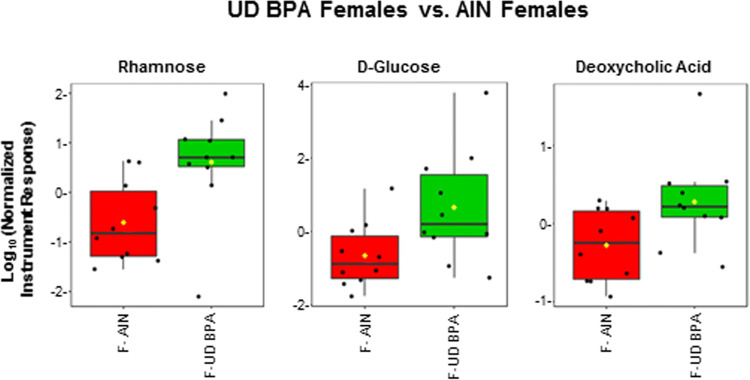
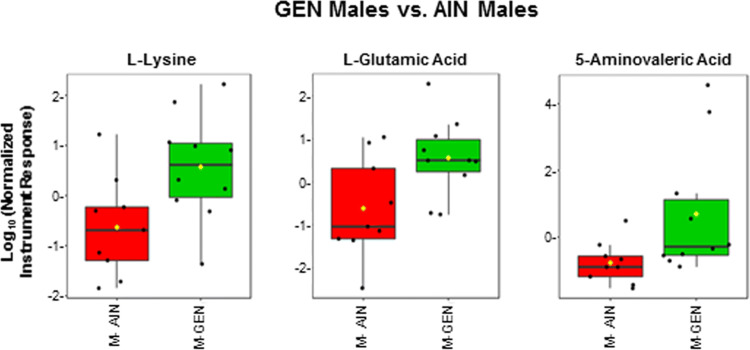
Xenoestrogens are chemicals found in plant products, such as genistein (GEN), and in industrial chemicals, e.g., bisphenol A (BPA), present in plastics and other products that are prevalent in the environment. Early exposure to such endocrine disrupting chemicals (EDC) may affect brain development by directly disrupting neural programming and/or through the microbiome-gut-brain axis. To test this hypothesis, California mice (Peromyscus californicus) offspring were exposed through the maternal diet to GEN (250 mg/kg feed weight) or BPA (5 mg/kg feed weight, low dose- LD or 50 mg/kg, upper dose-UD), and dams were placed on these diets two weeks prior to breeding, throughout gestation, and lactation. Various behaviors, gut microbiota, and fecal metabolome were assessed at 90 days of age. The LD but not UD of BPA exposure resulted in individuals spending more time engaging in repetitive behaviors. GEN exposed individuals were more likely to exhibit such behaviors and showed socio-communicative disturbances. BPA and GEN exposed females had increased number of metabolites involved in carbohydrate metabolism and synthesis. Males exposed to BPA or GEN showed alterations in lysine degradation and phenylalanine and tyrosine metabolism. Current findings indicate cause for concern that developmental exposure to BPA or GEN might affect the microbiome-gut-brain axis.
环境中普遍存在的植物产品(如染料木黄酮 GEN)和工业化学品(如双酚 A BPA)中存在着外源性雌激素。早期接触这些内分泌干扰化学物质(EDC)可能通过直接破坏神经编程和/或通过微生物组-肠道-大脑轴来影响大脑发育。为了验证这一假设,通过母体饮食使加利福尼亚鼠(Peromyscus californicus)后代暴露于 GEN(250mg/kg 饲料重量)或 BPA(5mg/kg 饲料重量,低剂量 LD 或 50mg/kg,高剂量 UD),并且在繁殖前两周、整个妊娠期和哺乳期,母体就开始食用这些饮食。在 90 天时评估了各种行为、肠道微生物群和粪便代谢组。BPA 的 LD 暴露而非 UD 导致个体花更多时间从事重复行为。暴露于 GEN 的个体更有可能表现出这种行为,并表现出社交沟通障碍。暴露于 BPA 或 GEN 的雌性的涉及碳水化合物代谢和合成的代谢物数量增加。暴露于 BPA 或 GEN 的雄性表现出赖氨酸降解以及苯丙氨酸和酪氨酸代谢的改变。目前的研究结果表明,人们有理由担心发育期间接触 BPA 或 GEN 可能会影响微生物组-肠道-大脑轴。