Wild Klemens, August Alexander, Pietrzik Claus U, Kins Stefan
Heidelberg University Biochemistry Center (BZH), University of Heidelberg Heidelberg, Germany.
Division of Human Biology and Human Genetics, Technical University of Kaiserslautern Kaiserslautern, Germany.
Front Mol Neurosci. 2017 Jan 31;10:21. doi: 10.3389/fnmol.2017.00021. eCollection 2017.
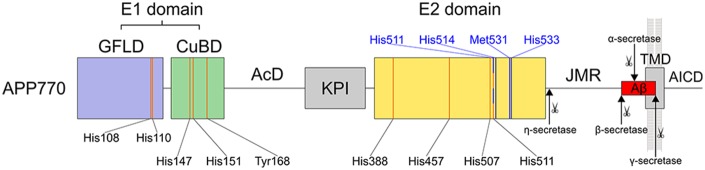
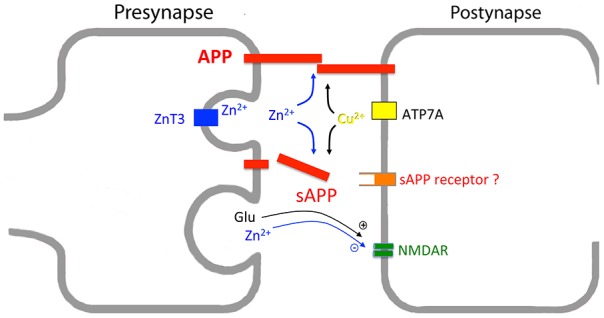
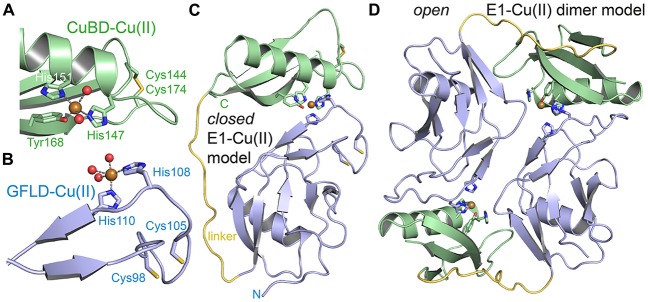
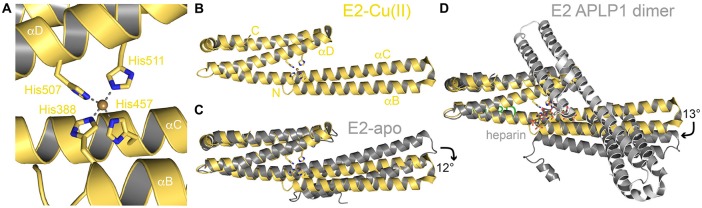
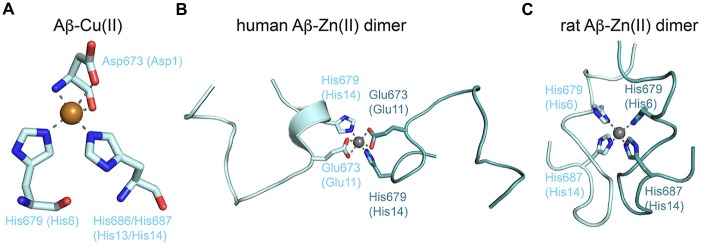
Alzheimer's disease (AD) is ultimately linked to the amyloid precursor protein (APP). However, current research reveals an important synaptic function of APP and APP-like proteins (APLP1 and 2). In this context various neurotrophic and neuroprotective functions have been reported for the APP proteolytic fragments sAPPα, sAPPβ and the monomeric amyloid-beta peptide (Aβ). APP is a metalloprotein and binds copper and zinc ions. Synaptic activity correlates with a release of these ions into the synaptic cleft and dysregulation of their homeostasis is linked to different neurodegenerative diseases. Metal binding to APP or its fragments affects its structure and its proteolytic cleavage and therefore its physiological function at the synapse. Here, we summarize the current data supporting this hypothesis and provide a model of how these different mechanisms might be intertwined with each other.
阿尔茨海默病(AD)最终与淀粉样前体蛋白(APP)相关联。然而,目前的研究揭示了APP及类APP蛋白(APLP1和APLP2)的重要突触功能。在这种情况下,已报道APP蛋白水解片段sAPPα、sAPPβ和单体淀粉样β肽(Aβ)具有多种神经营养和神经保护功能。APP是一种金属蛋白,可结合铜离子和锌离子。突触活动与这些离子释放到突触间隙相关,其稳态失调与不同的神经退行性疾病有关。金属与APP或其片段的结合会影响其结构、蛋白水解切割,进而影响其在突触处的生理功能。在此,我们总结了支持这一假说的当前数据,并提供了一个关于这些不同机制可能如何相互交织的模型。