McClelland M, Jones R, Patel Y, Nelson M
Nucleic Acids Res. 1987 Aug 11;15(15):5985-6005. doi: 10.1093/nar/15.15.5985.
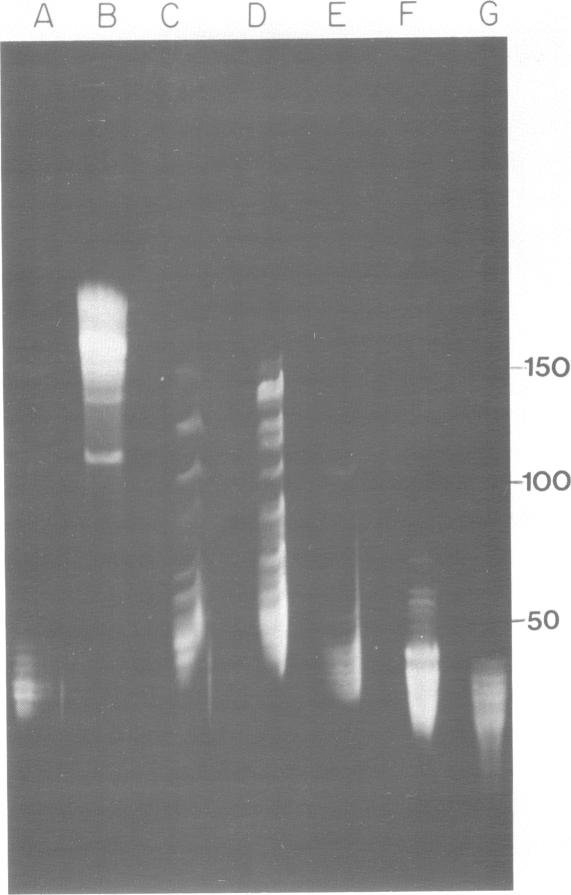
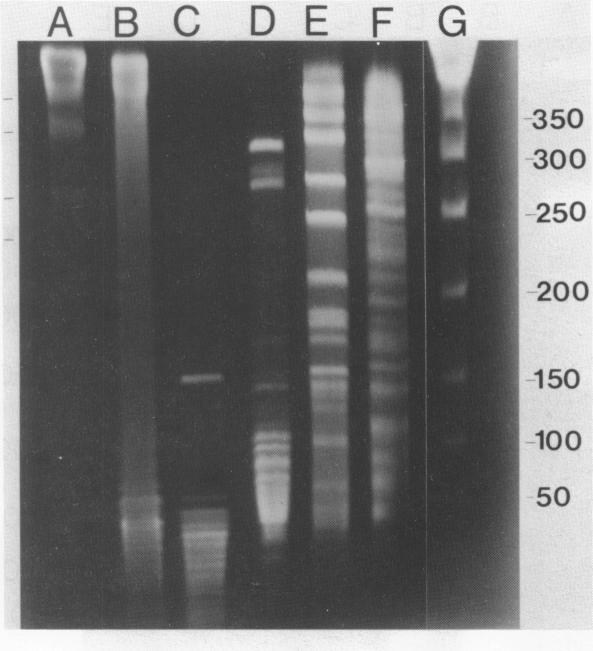
Fundamental to many bacterial genome mapping strategies currently under development is the need to cleave the genome into a few large DNA fragments that can be resolved by pulsed field gel electrophoresis. Identification of endonucleases that infrequently cut a genome is of key importance in this process. We show that the tetranucleotide CTAG is extremely rare in most bacterial genomes with G+C contents above 45%. As a consequence, most of the sixteen bacterial genomes we have tested are cleaved less than once every 100,000 base pairs by one or more endonucleases that have CTAG in their recognition sequences: Xba I (TCTAGA), Spe I (ACTAGT), Avr II (CCTAGG) and Nhe I (GCTAGC). Similarly, CCG and CGG are the rarest trinucleotides in many genomes with G+C content of less than 45%. Thus, Sma I (CCCGGG), Rsr II (CGGWCCG), Nae I (GCCGGC) and Sac II (CCGCGG) are often suitable endonucleases for producing fragments that average over 100,000 base pairs from such genomes. Pulsed field gel electrophoresis of the fragments that result from cleavage with endonucleases that cleave only a few times per genome should assist in the physical mapping of many prokaryotic genomes.
目前正在开发的许多细菌基因组图谱绘制策略的基础是需要将基因组切割成几个大的DNA片段,这些片段可以通过脉冲场凝胶电泳进行分辨。在这个过程中,鉴定很少切割基因组的核酸内切酶至关重要。我们发现,在大多数G+C含量高于45%的细菌基因组中,四核苷酸CTAG极其罕见。因此,我们测试的16个细菌基因组中的大多数,被识别序列中含有CTAG的一种或多种核酸内切酶切割的频率低于每100,000个碱基对一次,这些核酸内切酶包括:Xba I(TCTAGA)、Spe I(ACTAGT)、Avr II(CCTAGG)和Nhe I(GCTAGC)。同样,CCG和CGG是许多G+C含量低于45%的基因组中最罕见的三核苷酸。因此,Sma I(CCCGGG)、Rsr II(CGGWCCG)、Nae I(GCCGGC)和Sac II(CCGCGG)通常是适合从这类基因组中产生平均长度超过100,000个碱基对的片段的核酸内切酶。用每个基因组仅切割几次的核酸内切酶切割产生的片段进行脉冲场凝胶电泳,应有助于许多原核生物基因组的物理图谱绘制。