Department of Electrical, Electronic and Information Engineering "Guglielmo Marconi", University of Bologna, Cesena, Italy.
Health Sciences and Technology Interdepartmental Center for Industrial Research, University of Bologna, Cesena, Italy.
Sci Rep. 2017 Feb 15;7:42492. doi: 10.1038/srep42492.
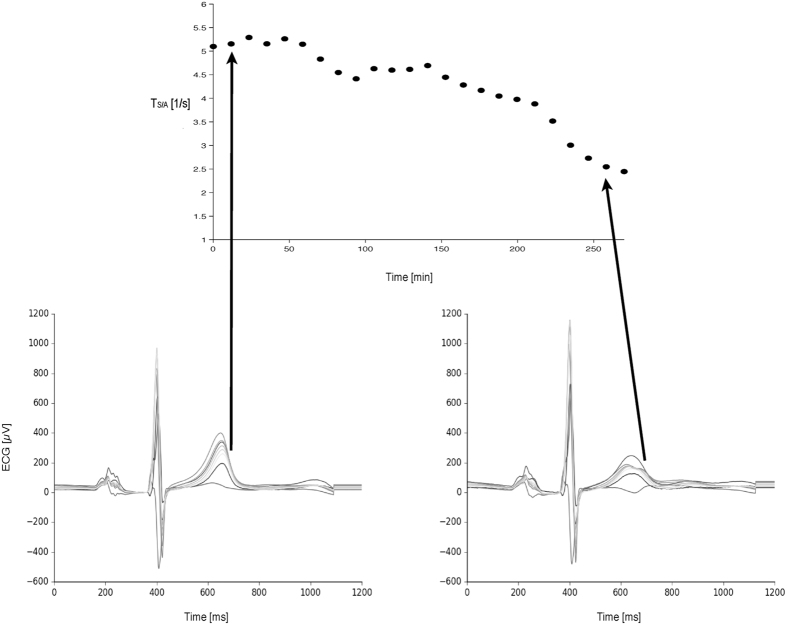
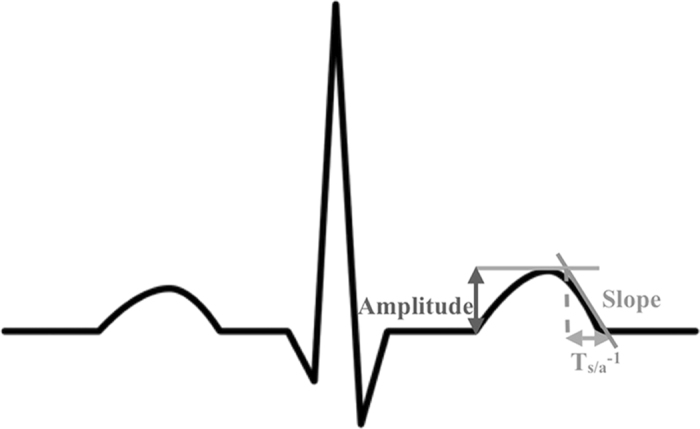
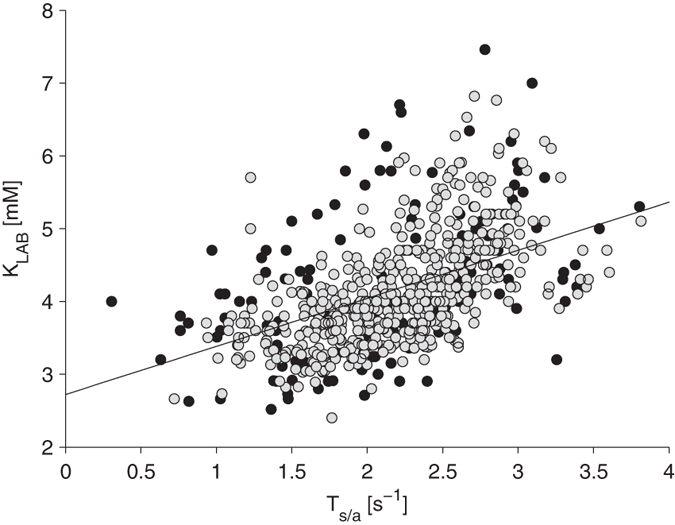
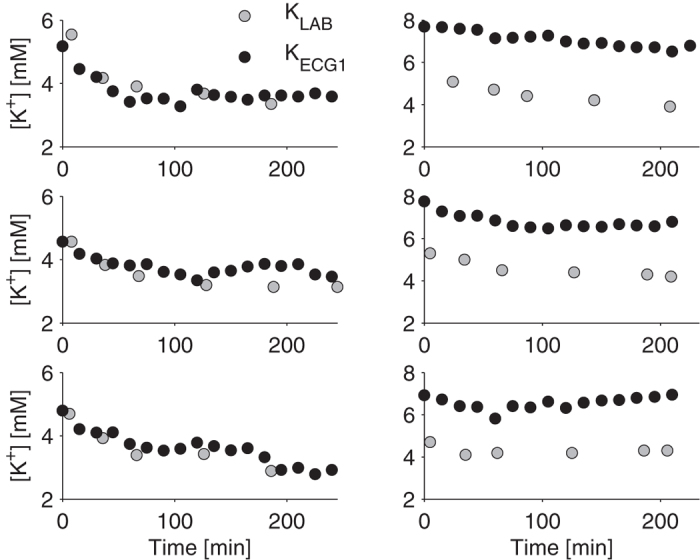
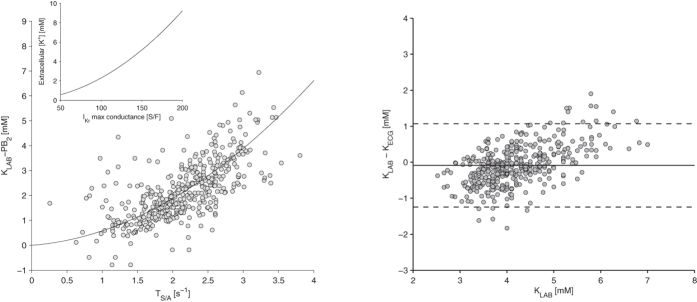
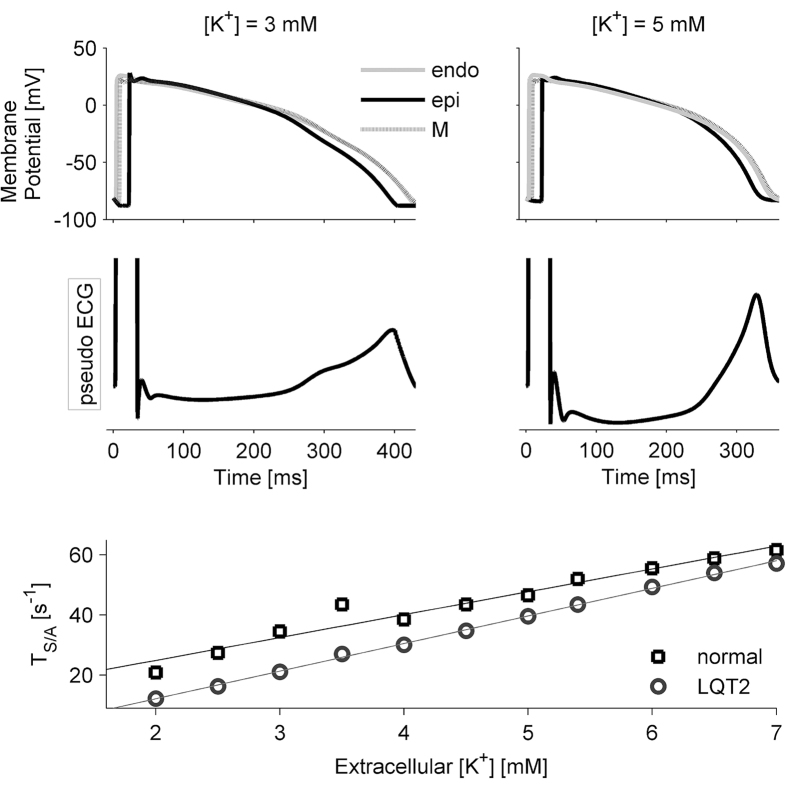
Blood potassium concentration ([K]) influences the electrocardiogram (ECG), particularly T-wave morphology. We developed a new method to quantify [K] from T-wave analysis and tested its clinical applicability on data from dialysis patients, in whom [K] varies significantly during the therapy. To elucidate the mechanism linking [K] and T-wave, we also analysed data from long QT syndrome type 2 (LQT2) patients, testing the hypothesis that our method would have underestimated [K] in these patients. Moreover, a computational model was used to explore the physiological processes underlying our estimator at the cellular level. We analysed 12-lead ECGs from 45 haemodialysis and 12 LQT2 patients. T-wave amplitude and downslope were calculated from the first two eigenleads. The T-wave slope-to-amplitude ratio (T) was used as starting point for an ECG-based [K] estimate (K). Leave-one-out cross-validation was performed. Agreement between K and reference [K] from blood samples was promising (error: -0.09 ± 0.59 mM, absolute error: 0.46 ± 0.39 mM). The analysis on LQT2 patients, also supported by the outcome of computational analysis, reinforces our interpretation that, at the cellular level, delayed-rectifier potassium current is a main contributor of K correlation to blood [K]. Following a comprehensive validation, this method could be effectively applied to monitor patients at risk for hyper/hypokalemia.
血钾浓度 ([K]) 会影响心电图 (ECG),尤其是 T 波形态。我们开发了一种从 T 波分析中定量 [K] 的新方法,并在透析患者的数据上测试了其临床适用性,这些患者在治疗过程中 [K] 会发生显著变化。为了阐明 [K] 和 T 波之间的联系机制,我们还分析了长 QT 综合征 2 型 (LQT2) 患者的数据,检验了我们的方法可能低估了这些患者 [K] 的假设。此外,还使用计算模型从细胞水平探索了我们的估算器背后的生理过程。我们分析了 45 名血液透析患者和 12 名 LQT2 患者的 12 导联心电图。从前两个特征导联中计算 T 波振幅和下降斜率。T 波斜率-振幅比 (T) 用作心电图 [K] 估计 (K) 的起点。进行了留一法交叉验证。K 与血液样本参考 [K] 之间的一致性很有希望(误差:-0.09 ± 0.59 mM,绝对误差:0.46 ± 0.39 mM)。对 LQT2 患者的分析也得到了计算分析的支持,这进一步证实了我们的解释,即在细胞水平上,延迟整流钾电流是 K 与血液 [K] 相关的主要贡献者。经过全面验证后,该方法可有效应用于监测高钾血症/低钾血症风险患者。