Ni Mi, Ma Wei, Wang Xiaofang, Gao Meijing, Dai Yan, Wei Xiaoli, Zhang Lei, Peng Yonggang, Chen Shuyuan, Ding Lingyun, Tian Yue, Li Jie, Wang Haiping, Wang Xiaolin, Xu Guowang, Guo Wangzhen, Yang Yihua, Wu Yidong, Heuberger Shannon, Tabashnik Bruce E, Zhang Tianzhen, Zhu Zhen
State Key Laboratory of Plant Genomics and National Center for Plant Gene Research (Beijing), Institute of Genetics and Developmental Biology, Chinese Academy of Sciences, Beijing, China.
National Key Laboratory for Crop Genetics and Germplasm Enhancement, Jiangsu Plant Gene Engineering Research Center, Nanjing Agricultural University, Nanjing, China.
Plant Biotechnol J. 2017 Sep;15(9):1204-1213. doi: 10.1111/pbi.12709. Epub 2017 Mar 16.
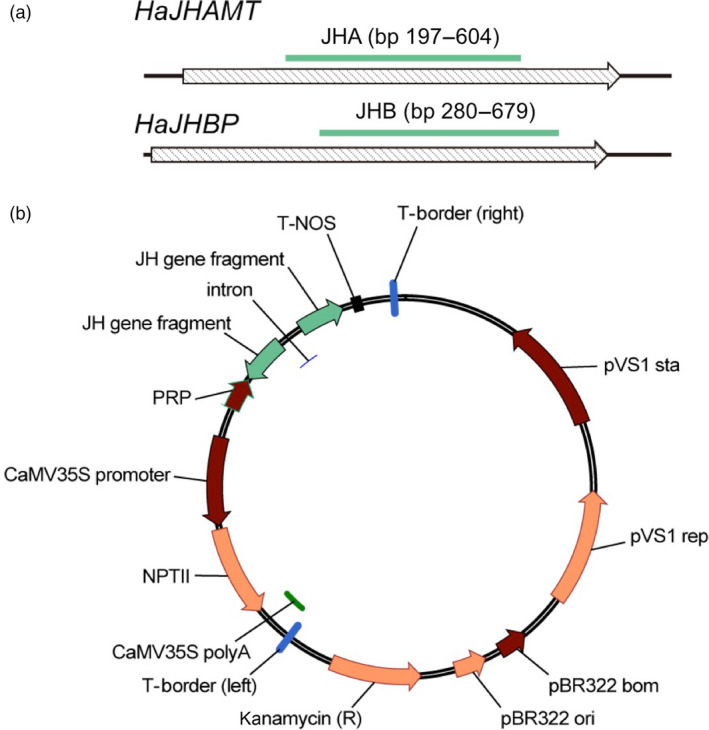
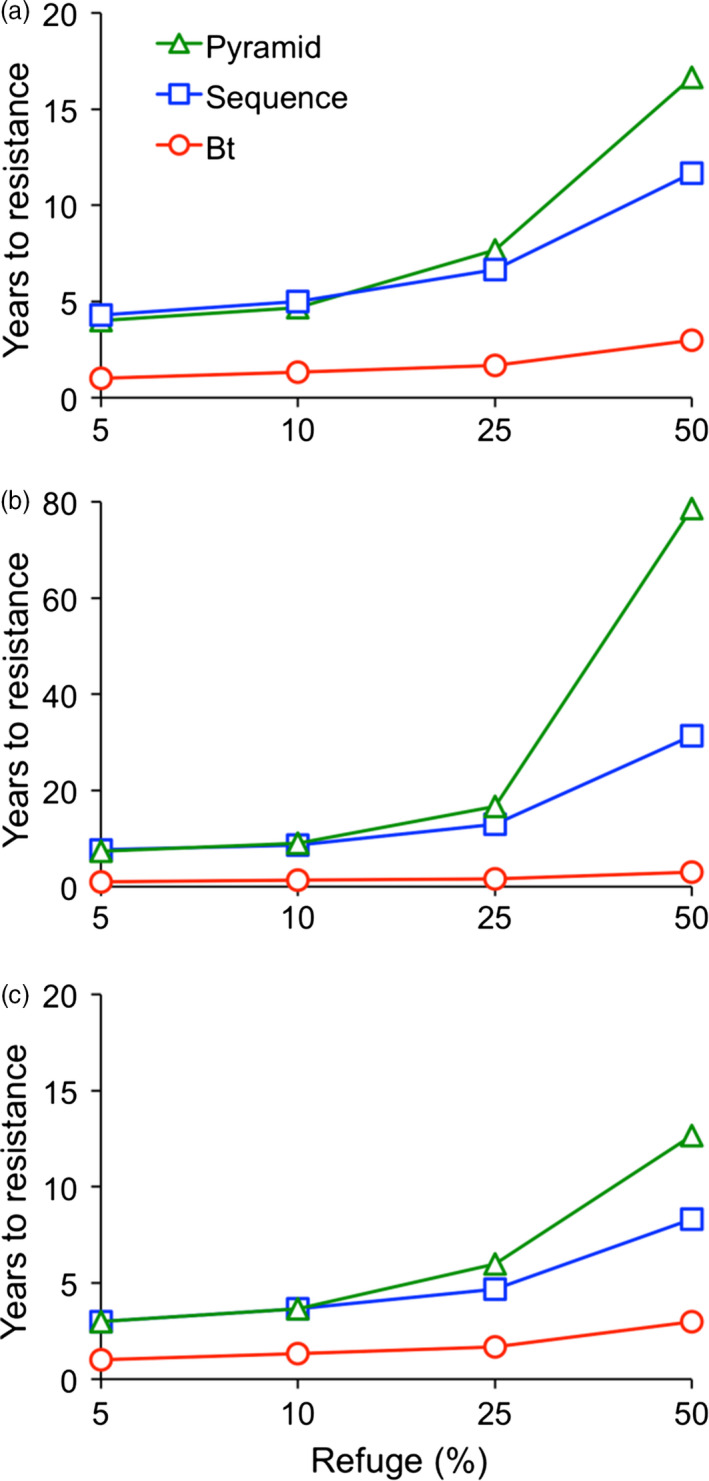
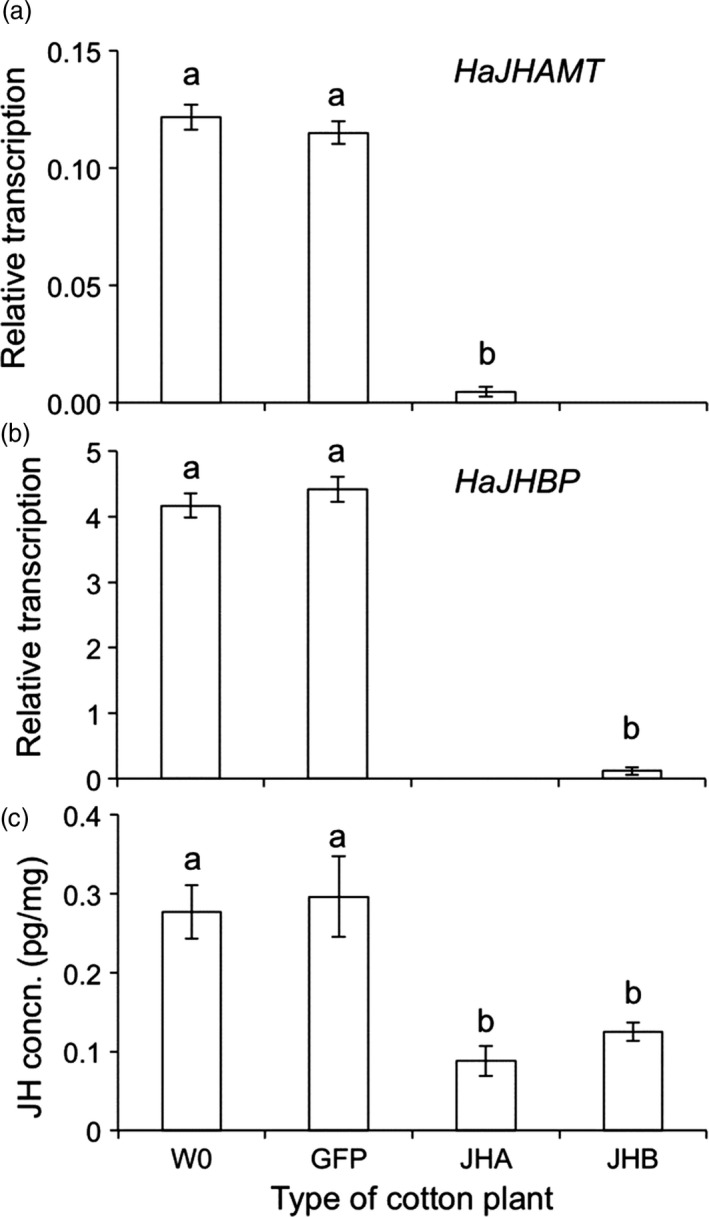
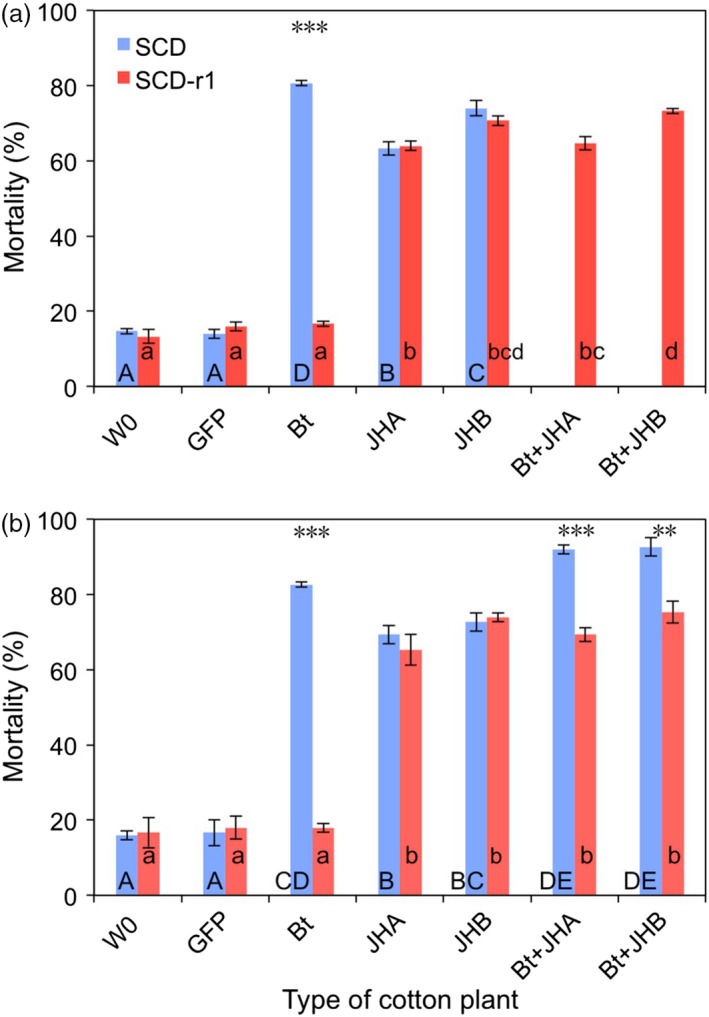
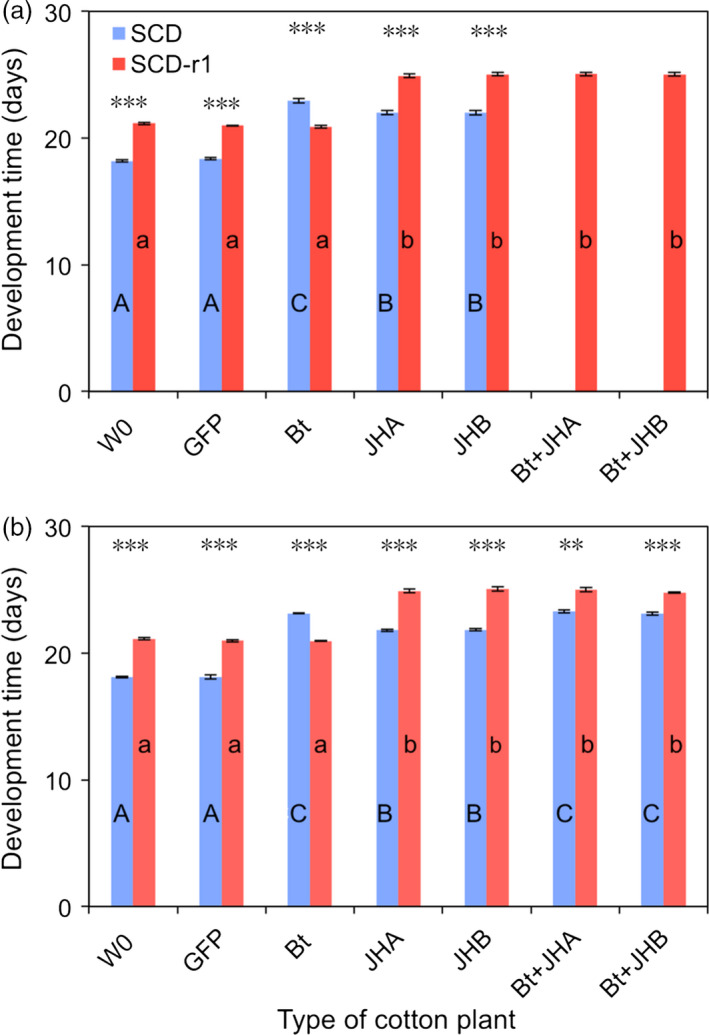
Transgenic crops producing insecticidal proteins from the bacterium Bacillus thuringiensis (Bt) are extensively cultivated worldwide. To counter rapidly increasing pest resistance to crops that produce single Bt toxins, transgenic plant 'pyramids' producing two or more Bt toxins that kill the same pest have been widely adopted. However, cross-resistance and antagonism between Bt toxins limit the sustainability of this approach. Here we describe development and testing of the first pyramids of cotton combining protection from a Bt toxin and RNA interference (RNAi). We developed two types of transgenic cotton plants producing double-stranded RNA (dsRNA) from the global lepidopteran pest Helicoverpa armigera designed to interfere with its metabolism of juvenile hormone (JH). We focused on suppression of JH acid methyltransferase (JHAMT), which is crucial for JH synthesis, and JH-binding protein (JHBP), which transports JH to organs. In 2015 and 2016, we tested larvae from a Bt-resistant strain and a related susceptible strain of H. armigera on seven types of cotton: two controls, Bt cotton, two types of RNAi cotton (targeting JHAMT or JHBP) and two pyramids (Bt cotton plus each type of RNAi). Both types of RNAi cotton were effective against Bt-resistant insects. Bt cotton and RNAi acted independently against the susceptible strain. In computer simulations of conditions in northern China, where millions of farmers grow Bt cotton as well as abundant non-transgenic host plants of H. armigera, pyramided cotton combining a Bt toxin and RNAi substantially delayed resistance relative to using Bt cotton alone.
能产生来自苏云金芽孢杆菌(Bt)杀虫蛋白的转基因作物在全球广泛种植。为应对害虫对产生单一Bt毒素作物的抗性迅速增加的情况,已广泛采用产生两种或更多种能杀死同一种害虫的Bt毒素的转基因植物“复合品系”。然而,Bt毒素之间的交叉抗性和拮抗作用限制了这种方法的可持续性。在此,我们描述了首个将Bt毒素保护与RNA干扰(RNAi)相结合的棉花复合品系的研发与测试。我们培育了两种转基因棉花植株,它们能产生针对全球鳞翅目害虫棉铃虫的双链RNA(dsRNA),旨在干扰其保幼激素(JH)的代谢。我们重点关注抑制对JH合成至关重要的JH酸甲基转移酶(JHAMT)以及将JH转运至器官的JH结合蛋白(JHBP)。在2015年和2016年,我们用棉铃虫的一个Bt抗性品系和一个相关的敏感品系的幼虫对七种棉花进行了测试:两个对照、Bt棉花、两种RNAi棉花(靶向JHAMT或JHBP)以及两种复合品系(Bt棉花加每种RNAi棉花)。两种RNAi棉花对Bt抗性昆虫均有效。Bt棉花和RNAi对敏感品系的作用相互独立。在中国北方的条件模拟中,数百万农民种植Bt棉花以及大量棉铃虫的非转基因寄主植物,相对于单独使用Bt棉花,结合Bt毒素和RNAi的复合棉花能显著延缓抗性的产生。