Imoto Naoto, Harunori Nakashima, Furukawa Katsuya, Tange Naoyuki, Murase Atsushi, Hayakawa Masaya, Ichihara Masatoshi, Iwata Yosuke, Kosugi Hiroshi
Division of Hematology and Oncology, Ogaki Municipal Hospital, Japan.
Intern Med. 2017;56(4):435-439. doi: 10.2169/internalmedicine.56.6920. Epub 2017 Feb 15.
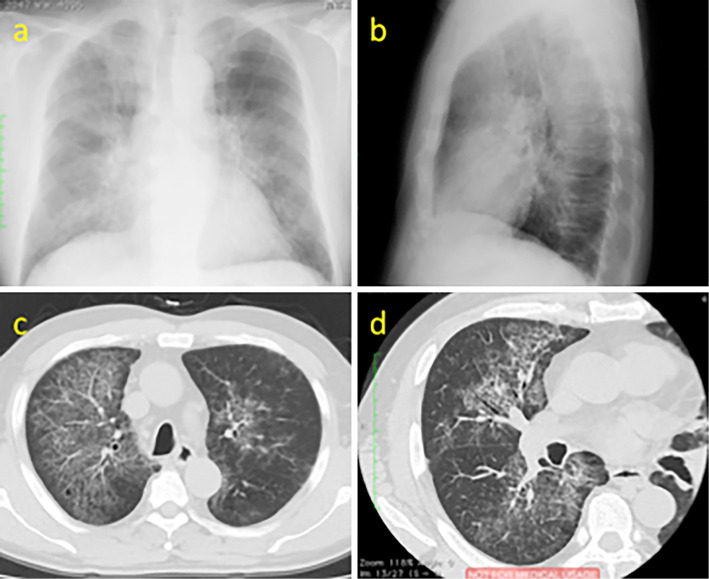
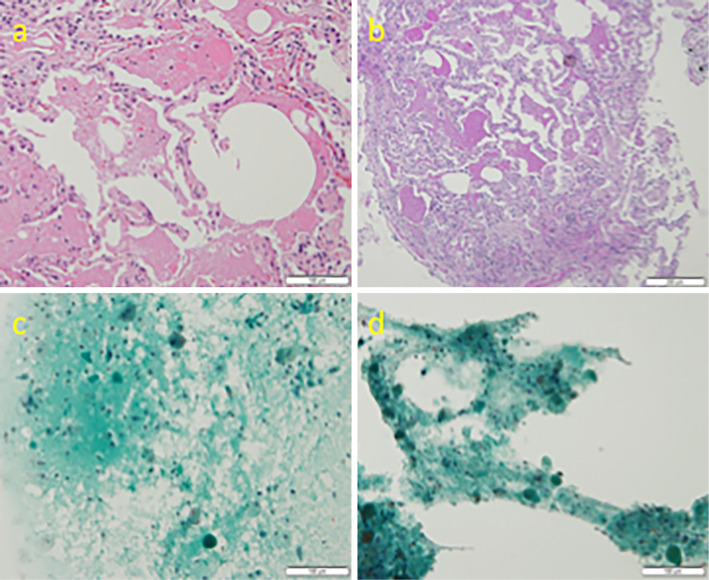
Pulmonary alveolar proteinosis (PAP) is classified as autoimmune, secondary, or genetic. We herein describe a 69-year-old man with autoimmune PAP, simultaneously diagnosed with myeloproliferative neoplasm (MPN). Two years after the diagnosis, the MPN progressed to acute myeloid leukemia, and the patient died from an alveolar hemorrhage during remission induction chemotherapy. Throughout the clinical course, no progression of PAP was observed, despite the progression to leukemia. There are few reports of autoimmune PAP with hematological malignancy, and this case demonstrated that an evaluation for GM-CSF autoantibodies is important for distinguishing the autoimmune and secondary forms of PAP, even if the patient has hematological malignancy.
肺泡蛋白沉积症(PAP)分为自身免疫性、继发性或遗传性。我们在此描述一名69岁患有自身免疫性PAP的男性,同时被诊断为骨髓增殖性肿瘤(MPN)。诊断两年后,MPN进展为急性髓系白血病,患者在诱导缓解化疗期间死于肺泡出血。在整个临床过程中,尽管已进展为白血病,但未观察到PAP进展。关于自身免疫性PAP合并血液系统恶性肿瘤的报道很少,该病例表明,即使患者患有血液系统恶性肿瘤,评估GM-CSF自身抗体对于区分自身免疫性和继发性PAP形式也很重要。