Prayongrat Anussara, Chakkabat Chakkapong, Kannarunimit Danita, Hansasuta Pokrath, Lertbutsayanukul Chawalit
Division of Radiation Oncology, Department of Radiology, Faculty of Medicine, Chulalongkorn University, King Chulalongkorn Memorial Hospital, 1873 Rama IV Road, Pathumwan, Bangkok, 10330, Thailand.
Department of Immunology, Faculty of Medicine, Chulalongkorn University, Bangkok, 10330, Thailand.
J Radiat Res. 2017 Jul 1;58(4):509-516. doi: 10.1093/jrr/rrw128.
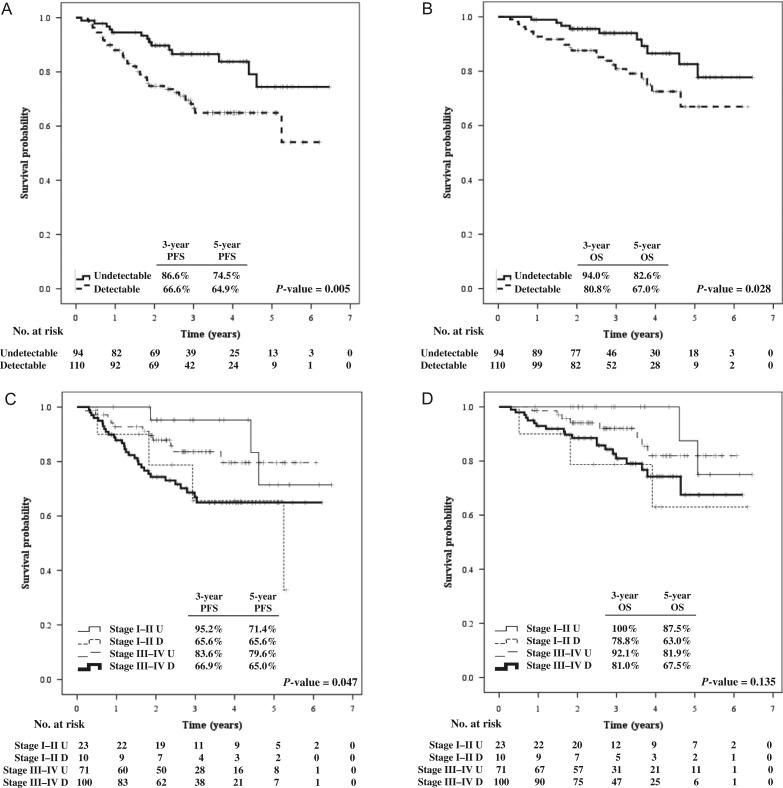
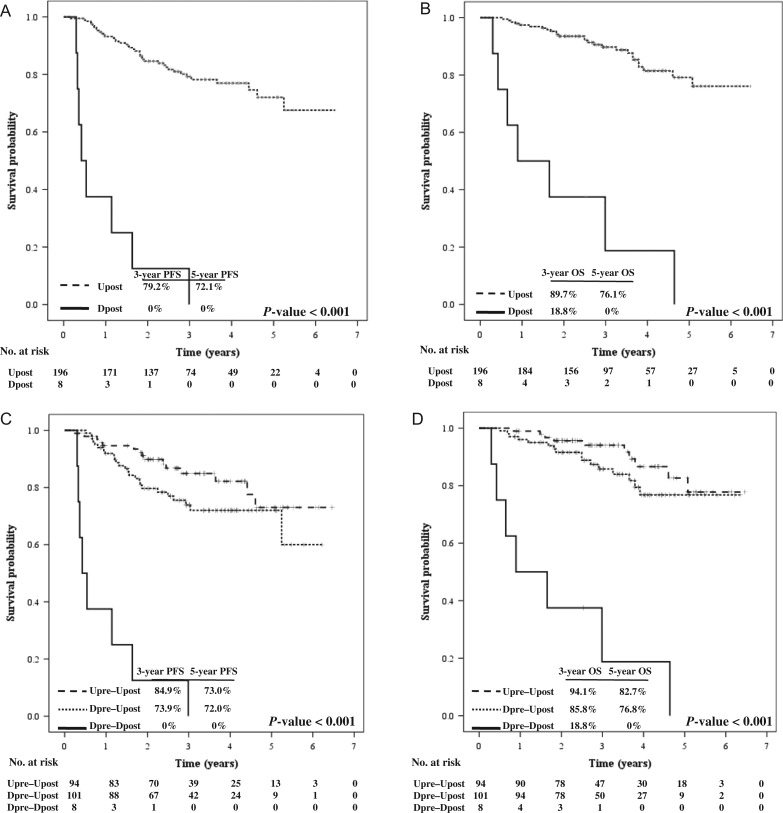
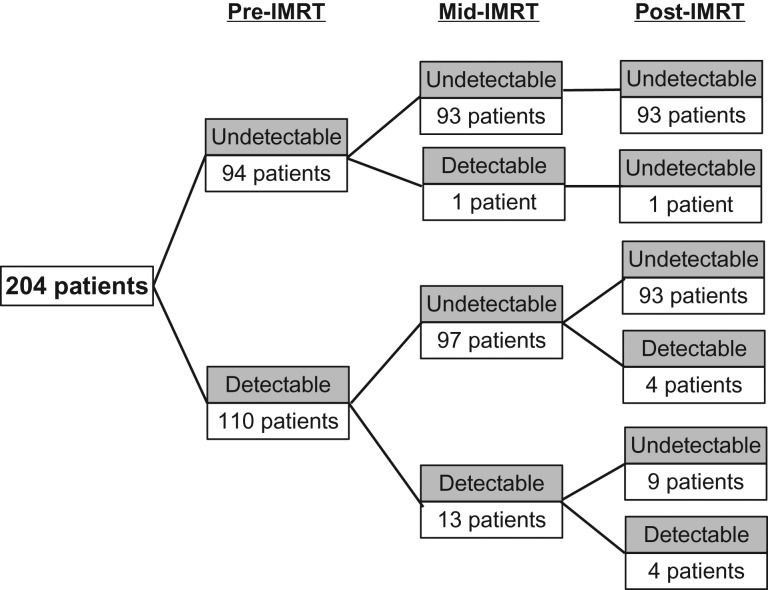
Epstein-Barr virus (EBV) DNA has been recognized as a promising tumor marker for nasopharyngeal carcinoma (NPC). This study aims to demonstrate the prevalence of plasma EBV DNA and its temporal correlation with treatment outcomes in the modern era. A total of 204 patients with Stage I-IVB NPC treated with intensity-modulated radiotherapy (IMRT) were enrolled. Quantitative plasma EBV DNA measurement was performed before treatment (pre-IMRT), on the fifth week of radiation (mid-IMRT), at 3 months after radiation (post-IMRT), then every 6 months until disease relapse. Progression-free survival (PFS) and overall survival (OS) were analyzed using the Kaplan-Meier method. Plasma EBV DNA was detected in 110 patients (53.9%), with a median pre-IMRT EBV DNA level of 8005 copies/ml. Significant correlation was noted between pre-IMRT EBV DNA level and disease stage, but not between pre-IMRT EBV DNA level and World Health Organization classification. With a median follow-up time of 35.1 months, the 3-year PFS and OS rates were higher in the group with undetectable pre-IMRT EBV DNA level compared with in the group in which it was detectable. When classified according to disease stage and pre-IMRT EBV DNA, patients with early disease and detectable pre-IMRT EBV DNA experienced poorer survival than those with locally advanced disease and undetectable pre-IMRT EBV DNA. According to the dynamic changes in EBV DNA level between pre-IMRT and mid/post IMRT, survival was significantly higher in patients who achieved an undetectable level following treatment. On multivariate analysis, post-IMRT EBV DNA level was the strongest predictor of all treatment outcomes (P < 0.001). Our study demonstrated the clinical significance of the plasma EBV DNA level at specific time points, as well as of the dynamic changes in the EBV DNA level. Disappearance of plasma EBV DNA after treatment was associated with better survival.
爱泼斯坦-巴尔病毒(EBV)DNA已被公认为是鼻咽癌(NPC)一种很有前景的肿瘤标志物。本研究旨在证实现代时期血浆EBV DNA的流行情况及其与治疗结果的时间相关性。共纳入204例接受调强放疗(IMRT)的Ⅰ-ⅣB期鼻咽癌患者。在治疗前(IMRT前)、放疗第5周(IMRT中)、放疗后3个月(IMRT后)进行血浆EBV DNA定量检测,之后每6个月检测一次,直至疾病复发。采用Kaplan-Meier法分析无进展生存期(PFS)和总生存期(OS)。110例患者(53.9%)检测到血浆EBV DNA,IMRT前EBV DNA水平中位数为8005拷贝/ml。IMRT前EBV DNA水平与疾病分期之间存在显著相关性,但与世界卫生组织分类之间无相关性。中位随访时间为35.1个月,IMRT前未检测到EBV DNA水平的组3年PFS和OS率高于可检测到的组。根据疾病分期和IMRT前EBV DNA进行分类时,早期疾病且IMRT前可检测到EBV DNA的患者生存情况比局部晚期疾病且IMRT前未检测到EBV DNA的患者差。根据IMRT前与IMRT中/后EBV DNA水平的动态变化,治疗后达到不可检测水平的患者生存率显著更高。多因素分析显示,IMRT后EBV DNA水平是所有治疗结果的最强预测指标(P<0.001)。我们的研究证实了特定时间点血浆EBV DNA水平以及EBV DNA水平动态变化的临床意义。治疗后血浆EBV DNA消失与更好的生存相关。