Lindner Robert
Institute of Neuroanatomy and Cell Biology, Hannover Medical School, 30625 Hannover, Germany.
Cells. 2017 Feb 10;6(1):6. doi: 10.3390/cells6010006.
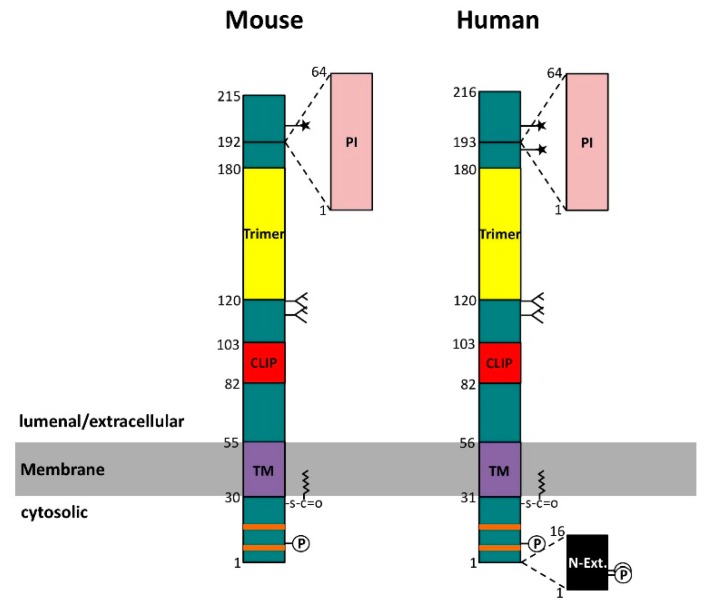
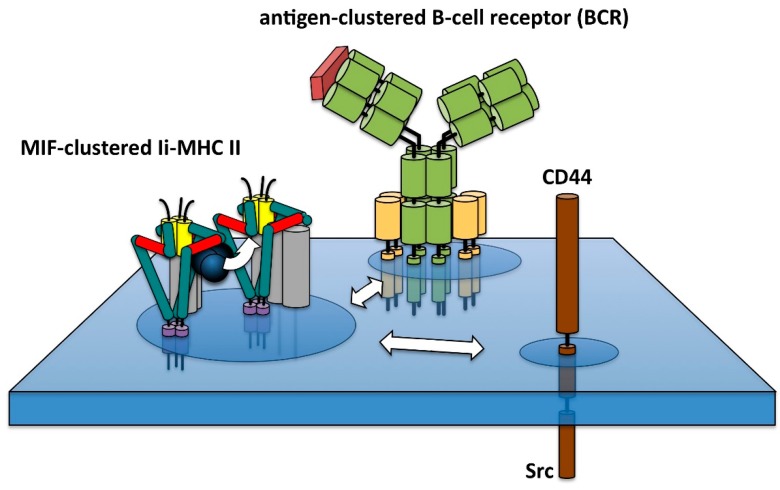
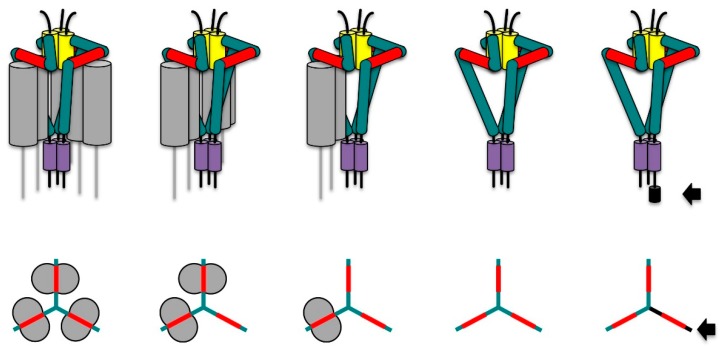
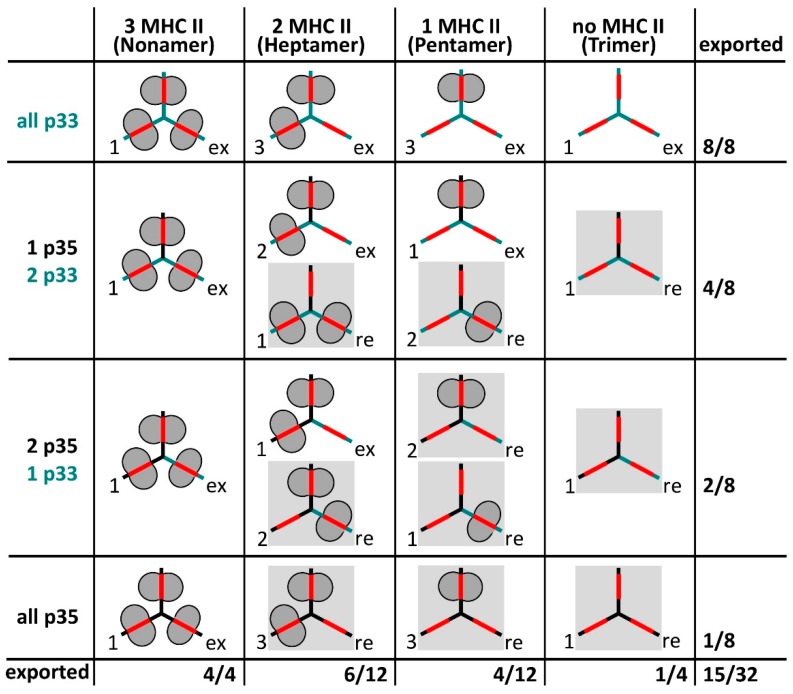
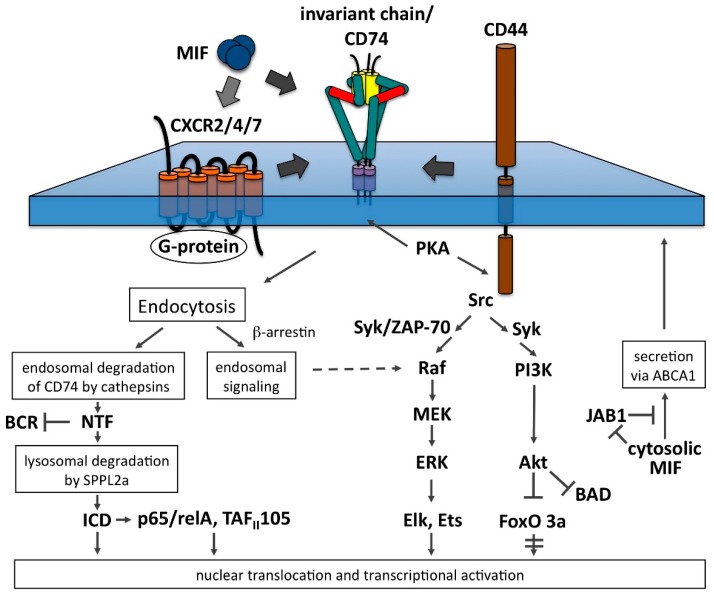
Invariant chain (Ii/CD74) has been identified as a surface receptor for migration inhibitory factor (MIF). Most cells that express Ii also synthesize major histocompatibility complex class II (MHC II) molecules, which depend on Ii as a chaperone and a targeting factor. The assembly of nonameric complexes consisting of one Ii trimer and three MHC II molecules (each of which is a heterodimer) has been regarded as a prerequisite for efficient delivery to the cell surface. Due to rapid endocytosis, however, only low levels of Ii-MHC II complexes are displayed on the cell surface of professional antigen presenting cells and very little free Ii trimers. The association of Ii and MHC II has been reported to block the interaction with MIF, thus questioning the role of surface Ii as a receptor for MIF on MHC II-expressing cells. Recent work offers a potential solution to this conundrum: Many Ii-complexes at the cell surface appear to be under-saturated with MHC II, leaving unoccupied Ii subunits as potential binding sites for MIF. Some of this work also sheds light on novel aspects of signal transduction by Ii-bound MIF in B-lymphocytes: membrane raft association of Ii-MHC II complexes enables MIF to target Ii-MHC II to antigen-clustered B-cell-receptors (BCR) and to foster BCR-driven signaling and intracellular trafficking.
不变链(Ii/CD74)已被鉴定为迁移抑制因子(MIF)的表面受体。大多数表达Ii的细胞也合成主要组织相容性复合体II类(MHC II)分子,这些分子依赖Ii作为伴侣蛋白和靶向因子。由一个Ii三聚体和三个MHC II分子(每个都是异二聚体)组成的九聚体复合物的组装被认为是有效递送至细胞表面的先决条件。然而,由于快速的内吞作用,只有低水平的Ii-MHC II复合物展示在专职抗原呈递细胞的细胞表面,且游离的Ii三聚体极少。据报道,Ii与MHC II的结合会阻断与MIF的相互作用,因此质疑表面Ii作为MIF在表达MHC II细胞上的受体的作用。最近的研究为这个难题提供了一个潜在的解决方案:细胞表面的许多Ii复合物似乎未被MHC II饱和,留下未占据的Ii亚基作为MIF的潜在结合位点。这项研究的一些成果还揭示了Ii结合的MIF在B淋巴细胞中信号转导的新方面:Ii-MHC II复合物与膜筏的结合使MIF能够将Ii-MHC II靶向抗原聚集的B细胞受体(BCR),并促进BCR驱动的信号传导和细胞内运输。