Liu Yanhong, McKeever Lindsay C, Malik Nasir S A
Molecular Characterization of Foodborne Pathogens Research Unit, Eastern Regional Research Center, Agricultural Research Service, U.S. Department of Agriculture, Wyndmoor PA, USA.
Front Microbiol. 2017 Feb 2;8:113. doi: 10.3389/fmicb.2017.00113. eCollection 2017.
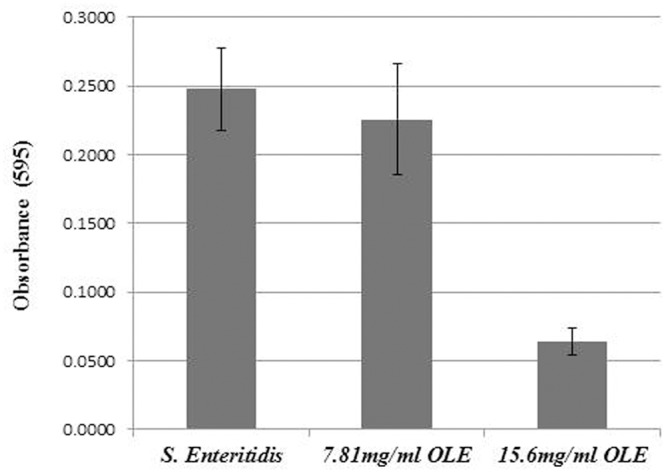
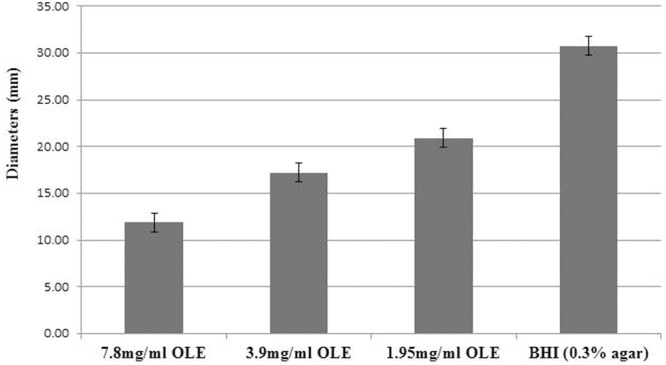
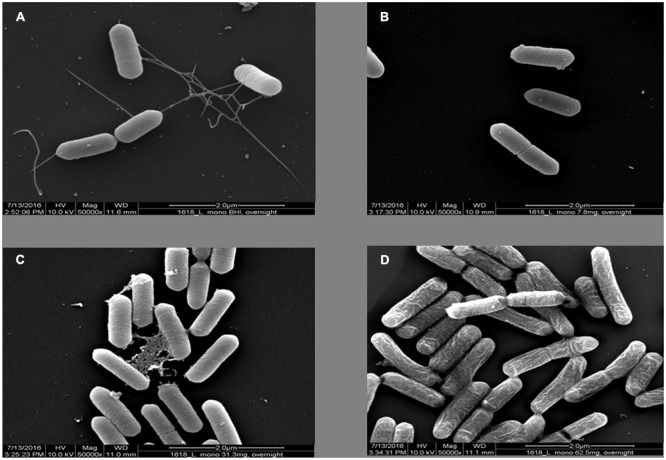
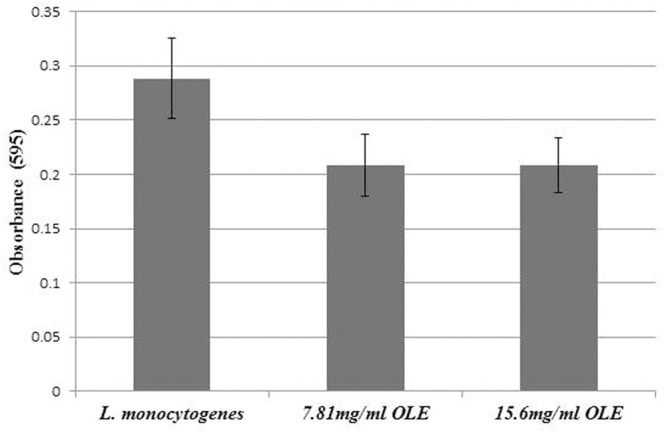
Olive leaf extract (OLE) has been used traditionally as a herbal supplement since it contains polyphenolic compounds with beneficial properties ranging from increasing energy levels, lowering blood pressure, and supporting the cardiovascular and immune systems. In addition to the beneficial effects on human health, OLE also has antimicrobial properties. The aim of this work was to investigate the antimicrobial effect of OLE against major foodborne pathogens, including O157:H7, and Enteritidis. Our results demonstrated that at a concentration of 62.5 mg/ml, OLE almost completely inhibited the growth of these three pathogens. In addition, OLE also reduced cell motility in , which correlated with the absence of flagella as shown by scanning electron microscopy. Moreover, OLE inhibited biofilm formation in and . Enteritidis. Taken together, OLE, as a natural product, has the potential to be used as an antimicrobial to control foodborne pathogens.
橄榄叶提取物(OLE)传统上一直被用作草药补充剂,因为它含有多酚类化合物,具有多种有益特性,包括提高能量水平、降低血压以及支持心血管和免疫系统。除了对人体健康有益外,OLE还具有抗菌特性。这项工作的目的是研究OLE对包括O157:H7和肠炎沙门氏菌在内的主要食源性病原体的抗菌作用。我们的结果表明,在浓度为62.5毫克/毫升时,OLE几乎完全抑制了这三种病原体的生长。此外,OLE还降低了[此处原文缺失具体菌名]中的细胞运动性,这与扫描电子显微镜显示的鞭毛缺失有关。此外,OLE抑制了[此处原文缺失具体菌名]和肠炎沙门氏菌中的生物膜形成。综上所述,OLE作为一种天然产物,有潜力用作抗菌剂来控制食源性病原体。