Morel Agnieszka, Rywaniak Joanna, Bijak Michał, Miller Elżbieta, Niwald Marta, Saluk Joanna
Department of General Biochemistry, Faculty of Biology and Environmental Protection, University of Lodz, Pomorska 141/143, 90-236, Lodz, Poland.
Department of Physical Medicine, Medical University of Lodz, Pl. Hallera 1, 90-647, Lodz, Poland.
Mol Cell Biochem. 2017 Jun;430(1-2):69-80. doi: 10.1007/s11010-017-2955-7. Epub 2017 Feb 16.
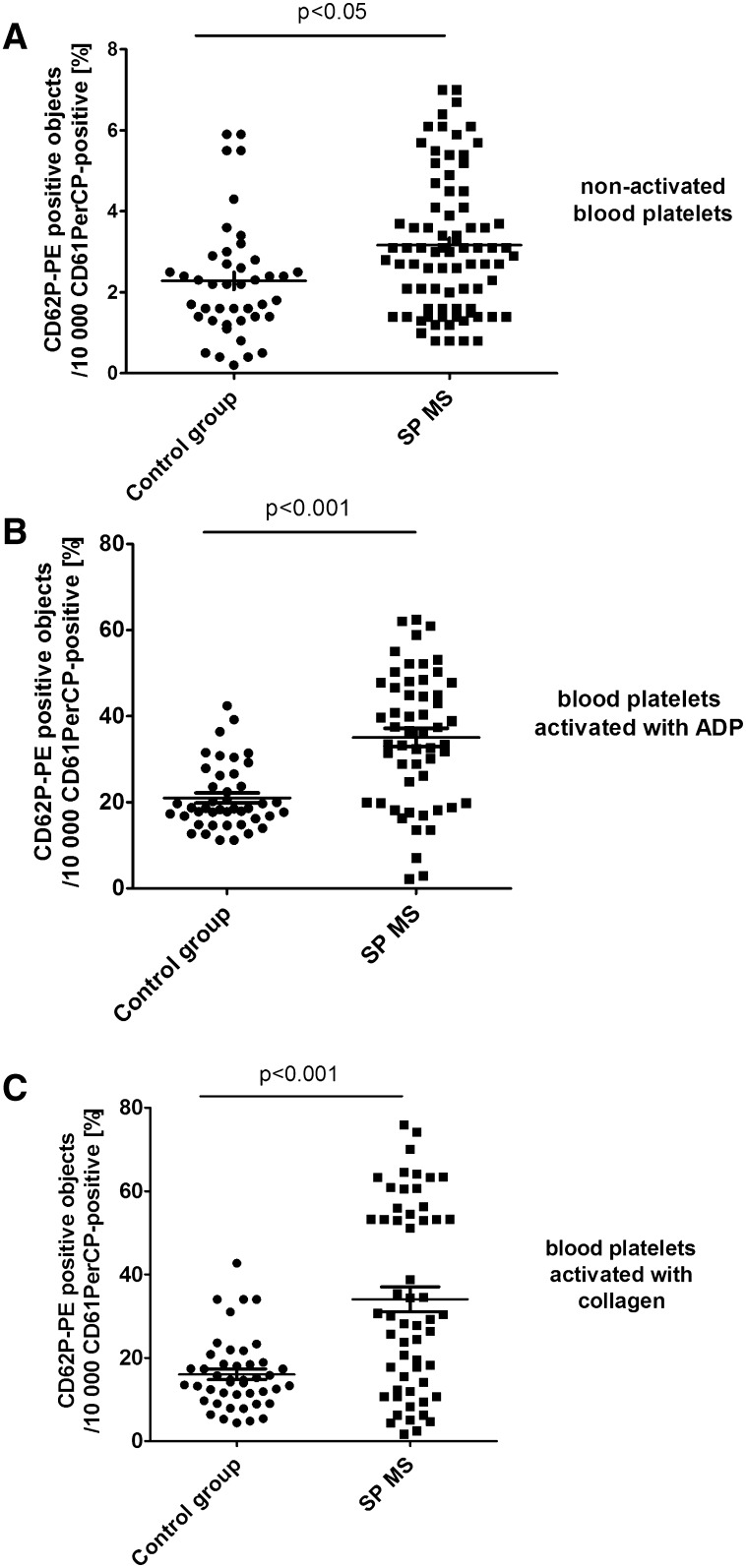
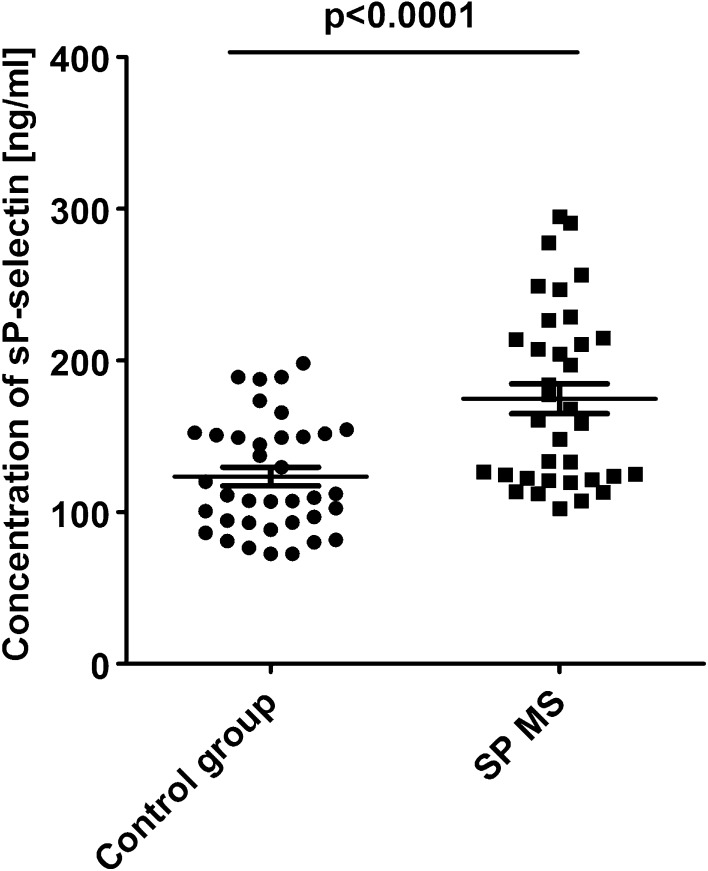
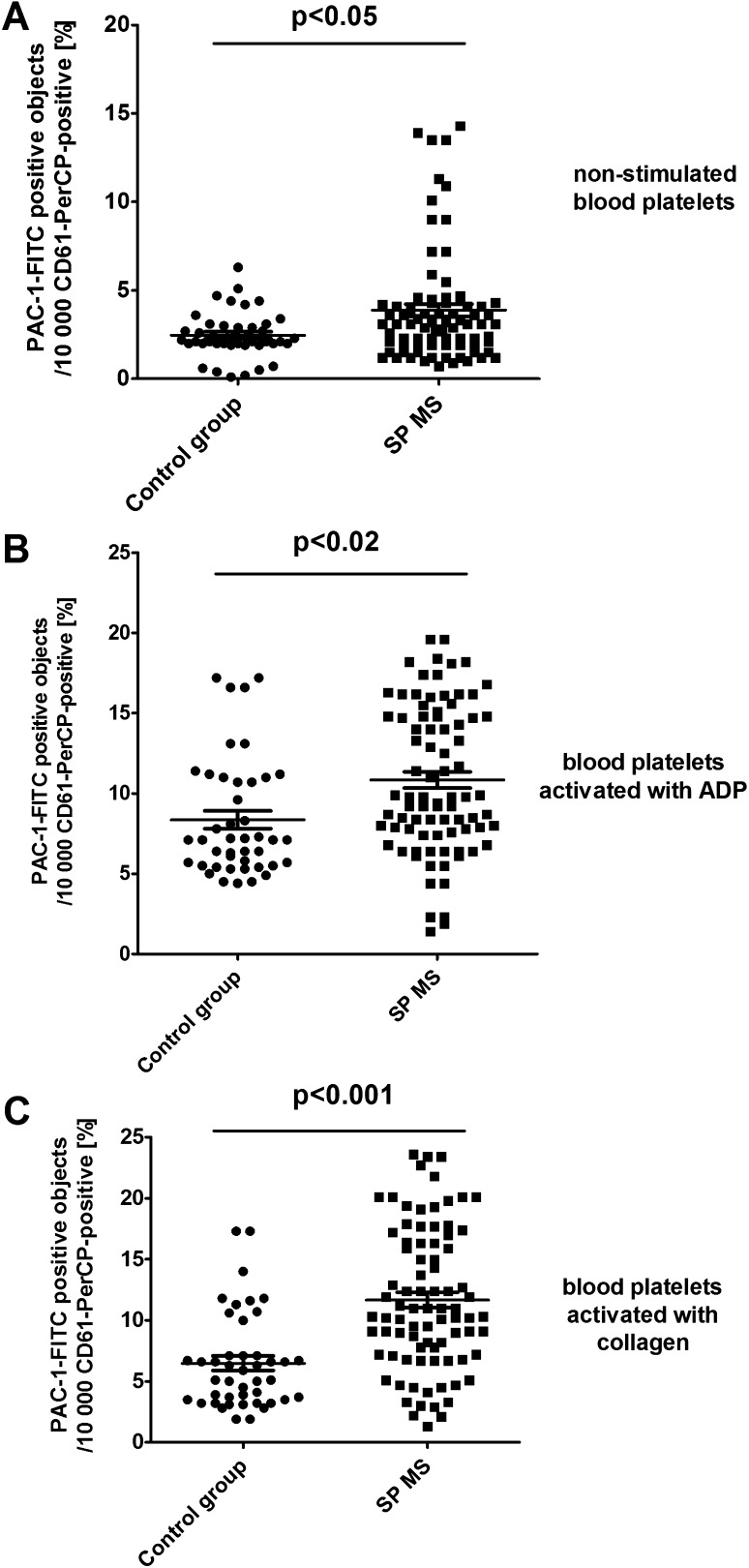
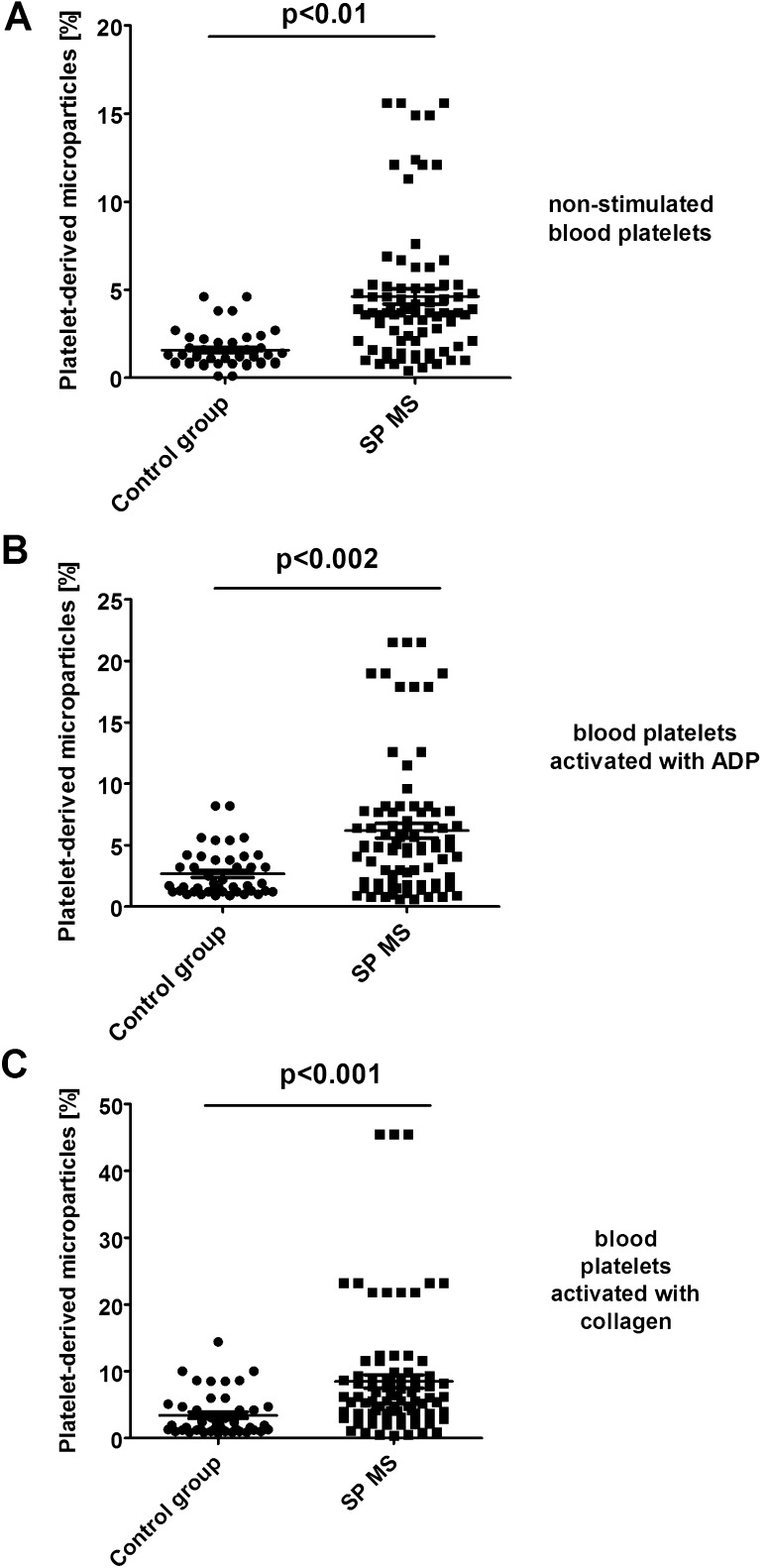
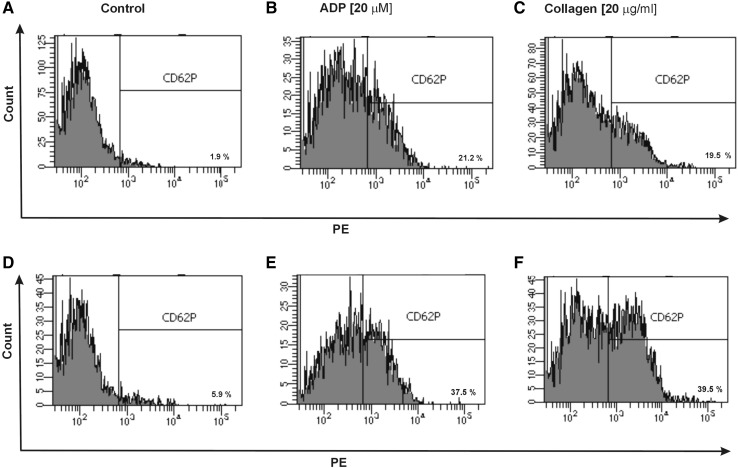
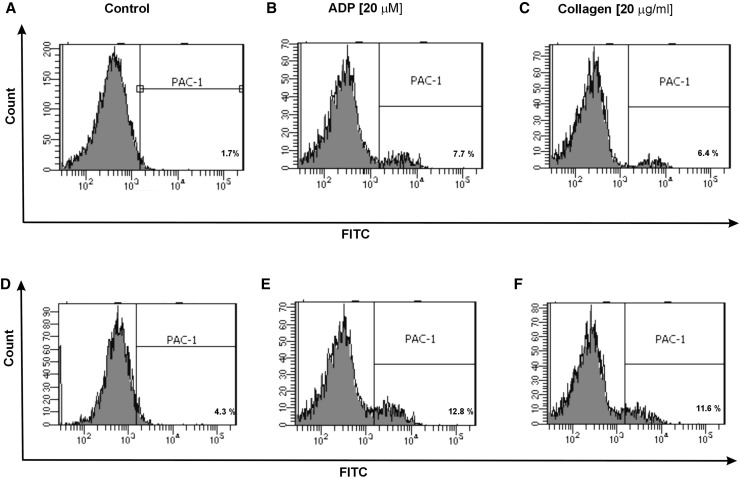
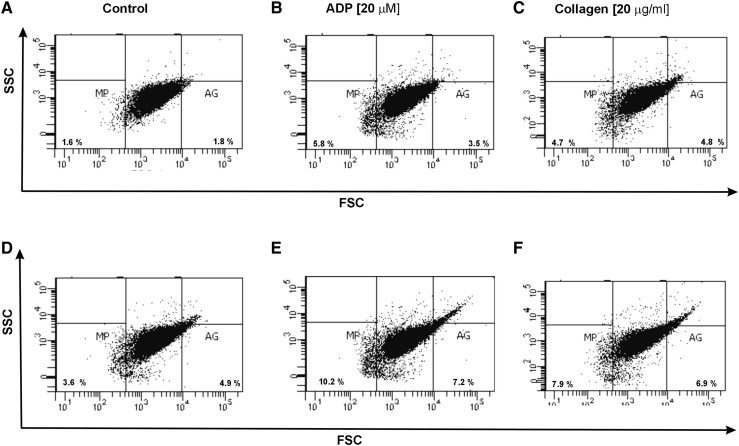
The epidemiological studies confirm an increased risk of cardiovascular disease in multiple sclerosis, especially prothrombotic events directly associated with abnormal platelet activity. The aim of our study was to investigate the level of blood platelet activation in the circulation of patients with chronic phase of multiple sclerosis (SP MS) and their reactivity in response to typical platelets' physiological agonists. We examined 85 SP MS patients diagnosed according to the revised McDonald's criteria and 50 healthy volunteers as a control group. The platelet activation and reactivity were assessed using flow cytometry analysis of the following: P-selectin expression (CD62P), activation of GP IIb/IIIa complex (PAC-1 binding), and formation of platelet microparticles (PMPs) and platelet aggregates (PA) in agonist-stimulated (ADP, collagen) and unstimulated whole blood samples. Furthermore, we measured the level of soluble P-selectin (sP-selectin) in plasma using ELISA method, to evaluate the in vivo level of platelet activation, both in healthy and SP MS subjects. We found a statistically significant increase in P-selectin expression, GP IIb/IIIa activation, and formation of PMPs and PA, as well as in unstimulated and agonist-stimulated (ADP, collagen) platelets in whole blood samples from patients with SP MS in comparison to the control group. We also determined the higher sP-selectin level in plasma of SP MS subjects than in the control group. Based on the obtained results, we might conclude that during the course of SP MS platelets are chronically activated and display hyperreactivity to physiological agonists, such as ADP or collagen.
流行病学研究证实,多发性硬化症患者患心血管疾病的风险增加,尤其是与血小板异常活性直接相关的血栓前状态事件。我们研究的目的是调查多发性硬化症慢性期(SP MS)患者循环中血小板活化水平及其对典型血小板生理激动剂的反应性。我们检查了85例根据修订的麦克唐纳标准诊断的SP MS患者,并将50名健康志愿者作为对照组。使用流式细胞术分析评估血小板活化和反应性,包括以下指标:P-选择素表达(CD62P)、GP IIb/IIIa复合物活化(PAC-1结合),以及在激动剂刺激(ADP、胶原)和未刺激的全血样本中血小板微粒(PMPs)和血小板聚集体(PA)的形成。此外,我们使用ELISA方法测量血浆中可溶性P-选择素(sP-选择素)水平,以评估健康和SP MS受试者体内血小板活化水平。我们发现,与对照组相比,SP MS患者全血样本中未刺激和激动剂刺激(ADP、胶原)的血小板中,P-选择素表达、GP IIb/IIIa活化、PMPs和PA的形成均有统计学显著增加。我们还确定SP MS受试者血浆中的sP-选择素水平高于对照组。基于获得的结果,我们可以得出结论,在SP MS病程中,血小板长期活化,并对生理激动剂如ADP或胶原表现出高反应性。