Department of Immunology and Infectious Diseases, Harvard T.H. Chan School of Public Health, 651 Huntington Avenue, FXB, Room 202, Boston, Massachusetts 02115, USA.
Division of Infectious Diseases, Boston Children's Hospital, Boston, Massachusetts 02115, USA.
Nat Microbiol. 2017 Feb 17;2:17017. doi: 10.1038/nmicrobiol.2017.17.
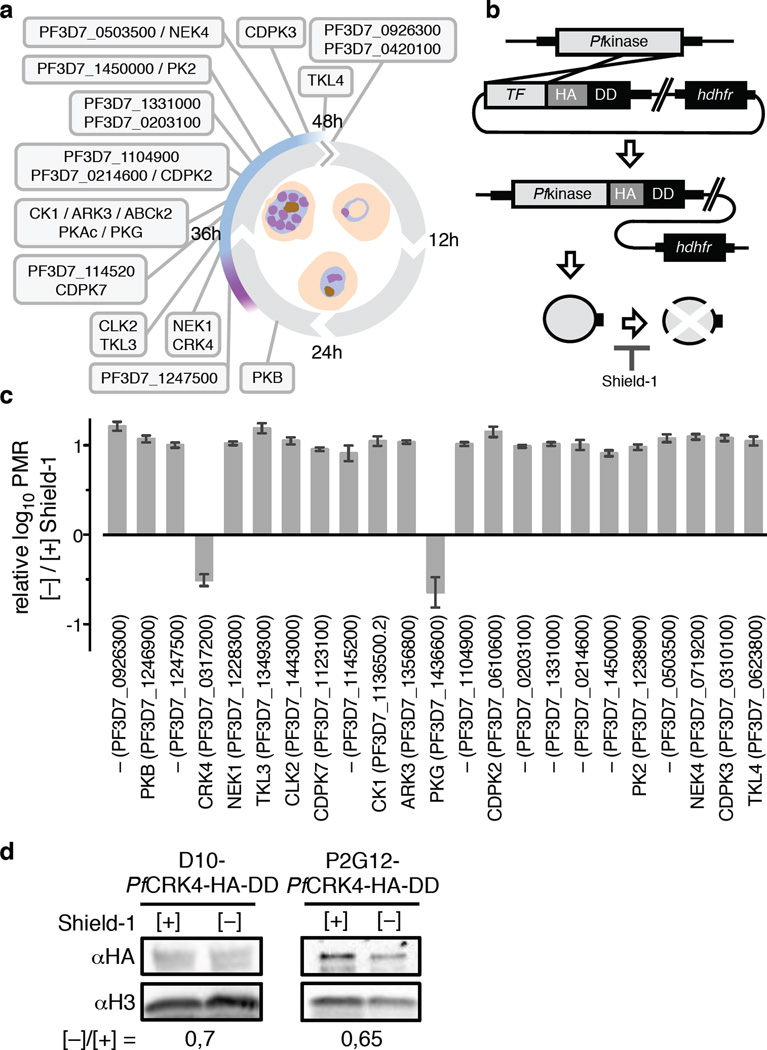
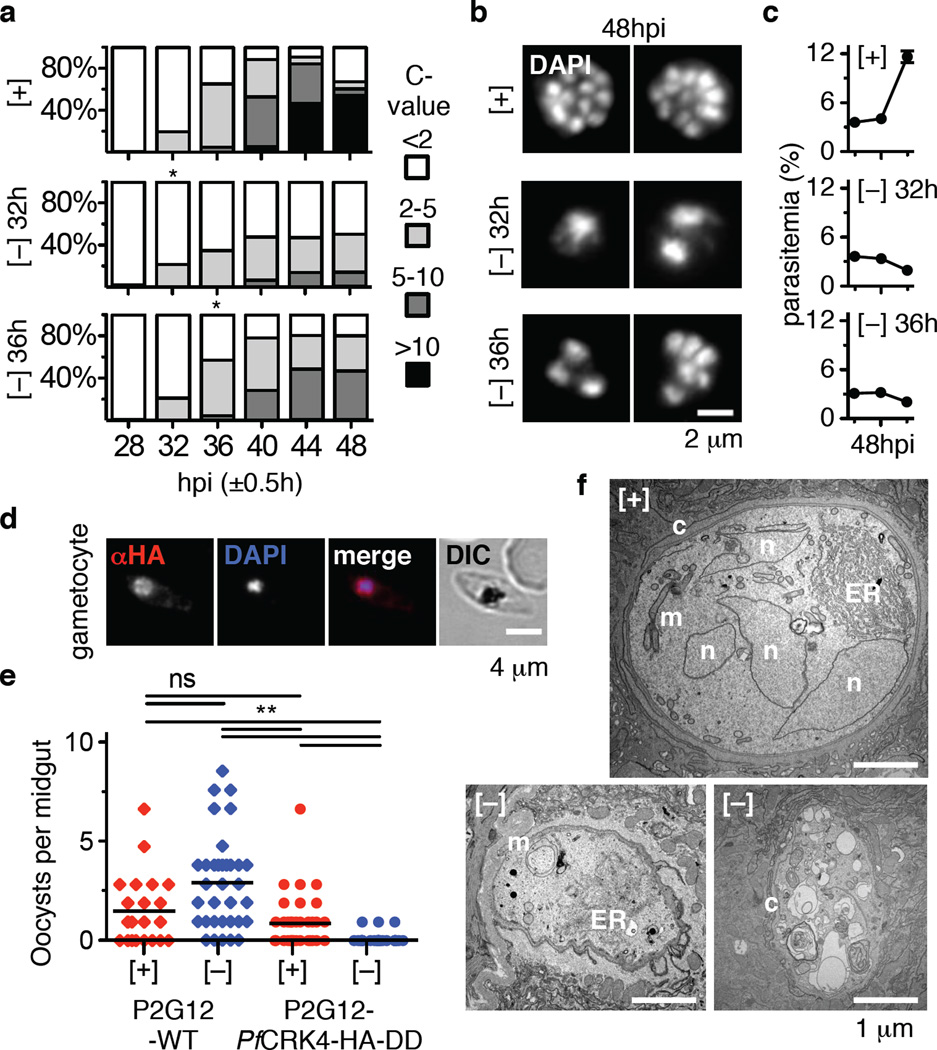
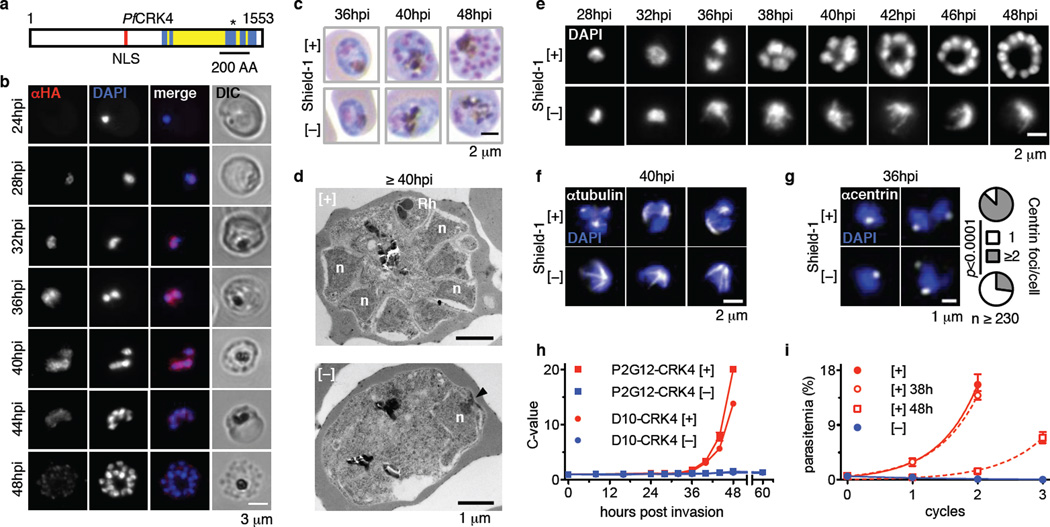
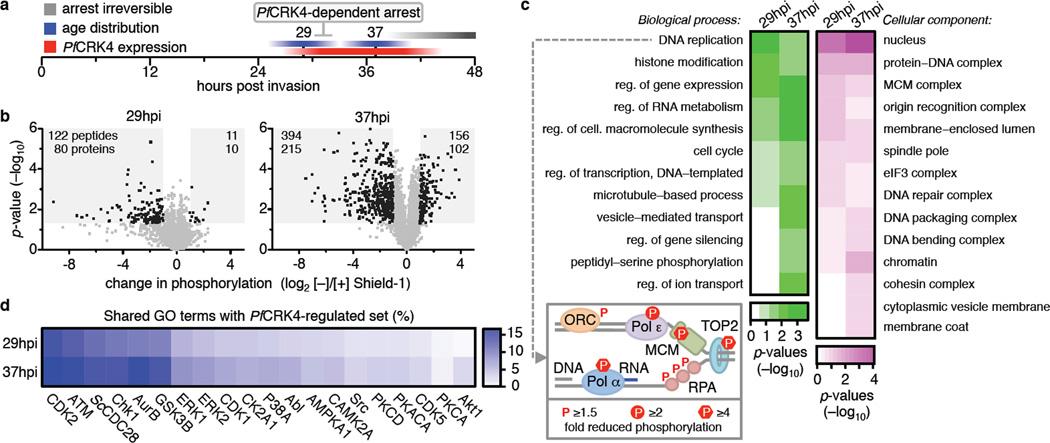
Plasmodium parasites, the causative agents of malaria, have evolved a unique cell division cycle in the clinically relevant asexual blood stage of infection. DNA replication commences approximately halfway through the intracellular development following invasion and parasite growth. The schizont stage is associated with multiple rounds of DNA replication and nuclear division without cytokinesis, resulting in a multinucleated cell. Nuclei divide asynchronously through schizogony, with only the final round of DNA replication and segregation being synchronous and coordinated with daughter cell assembly. However, the control mechanisms for this divergent mode of replication are unknown. Here, we show that the Plasmodium-specific kinase PfCRK4 is a key cell-cycle regulator that orchestrates multiple rounds of DNA replication throughout schizogony in Plasmodium falciparum. PfCRK4 depletion led to a complete block in nuclear division and profoundly inhibited DNA replication. Quantitative phosphoproteomic profiling identified a set of PfCRK4-regulated phosphoproteins with greatest functional similarity to CDK2 substrates, particularly proteins involved in the origin of replication firing. PfCRK4 was required for initial and subsequent rounds of DNA replication during schizogony and, in addition, was essential for development in the mosquito vector. Our results identified an essential S-phase promoting factor of the unconventional P. falciparum cell cycle. PfCRK4 is required for both a prolonged period of the intraerythrocytic stage of Plasmodium infection, as well as for transmission, revealing a broad window for PfCRK4-targeted chemotherapeutics.
疟原虫寄生虫是疟疾的病原体,在感染的临床相关无性血阶段已经进化出独特的细胞分裂周期。DNA 复制大约在入侵和寄生虫生长后细胞内发育的中途开始。裂殖体阶段与多次 DNA 复制和核分裂而没有胞质分裂有关,导致多核细胞。核通过裂殖以不同步的方式分裂,只有最后一轮 DNA 复制和分离是同步的,并与子细胞组装相协调。然而,这种分歧的复制模式的控制机制尚不清楚。在这里,我们表明,疟原虫特异性激酶 PfCRK4 是一种关键的细胞周期调节剂,它在疟原虫裂殖过程中协调多次 DNA 复制。PfCRK4 的耗竭导致核分裂完全阻断,并严重抑制 DNA 复制。定量磷酸蛋白质组学分析鉴定了一组 PfCRK4 调节的磷酸蛋白质,其功能与 CDK2 底物最相似,特别是与复制起始 firing 相关的蛋白质。PfCRK4 在裂殖过程中进行初始和后续的 DNA 复制是必需的,此外,在蚊子媒介中发育也是必需的。我们的结果确定了一种非传统的疟原虫细胞周期的必需 S 期促进因子。PfCRK4 既需要延长疟原虫感染的红细胞内阶段,也需要传播,这揭示了 PfCRK4 靶向化学疗法的广泛窗口。