Ward Fuller Gordon, Hernandez Monica, Pallot David, Lecky Fiona, Stevenson Mathew, Gabbe Belinda
Emergency Medicine Research in Sheffield, Health Services Research Section, School of Health and Related Research (ScHARR), University of Sheffield, Sheffield, South Yorkshire, UK.
School of Health and Related Research, University of Sheffield, Sheffield, South Yorkshire, UK.
Value Health. 2017 Jan;20(1):141-151. doi: 10.1016/j.jval.2016.09.2398. Epub 2016 Dec 28.
Valid and relevant estimates of health state preference weights (HSPWs) for Glasgow Outcome Scale (GOS) categories are a key input of economic models evaluating treatments for traumatic brain injury (TBI).
To characterize existing HSPW estimates, and model the EuroQol five-dimensional questionnaire (EQ-5D) from the GOS, to inform parameterization of future economic models.
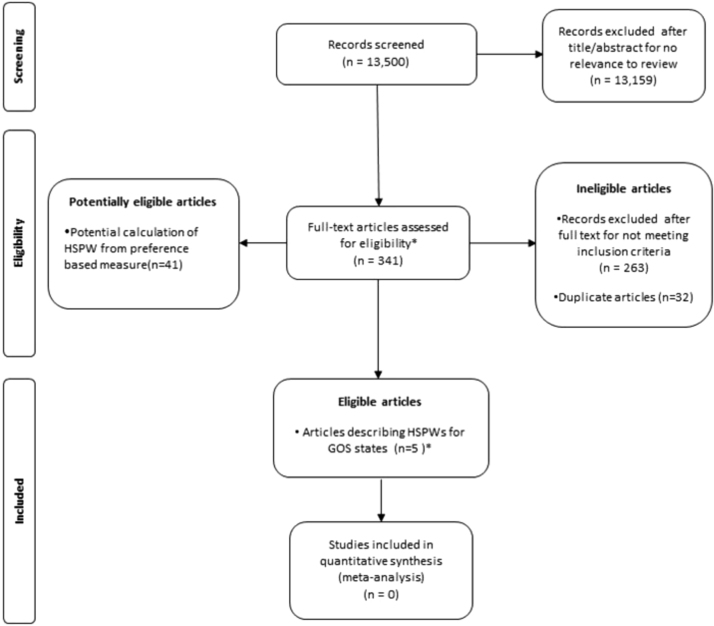
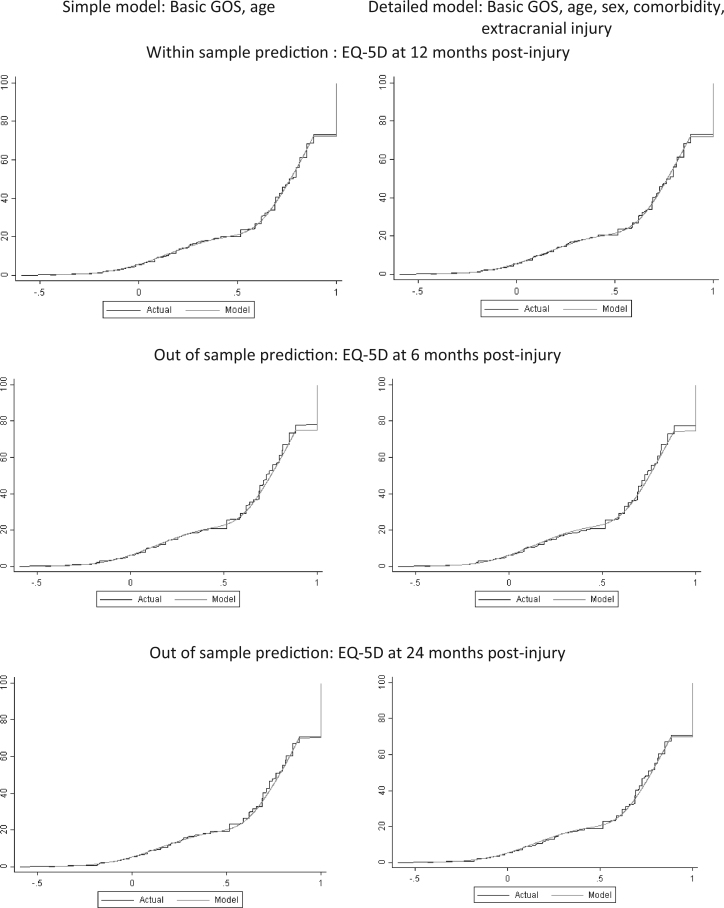
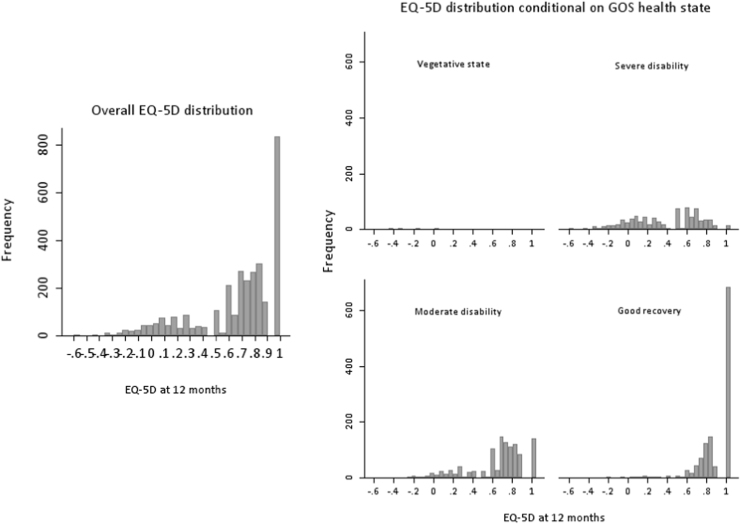
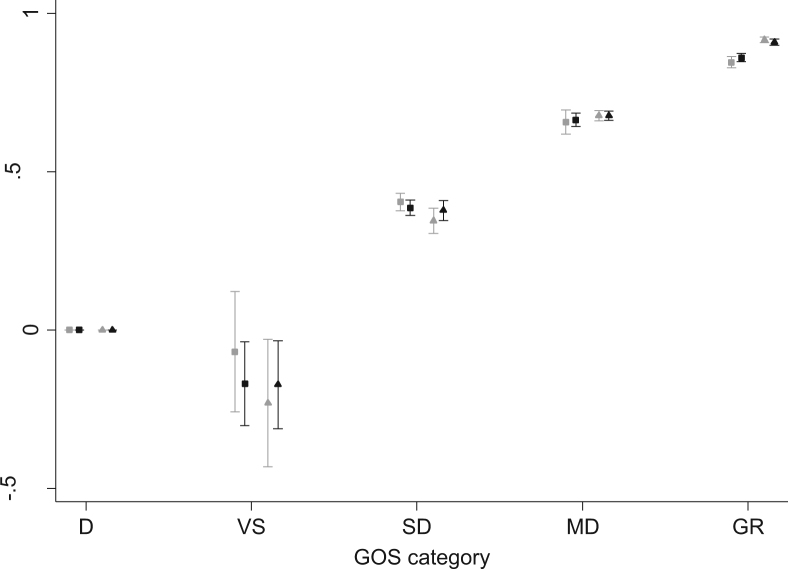
A systematic review of HSPWs for GOS categories following TBI was conducted using a highly sensitive search strategy implemented in an extensive range of information sources between 1975 and 2016. A cross-sectional mapping study of GOS health states onto the three-level EQ-5D UK tariff index values was also performed in patients with significant TBI (head region Abbreviated Injury Scale score ≥3) from the Victoria State Trauma Registry. A limited dependent variable mixture model was used to estimate the 12-month EQ-5D UK value set as a function of GOS category, age, and other explanatory variables.
Six unique HSPWs from five eligible studies were identified. All studies were at high risk of bias with limited applicability. The magnitude of HSPWs differed significantly between studies. Three class mixture models demonstrated excellent goodness of fit to the observed Victoria State Trauma Registry data. GOS category, age at injury, sex, comorbidity, and major extracranial injury all had significant independent effects on mean EQ-5D utility values.
The few available HSPWs for GOS categories are challenged by potential biases and restricted generalizability. Mixture models are presented to provide HSPWs for GOS categories consistent with the National Institute for Health and Care Excellence reference case.
格拉斯哥预后量表(GOS)各分类的健康状态偏好权重(HSPW)的有效且相关的估计值,是评估创伤性脑损伤(TBI)治疗方法的经济模型的关键输入。
描述现有的HSPW估计值,并根据GOS对欧洲五维健康量表(EQ-5D)进行建模,以为未来经济模型的参数化提供信息。
采用高灵敏度搜索策略,对1975年至2016年间广泛信息来源中有关TBI后GOS各分类的HSPW进行系统评价。还对维多利亚州创伤登记处中严重TBI(头部区域简明损伤量表评分≥3)患者的GOS健康状态与三级EQ-5D英国关税指数值进行了横断面映射研究。使用有限因变量混合模型来估计作为GOS分类、年龄和其他解释变量函数的12个月EQ-5D英国值集。
从五项符合条件的研究中确定了六个独特的HSPW。所有研究都存在高偏倚风险且适用性有限。不同研究之间HSPW的大小差异显著。三种类别混合模型对观察到的维多利亚州创伤登记处数据显示出极佳的拟合优度。GOS分类、受伤时年龄、性别、合并症和主要颅外损伤均对平均EQ-5D效用值有显著独立影响。
GOS各分类现有的少数HSPW受到潜在偏倚和普遍适用性受限的挑战。提出了混合模型,以提供与英国国家卫生与临床优化研究所参考案例一致的GOS各分类的HSPW。