Hibino Hiroshi, Takai Madoka, Noguchi Hidenori, Sawamura Seishiro, Takahashi Yasufumi, Sakai Hideki, Shiku Hitoshi
Department of Molecular Physiology, Niigata University School of Medicine, 1-757 Asahimachi-dori, Chuo-ku, Niigata, Niigata, 951-8510, Japan.
Center for Transdisciplinary Research, Niigata University, Niigata, Niigata, 950-2181, Japan.
J Physiol Sci. 2017 Jul;67(4):439-445. doi: 10.1007/s12576-017-0530-3. Epub 2017 Feb 17.
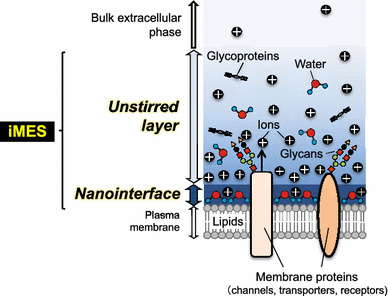
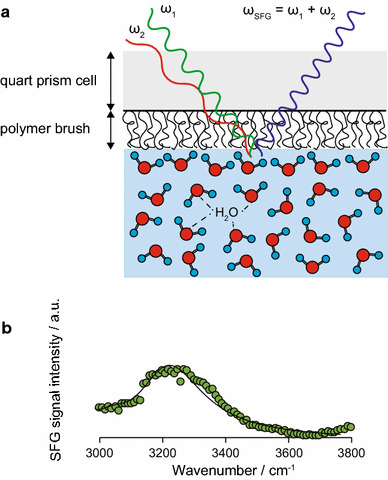
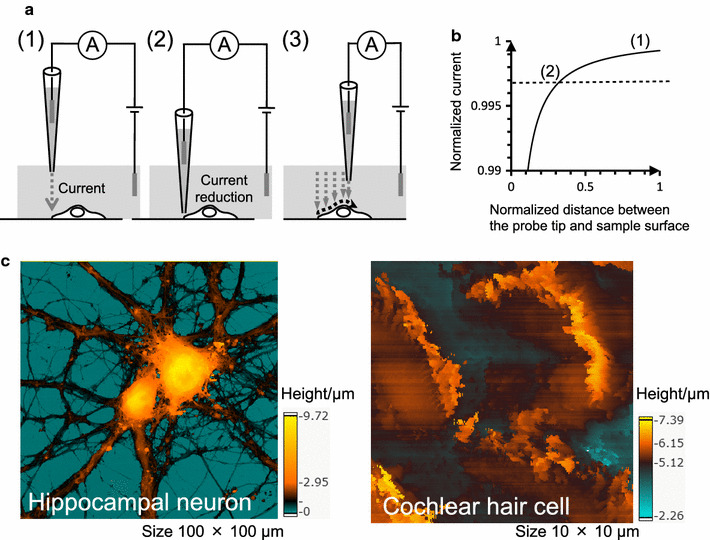
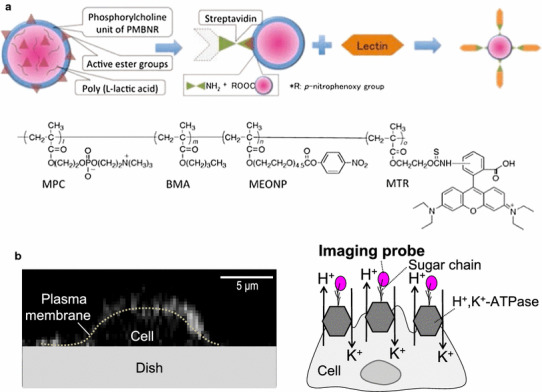
In vivo, cells are immersed in an extracellular solution that contains a variety of bioactive substances including ions and water. Classical electrophysiological analyses of epithelial cells in the stomach and small intestine have revealed that within a distance of several hundred micrometers above their apical plasma membrane, lies an extracellular layer that shows ion concentration gradients undetectable in the bulk phase. This "unstirred layer", which contains stagnant solutes, may also exist between the bulk extracellular solution and membranes of other cells in an organism and may show different properties. On the other hand, an earlier study using a bacterial planar membrane indicated that H released from a transporter migrates in the horizontal direction along the membrane surface much faster than it diffuses vertically toward the extracellular space. This result implies that between the membrane surface and unstirred layer, there is a "nanointerface" that has unique ionic dynamics. Advanced technologies have revealed that the nanointerface on artificial membranes possibly harbors a highly ordered assembly of water molecules. In general, hydrogen bonds are involved in formation of the ordered water structure and can mediate rapid transfer of H between neighboring molecules. This description may match the phenomenon on the bacterial membrane. A recent study has suggested that water molecules in the nanointerface regulate the gating of K channels. Here, the region comprising the unstirred layer and nanointerface is defined as the interphase between the plasma membrane and bulk extracellular solution (iMES). This article briefly describes the physicochemical properties of ions and water in the iMES and their physiological significance. We also describe the methodologies that are currently used or will be applicable to the interphase research.
在体内,细胞浸没在含有多种生物活性物质(包括离子和水)的细胞外溶液中。对胃和小肠上皮细胞的经典电生理分析表明,在其顶端质膜上方几百微米的距离内,存在一层细胞外层,该层显示出在体相中无法检测到的离子浓度梯度。这个含有停滞溶质的“静止层”也可能存在于生物体中细胞外溶液主体与其他细胞膜之间,并且可能表现出不同的特性。另一方面,一项早期使用细菌平面膜的研究表明,从转运体释放的H沿着膜表面在水平方向上迁移的速度比其向细胞外空间垂直扩散的速度要快得多。这一结果意味着在膜表面和静止层之间存在一个具有独特离子动力学特性的“纳米界面”。先进技术已经揭示,人工膜上的纳米界面可能含有高度有序的水分子组装体。一般来说,氢键参与有序水结构的形成,并能介导相邻分子之间H的快速转移。这种描述可能与细菌膜上的现象相符。最近的一项研究表明,纳米界面中的水分子调节钾通道的门控。在这里,由静止层和纳米界面组成的区域被定义为质膜与细胞外溶液主体之间的界面(iMES)。本文简要描述了iMES中离子和水的物理化学性质及其生理意义。我们还描述了目前正在使用或适用于该界面研究的方法。