Hochberg Uri, Bonel Andrea Giulia, David-Schwartz Rakefet, Degu Asfaw, Fait Aaron, Cochard Hervé, Peterlunger Enrico, Herrera Jose Carlos
Department of Agricultural, Food, Environmental and Animal Sciences, University of Udine, Via delle Scienze 206, 33100, Udine, Italy.
PIAF, INRA, Univ. Clermont-Auvergne, 63100, Clermont-Ferrand, France.
Planta. 2017 Jun;245(6):1091-1104. doi: 10.1007/s00425-017-2662-3. Epub 2017 Feb 18.
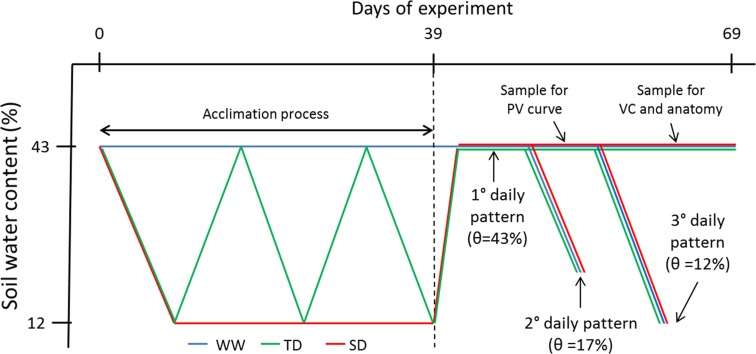
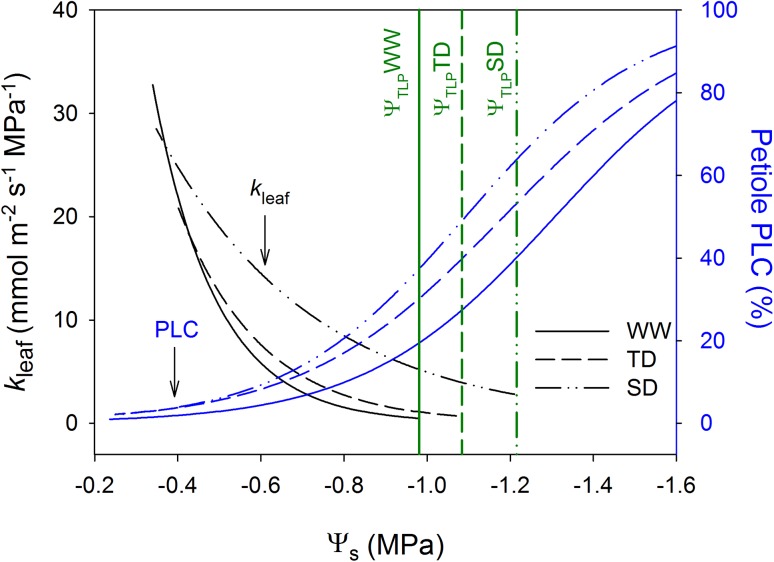
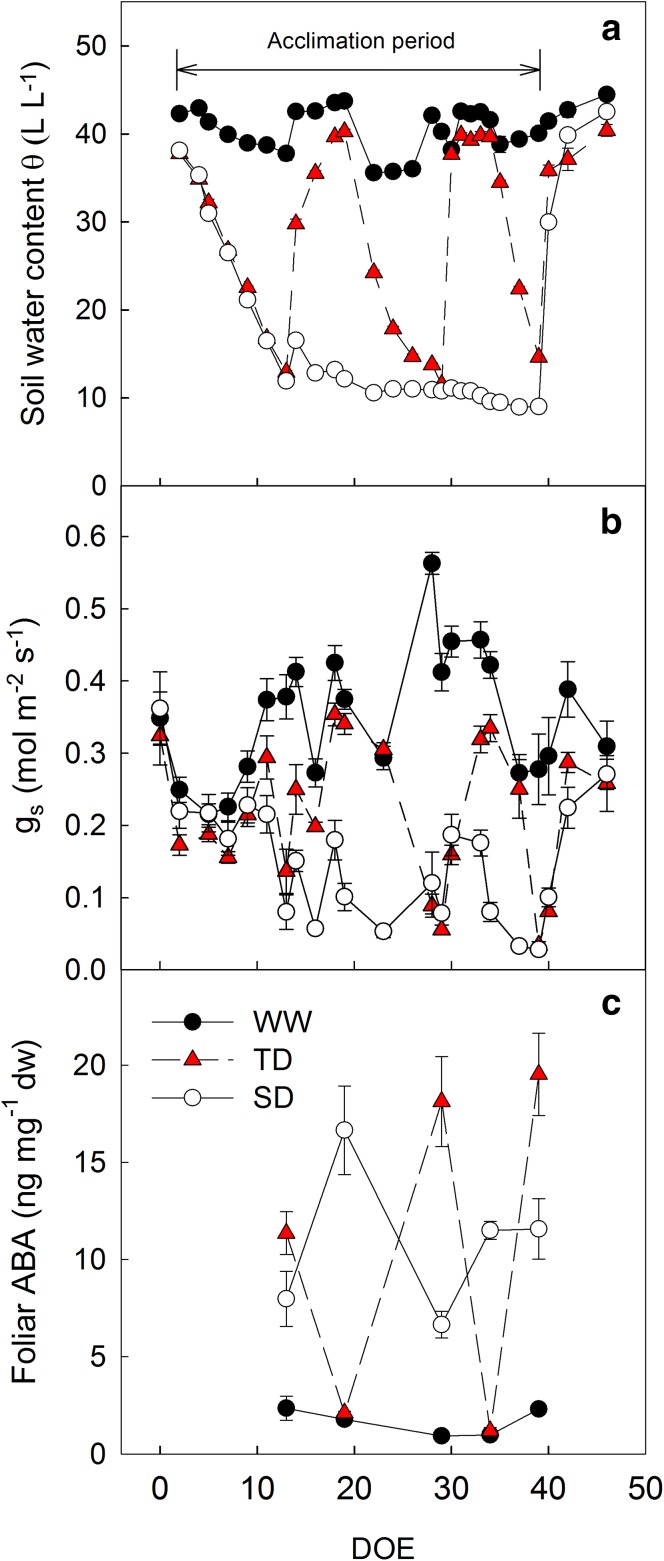
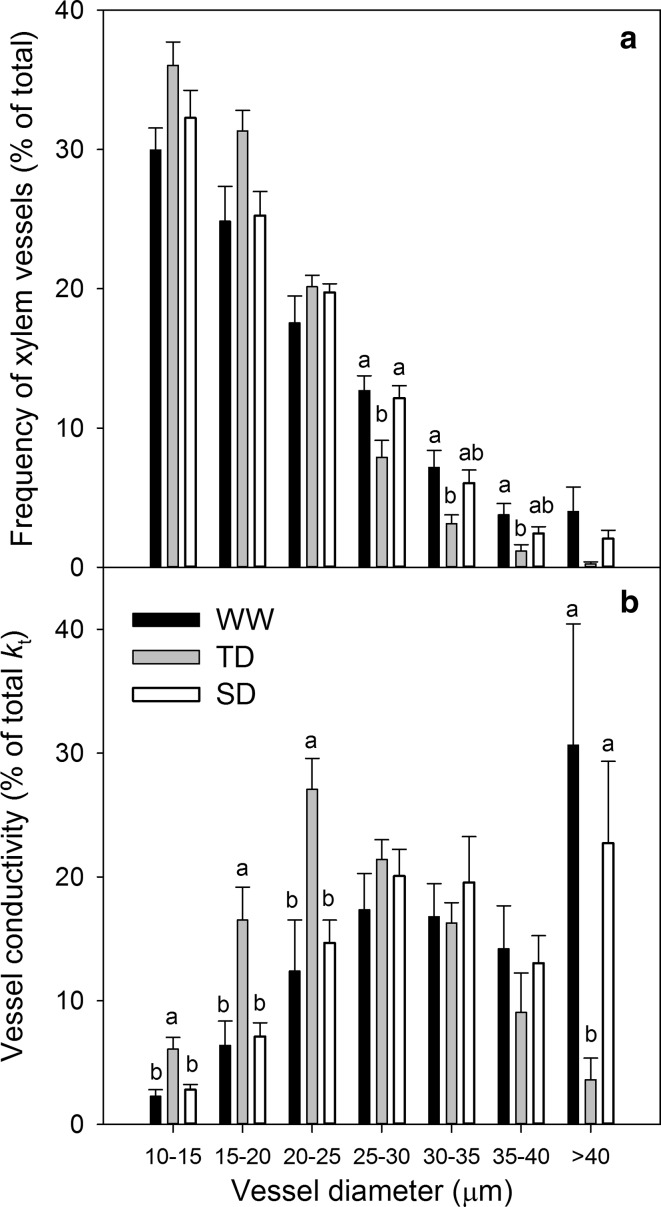
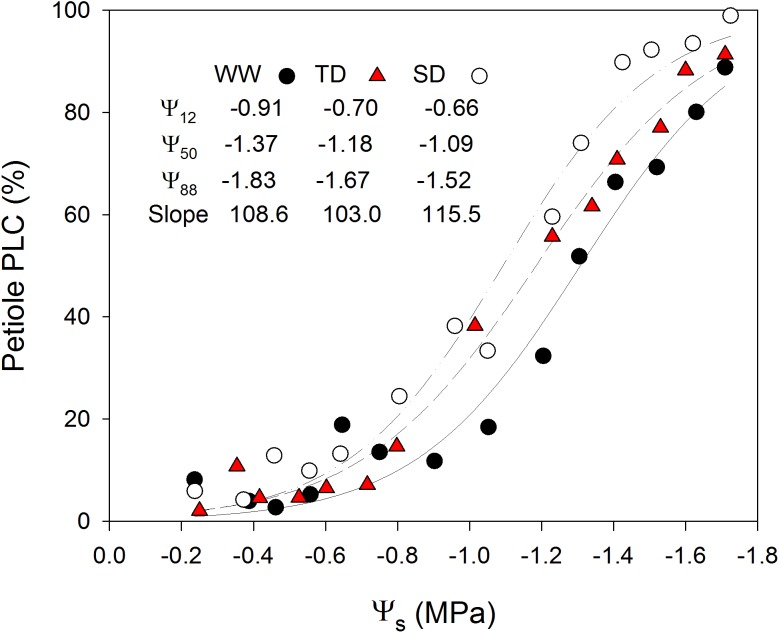
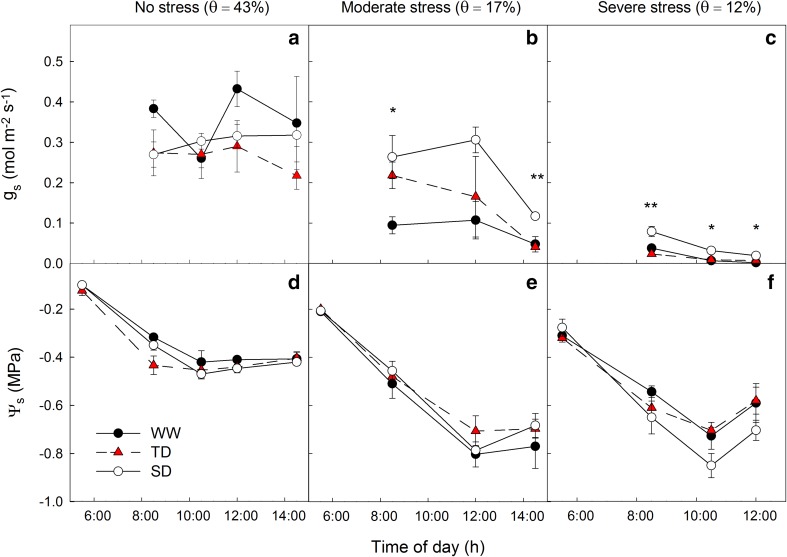
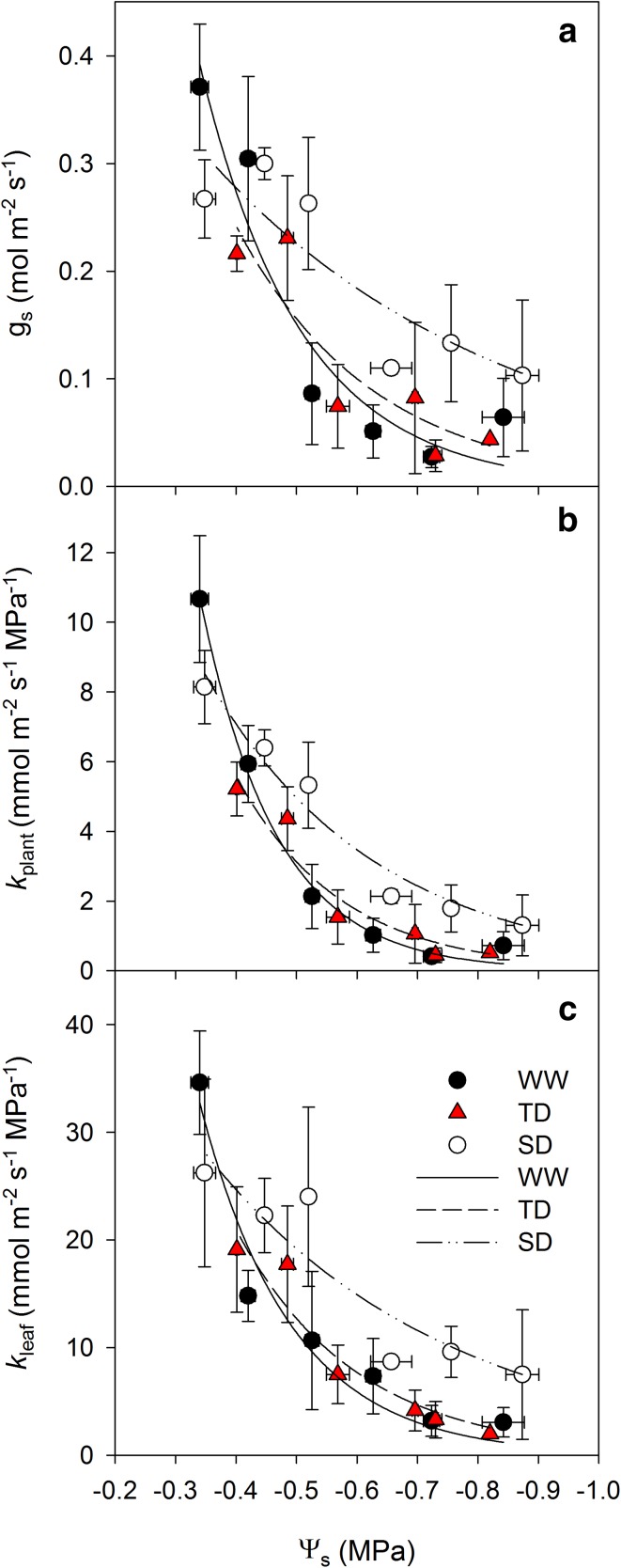
Drought-acclimated vines maintained higher gas exchange compared to irrigated controls under water deficit; this effect is associated with modified leaf turgor but not with improved petiole vulnerability to cavitation. A key feature for the prosperity of plants under changing environments is the plasticity of their hydraulic system. In the present research we studied the hydraulic regulation in grapevines (Vitis vinifera L.) that were first acclimated for 39 days to well-watered (WW), sustained water deficit (SD), or transient-cycles of dehydration-rehydration-water deficit (TD) conditions, and then subjected to varying degrees of drought. Vine development under SD led to the smallest leaves and petioles, but the TD vines had the smallest mean xylem vessel and calculated specific conductivity (k ). Unexpectedly, both the water deficit acclimation treatments resulted in vines more vulnerable to cavitation in comparison to WW, possibly as a result of developmental differences or cavitation fatigue. When exposed to drought, the SD vines maintained the highest stomatal (g ) and leaf conductance (k ) under low stem water potential (Ψ), despite their high xylem vulnerability and in agreement with their lower turgor loss point (Ψ). These findings suggest that the down-regulation of k and g is not associated with embolism, and the ability of drought-acclimated vines to maintain hydraulic conductance and gas exchange under stressed conditions is more likely associated with the leaf turgor and membrane permeability.
与灌溉对照相比,在水分亏缺条件下,经干旱驯化的葡萄藤保持了更高的气体交换;这种效应与叶片膨压的改变有关,但与叶柄对空穴化的抗性提高无关。植物在不断变化的环境中繁荣生长的一个关键特征是其水力系统的可塑性。在本研究中,我们研究了葡萄藤(Vitis vinifera L.)的水力调节,这些葡萄藤首先在充分浇水(WW)、持续水分亏缺(SD)或脱水-复水-水分亏缺的瞬态循环(TD)条件下驯化39天,然后经受不同程度的干旱。在SD条件下的葡萄藤发育导致叶片和叶柄最小,但TD处理的葡萄藤平均木质部导管最小,计算得出的比导率(k)也最小。出乎意料的是,与WW处理相比,两种水分亏缺驯化处理都使葡萄藤更容易发生空穴化,这可能是发育差异或空穴化疲劳的结果。当暴露于干旱时,尽管SD处理的葡萄藤木质部脆弱性高且与较低的膨压损失点(Ψ)一致,但在低茎水势(Ψ)下,它们仍保持最高的气孔导度(g)和叶片导度(k)。这些发现表明,k和g的下调与栓塞无关,经干旱驯化的葡萄藤在胁迫条件下维持水力导度和气体交换的能力更可能与叶片膨压和膜通透性有关。