Institut Méditerranéen de Biodiversité et d'Ecologie marine et continentale, IMBE UMR 7263 CNRS/IRD/Aix Marseille Université/Avignon Université. Station Marine d'Endoume, rue de la Batterie des Lions, 13007 Marseille, France.
CCMAR-CIMAR Centre for Marine Sciences, University of Algarve, Campus de Gambelas, 8005-139 Faro, Portugal.
Sci Rep. 2017 Feb 20;7:42625. doi: 10.1038/srep42625.
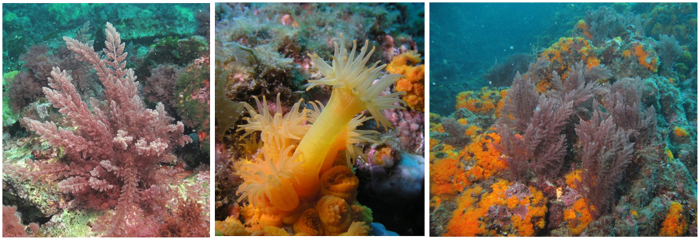
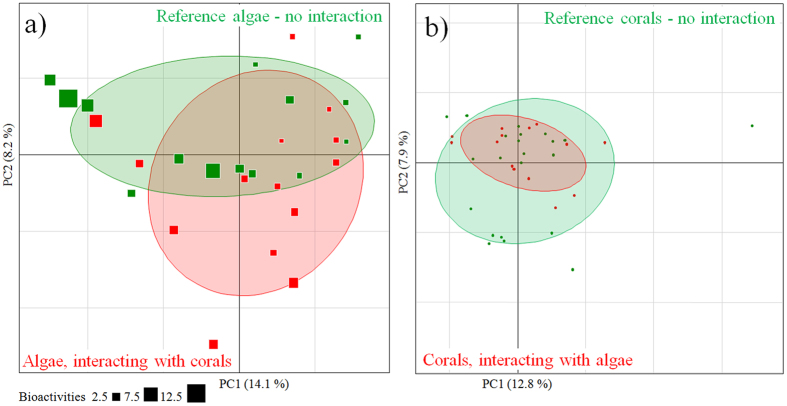
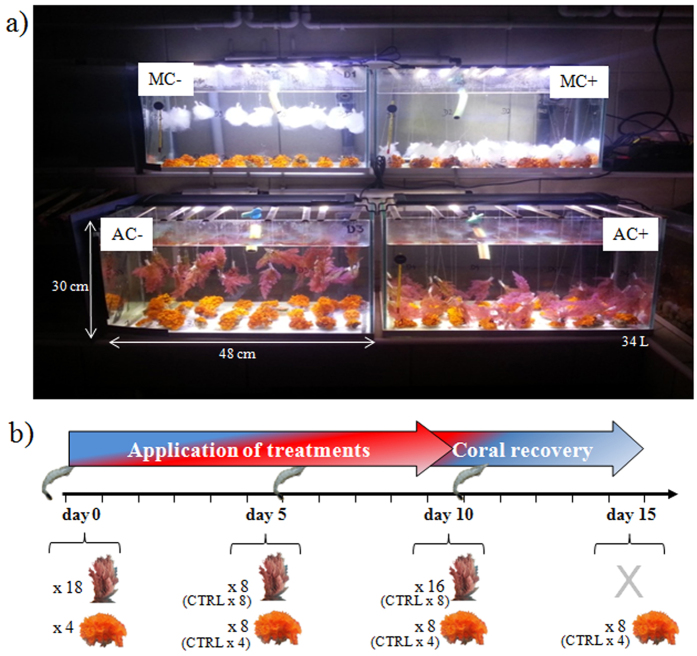
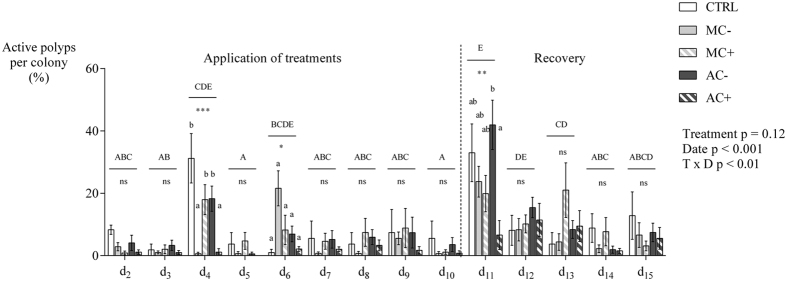
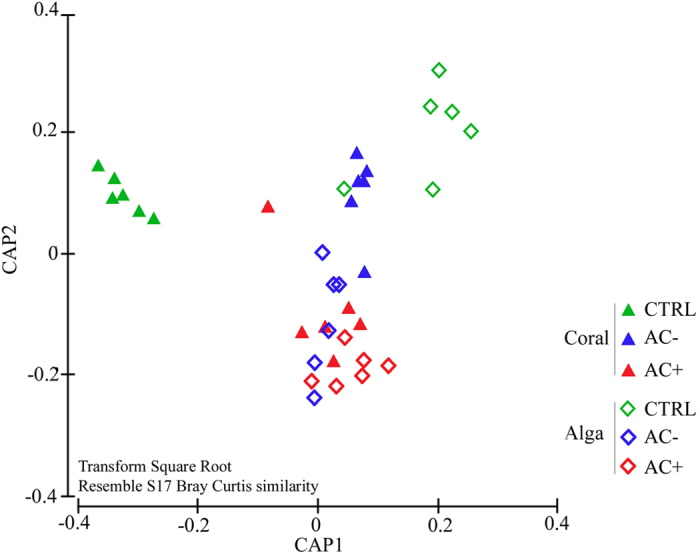
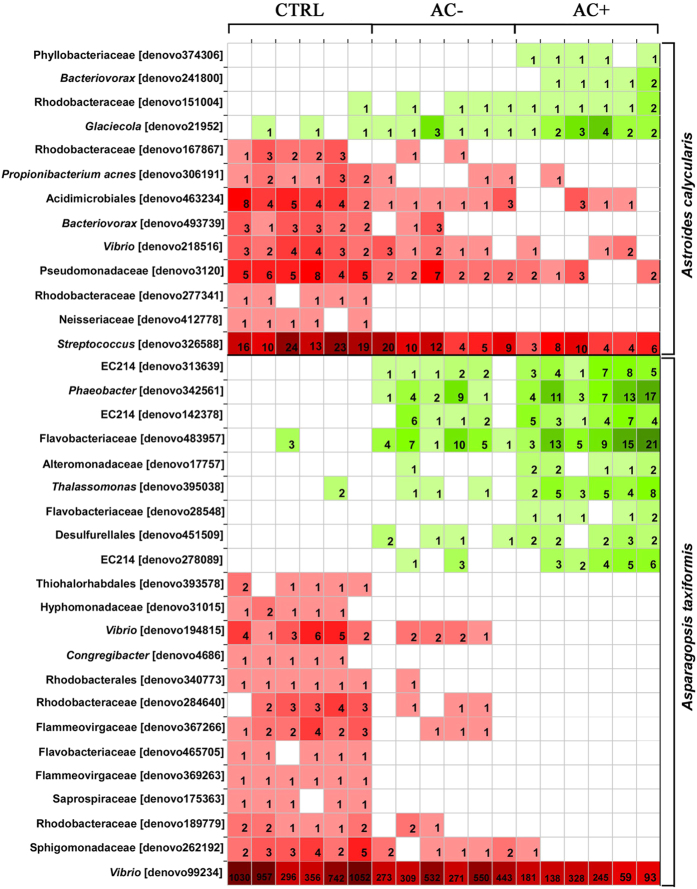
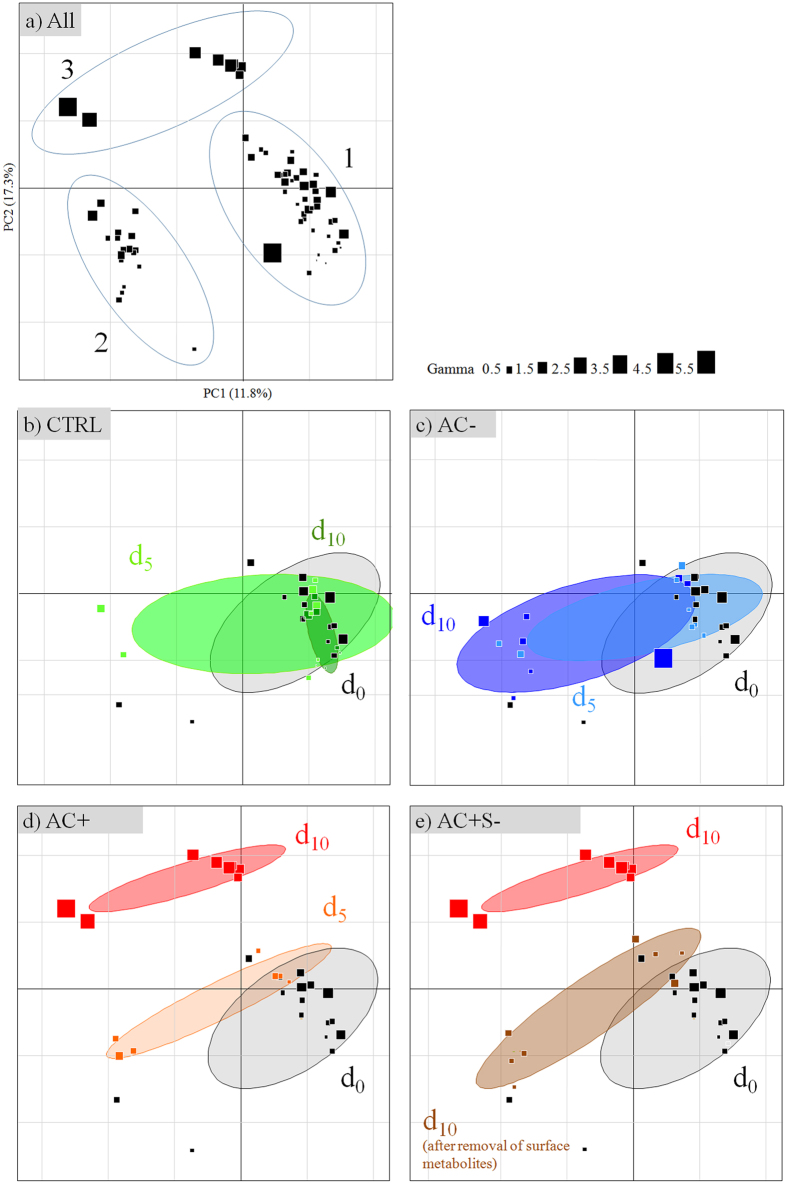
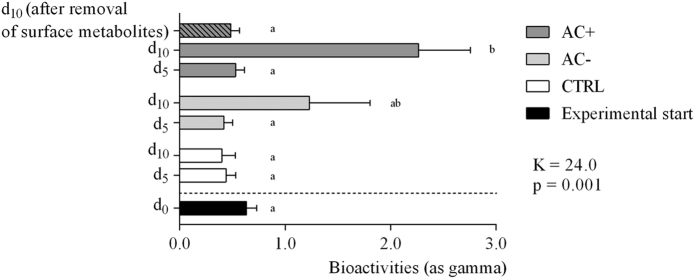
Mediterranean Sea ecosystems are considered as hotspots of biological introductions, exposed to possible negative effects of non-indigenous species. In such temperate marine ecosystems, macroalgae may be dominant, with a great percentage of their diversity represented by introduced species. Their interaction with temperate indigenous benthic organisms have been poorly investigated. To provide new insights, we performed an experimental study on the interaction between the introduced proliferative red alga Asparagopsis taxiformis and the indigenous Mediterranean coral Astroides calycularis. The biological response measurements included meta-barcoding of the associated microbial communities and metabolomic fingerprinting of both species. Significant changes were detected among both associated microbial communities, the interspecific differences decreasing with stronger host interaction. No short term effects of the macroalga on the coral health, neither on its polyp activity or its metabolism, were detected. In contrast, the contact interaction with the coral induced a change in the macroalgal metabolomic fingerprint with a significant increase of its bioactivity against the marine bacteria Aliivibrio fischeri. This induction was related to the expression of bioactive metabolites located on the macroalgal surface, a phenomenon which might represent an immediate defensive response of the macroalga or an allelopathic offense against coral.
地中海生态系统被认为是生物引入的热点区域,容易受到非本地物种的负面影响。在这种温带海洋生态系统中,大型藻类可能占主导地位,其多样性中有很大一部分是外来物种。它们与温带本地底栖生物的相互作用还没有得到充分的研究。为了提供新的见解,我们对引入的增殖红藻 Asparagopsis taxiformis 和本地地中海珊瑚 Astroides calycularis 之间的相互作用进行了实验研究。生物反应测量包括相关微生物群落的宏条形码和两种物种的代谢组指纹分析。在相关微生物群落中都检测到了显著的变化,种间差异随着宿主相互作用的增强而减小。没有检测到藻类对珊瑚健康、珊瑚息肉活动或代谢的短期影响。相反,与珊瑚的接触相互作用导致大型藻类的代谢组指纹发生变化,其对海洋细菌 Aliivibrio fischeri 的生物活性显著增加。这种诱导与位于大型藻类表面的生物活性代谢物的表达有关,这一现象可能代表大型藻类的即时防御反应或对珊瑚的化感进攻。