Swire Institute of Marine Science, The University of Hong Kong, Hong Kong, SAR, China.
UMR250/9220 ENTROPIE IRD-CNRS-UR, Promenade Roger-Laroque, Sorbonne Université, Noumea Cedex, New Caledonia, France.
Microbiome. 2020 Apr 21;8(1):57. doi: 10.1186/s40168-020-00835-8.
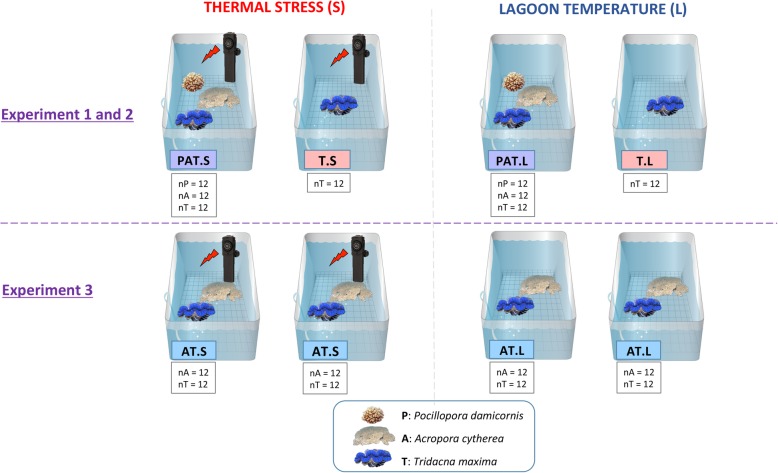
Giant clams and scleractinian (reef-building) corals are keystone species of coral reef ecosystems. The basis of their ecological success is a complex and fine-tuned symbiotic relationship with microbes. While the effect of environmental change on the composition of the coral microbiome has been heavily studied, we know very little about the composition and sensitivity of the microbiome associated with clams. Here, we explore the influence of increasing temperature on the microbial community (bacteria and dinoflagellates from the family Symbiodiniaceae) harbored by giant clams, maintained either in isolation or exposed to other reef species. We created artificial benthic assemblages using two coral species (Pocillopora damicornis and Acropora cytherea) and one giant clam species (Tridacna maxima) and studied the microbial community in the latter using metagenomics.
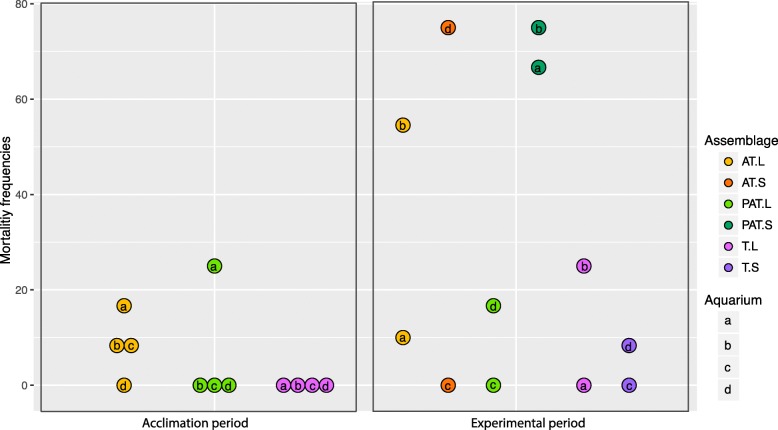
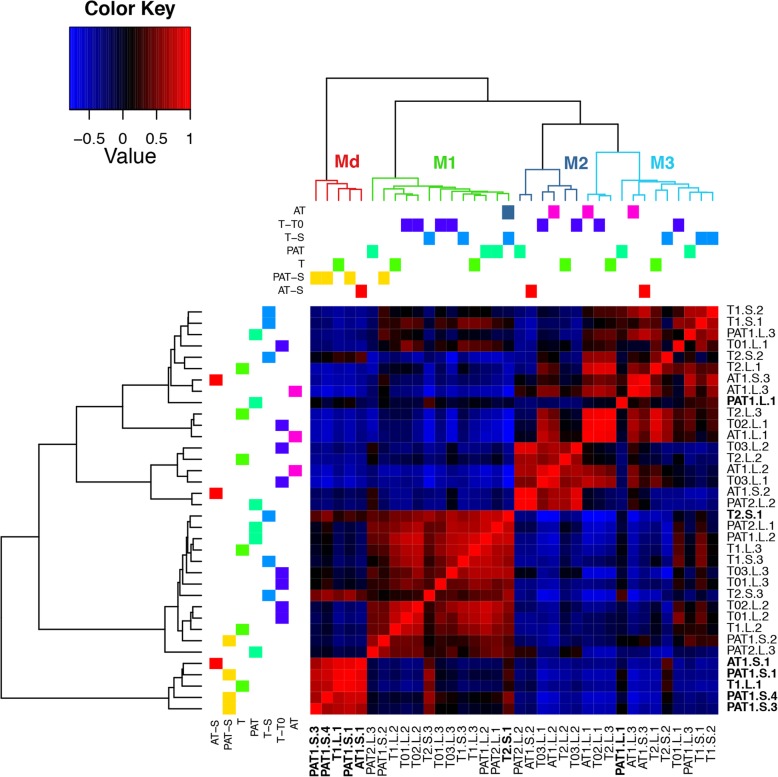
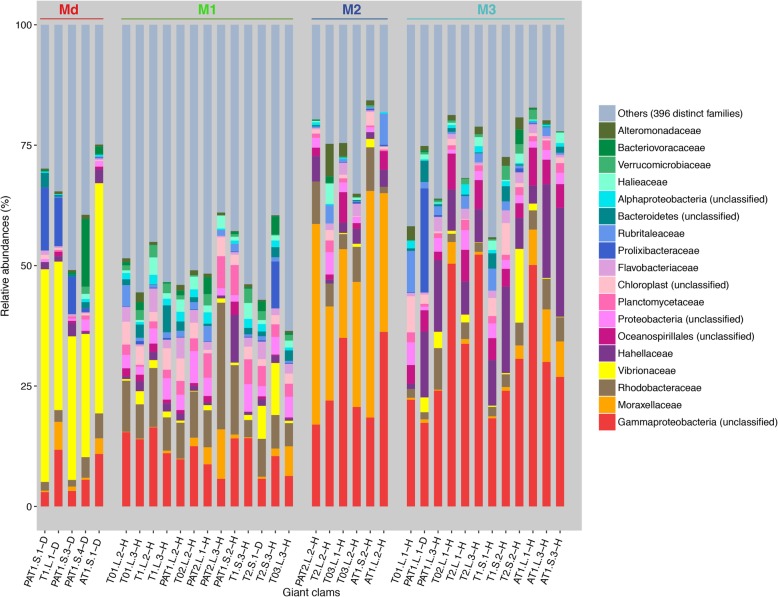
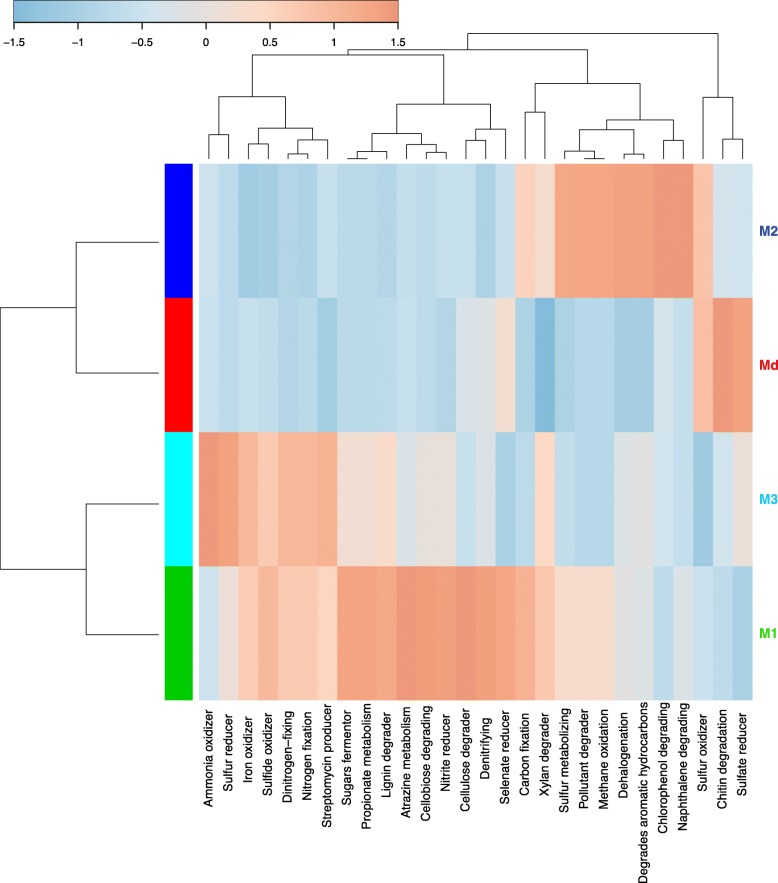
Our results led to three major conclusions. First, the health status of giant clams depended on the composition of the benthic species assemblages. Second, we discovered distinct microbiotypes in the studied T. maxima population, one of which was disproportionately dominated by Vibrionaceae and directly linked to clam mortality. Third, neither the increase in water temperature nor the composition of the benthic assemblage had a significant effect on the composition of the Symbiodiniaceae and bacterial communities of T. maxima.
Altogether, our results suggest that at least three microbiotypes naturally exist in the studied clam populations, regardless of water temperature. These microbiotypes plausibly provide similar functions to the clam host via alternate molecular pathways as well as microbiotype-specific functions. This redundancy in functions among microbiotypes together with their specificities provides hope that giant clam populations can tolerate some levels of environmental variation such as increased temperature. Importantly, the composition of the benthic assemblage could make clams susceptible to infections by Vibrionaceae, especially when water temperature increases. Video abstract.
巨蛤和石珊瑚(造礁珊瑚)是珊瑚礁生态系统的关键物种。它们生态成功的基础是与微生物之间复杂而精细的共生关系。虽然环境变化对珊瑚微生物组组成的影响已得到深入研究,但我们对与蛤类相关的微生物组的组成和敏感性知之甚少。在这里,我们探讨了温度升高对巨蛤体内微生物群落(细菌和属于 Symbiodiniaceae 科的甲藻)的影响,这些巨蛤要么单独饲养,要么与其他珊瑚物种一起饲养。我们使用两种珊瑚物种(Pocillopora damicornis 和 Acropora cytherea)和一种巨蛤物种(Tridacna maxima)创建了人工底栖组合,并使用宏基因组学研究了后者的微生物群落。
我们的研究结果得出了三个主要结论。首先,巨蛤的健康状况取决于底栖物种组合的组成。其次,我们在研究的 T. maxima 种群中发现了独特的微生物型,其中一种型被 Vibrionaceae 过度主导,并与蛤类死亡率直接相关。第三,无论是水温升高还是底栖组合的组成都没有对 T. maxima 的 Symbiodiniaceae 和细菌群落的组成产生显著影响。
总的来说,我们的研究结果表明,至少有三种微生物型自然存在于研究中的蛤类种群中,无论水温如何。这些微生物型可能通过替代分子途径以及微生物型特异性功能为蛤类宿主提供相似的功能。这些微生物型之间的功能冗余性以及它们的特异性为巨蛤种群能够耐受一定程度的环境变化(如温度升高)提供了希望。重要的是,底栖组合的组成可能使蛤类容易受到 Vibrionaceae 的感染,特别是当水温升高时。视频摘要。