Cvirn Gerhard, Kneihsl Markus, Rossmann Christine, Paar Margret, Gattringer Thomas, Schlagenhauf Axel, Leschnik Bettina, Koestenberger Martin, Tafeit Erwin, Reibnegger Gilbert, Trozic Irhad, Rössler Andreas, Fazekas Franz, Goswami Nandu
Institute of Physiological Chemistry, Medical University of Graz Graz, Austria.
Department of Neurology, Medical University of Graz Graz, Austria.
Front Physiol. 2017 Feb 7;8:12. doi: 10.3389/fphys.2017.00012. eCollection 2017.
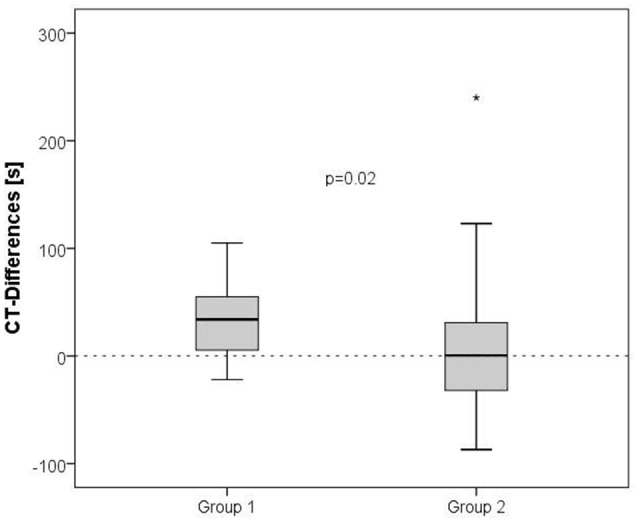
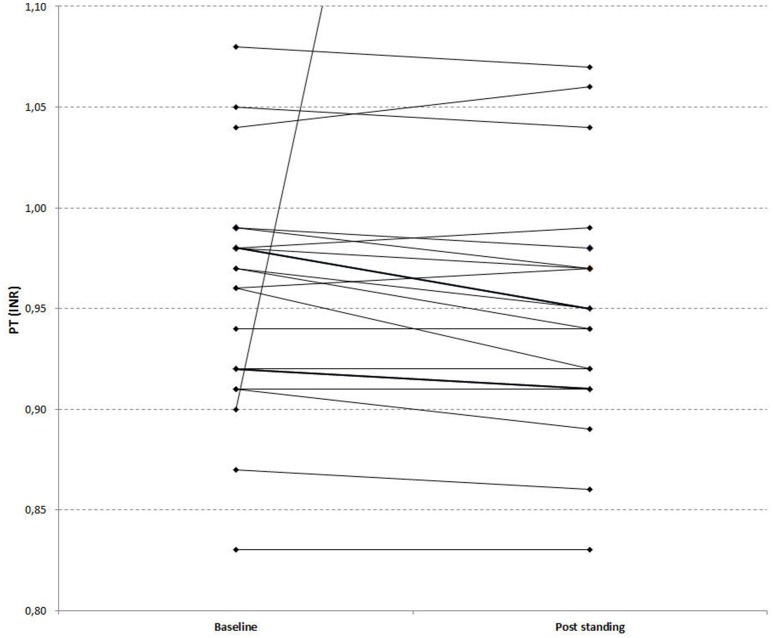
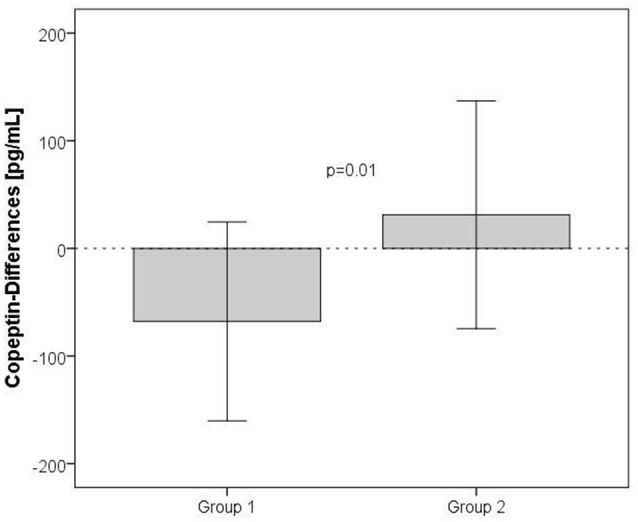
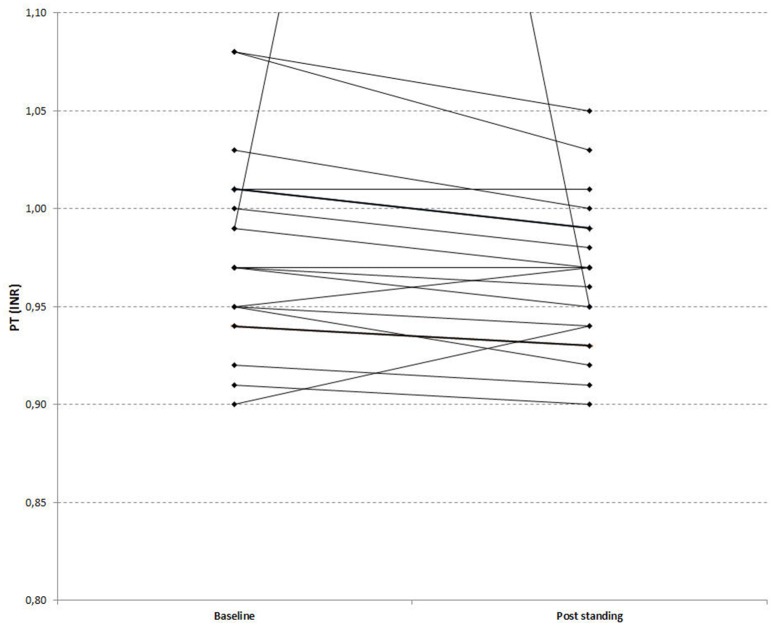
The objective of our study was to assess the effects of orthostatic challenge on the coagulation system in patients with a history of thromboembolic events and to assess how they compared with age-matched healthy controls. Twenty-two patients with histories of ischemic stroke and 22 healthy age-matched controls performed a sit-to-stand test. Blood was collected prior to- and at the end of- standing in the upright position for 6 min. Hemostatic profiling was performed by determining thrombelastometry and calibrated automated thrombogram values, indices of thrombin generation, standard coagulation times, markers of endothelial activation, plasma levels of coagulation factors and copeptin, and hematocrit. Orthostatic challenge caused a significant endothelial and coagulation activation in patients (Group 1) and healthy controls (Group 2): Plasma levels of prothrombin fragment F1+2 were increased by approximately 35% and thrombin/antithrombin-complex (TAT) increased 5-fold. Several coagulation variables were significantly altered in Group 1 but not in Group 2: Coagulation times (CTs) were significantly shortened and alpha angles, peak rate of thrombin generation (VELINDEX), tissue factor (TF) and copeptin plasma levels were significantly increased (comparison between standing and baseline). Moreover, the shortening of CTs and the rise of copeptin plasma levels were significantly higher in Group 1 vs. Group 2 (comparison between groups). The coagulation system of patients with a history of ischemic stroke can be more easily shifted toward a hypercoagulable state than that of healthy controls. Attentive and long-term anticoagulant treatment is essential to keep patients from recurrence of vascular events.
我们研究的目的是评估体位改变对有血栓栓塞事件病史患者凝血系统的影响,并评估这些患者与年龄匹配的健康对照者相比情况如何。22例有缺血性中风病史的患者和22例年龄匹配的健康对照者进行了从坐到站的测试。在站立前和站立6分钟结束时采集血液。通过测定血栓弹力图和校准自动血栓图值、凝血酶生成指标、标准凝血时间、内皮激活标志物、凝血因子和 copeptin 的血浆水平以及血细胞比容来进行止血分析。体位改变在患者组(第1组)和健康对照组(第2组)中均引起了显著的内皮和凝血激活:凝血酶原片段F1+2的血浆水平增加了约35%,凝血酶/抗凝血酶复合物(TAT)增加了5倍。第1组中有几个凝血变量发生了显著改变,而第2组中未发生改变:凝血时间(CTs)显著缩短,α角、凝血酶生成峰值速率(VELINDEX)、组织因子(TF)和copeptin血浆水平显著升高(站立与基线之间的比较)。此外,第1组中CTs的缩短和copeptin血浆水平的升高显著高于第2组(组间比较)。有缺血性中风病史患者的凝血系统比健康对照者更容易转向高凝状态。细心且长期的抗凝治疗对于防止患者血管事件复发至关重要。