van Arensbergen Joris, Dussaud Sebastien, Pardanaud-Glavieux Corinne, García-Hurtado Javier, Sauty Claire, Guerci Aline, Ferrer Jorge, Ravassard Philippe
Genomic Programming of Beta-Cells Laboratory, IDIBAPS, Barcelona, Spain.
CIBER de Diabetes y Enfermedades Metabólicas, Barcelona, Spain.
PLoS One. 2017 Feb 22;12(2):e0171508. doi: 10.1371/journal.pone.0171508. eCollection 2017.
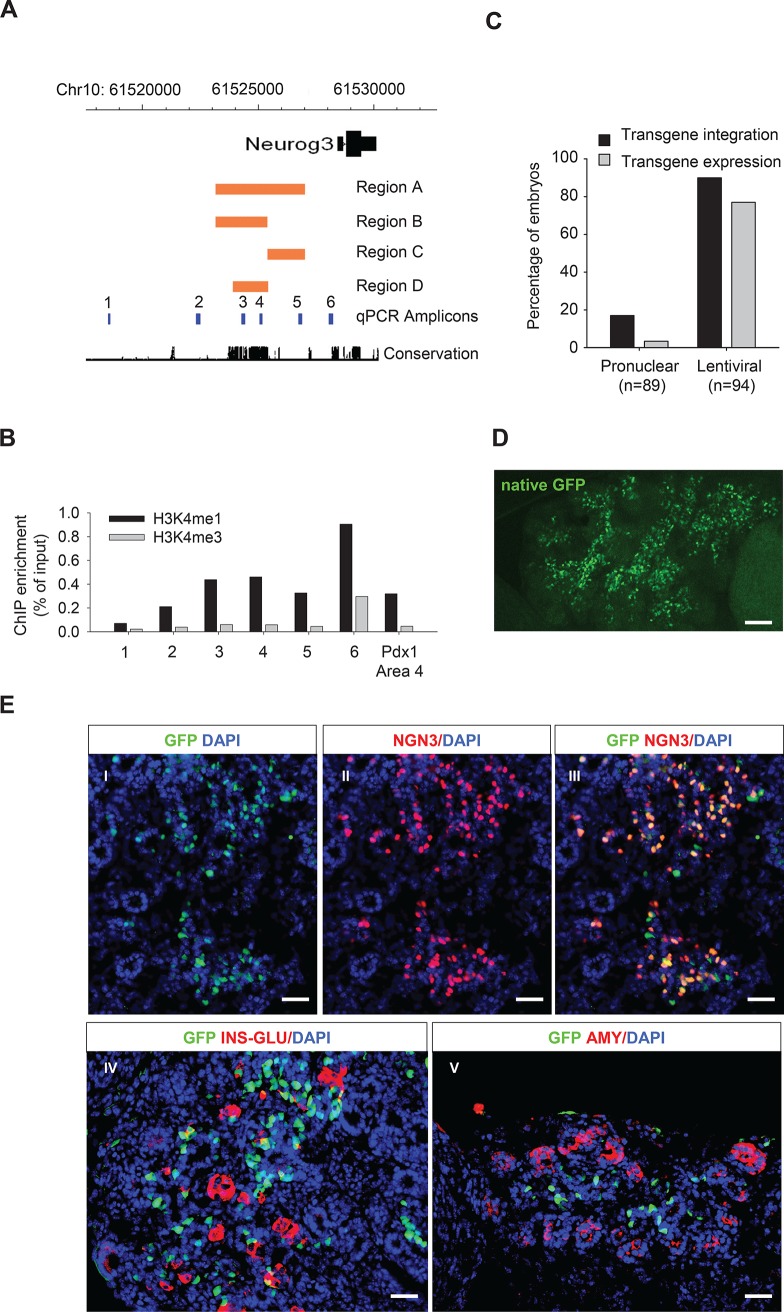
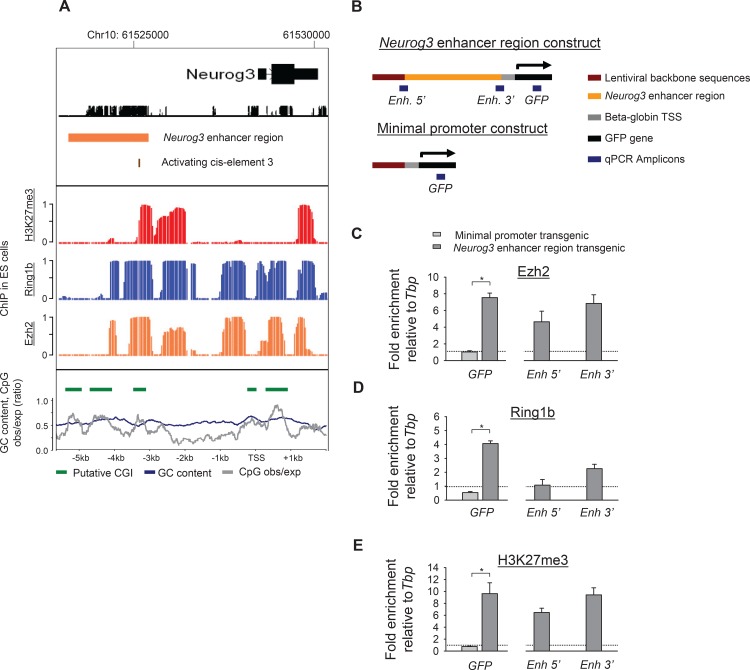
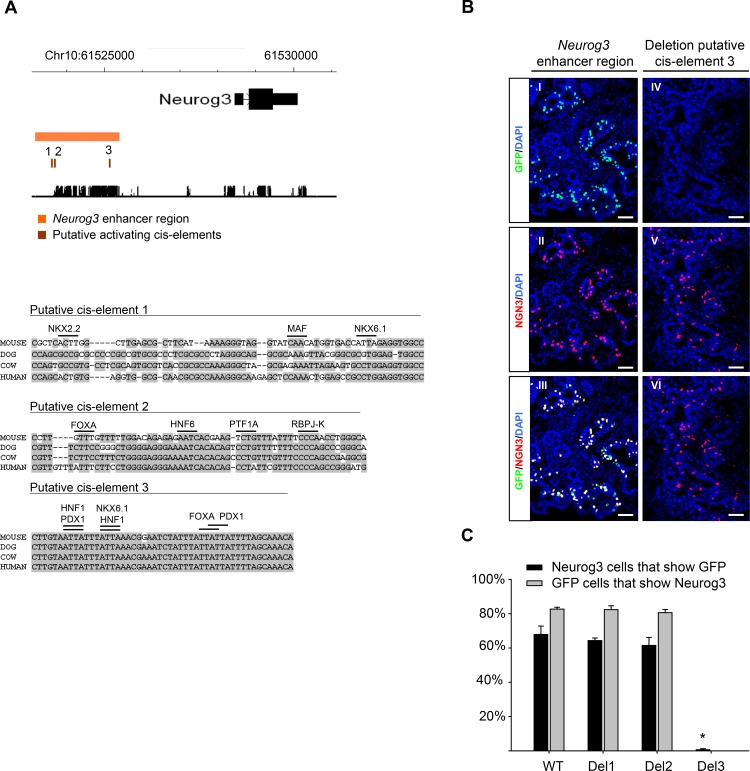
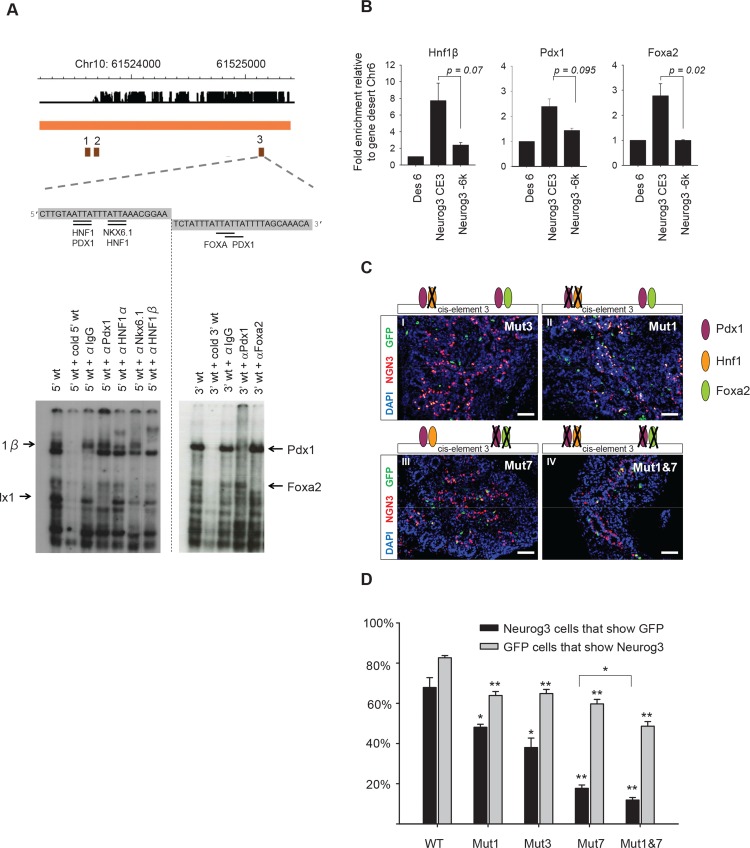
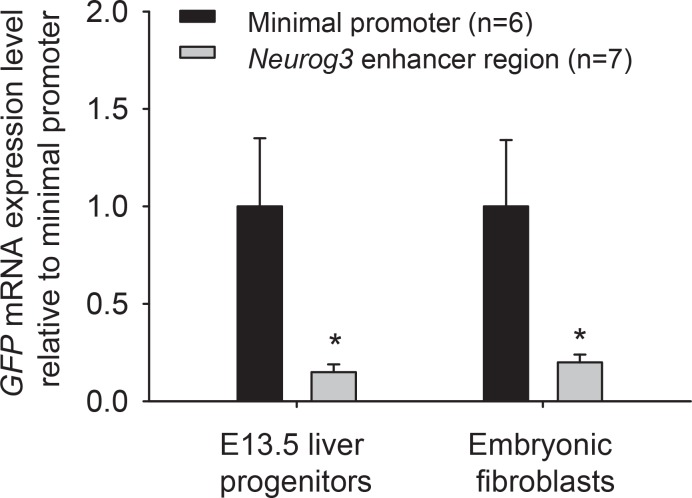
Lineage-selective expression of developmental genes is dependent on the interplay between activating and repressive mechanisms. Gene activation is dependent on cell-specific transcription factors that recognize transcriptional enhancer sequences. Gene repression often depends on the recruitment of Polycomb group (PcG) proteins, although the sequences that underlie the recruitment of PcG proteins, also known as Polycomb response elements (PREs), remain poorly understood in vertebrates. While distal PREs have been identified in mammals, a role for positive-acting enhancers in PcG-mediated repression has not been described. Here we have used a highly efficient procedure based on lentiviral-mediated transgenesis to carry out in vivo fine-mapping of, cis-regulatory sequences that control lineage-specific activation of Neurog3, a master regulator of pancreatic endocrine differentiation. Our findings reveal an enhancer region that is sufficient to drive correct spacio-temporal expression of Neurog3 and demonstrate that this same region serves as a PRE in alternative lineages where Neurog3 is inactive.
发育基因的谱系选择性表达取决于激活机制和抑制机制之间的相互作用。基因激活依赖于识别转录增强子序列的细胞特异性转录因子。基因抑制通常依赖于多梳蛋白家族(PcG)蛋白的募集,尽管在脊椎动物中,作为PcG蛋白募集基础的序列(也称为多梳反应元件,PREs)仍知之甚少。虽然在哺乳动物中已鉴定出远端PREs,但尚未描述正向作用增强子在PcG介导的抑制中的作用。在这里,我们使用了一种基于慢病毒介导转基因的高效方法,对控制胰腺内分泌分化的主要调节因子Neurog3谱系特异性激活的顺式调控序列进行体内精细定位。我们的研究结果揭示了一个足以驱动Neurog3正确时空表达的增强子区域,并证明该相同区域在Neurog3不活跃的其他谱系中作为PRE发挥作用。