Pinto Ana Cecília Versiani Duarte, Andrade Tatiana Cristina Pedro Cordeiro de, Brito Fernanda Freitas de, Silva Gardênia Viana da, Cavalcante Maria Lopes Lamenha Lins, Martelli Antonio Carlos Ceribelli
Department of Dermatology of the Instituto Lauro de Souza Lima (ILSL) - Bauru (SP), Brazil.
An Bras Dermatol. 2017 Jan-Feb;92(1):118-120. doi: 10.1590/abd1806-4841.20175136.
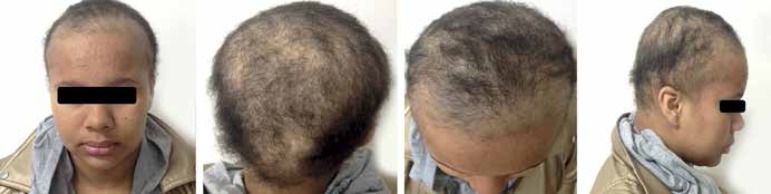
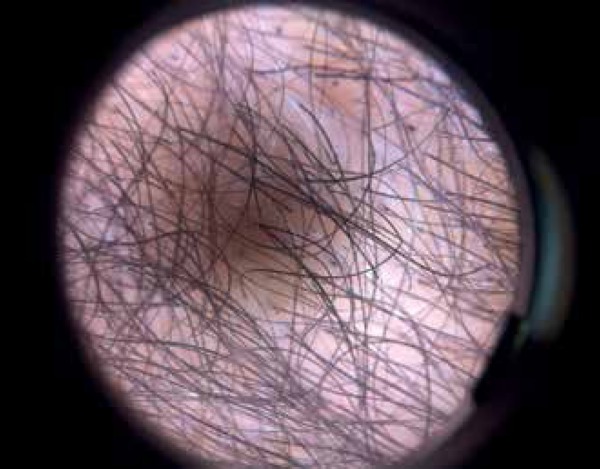
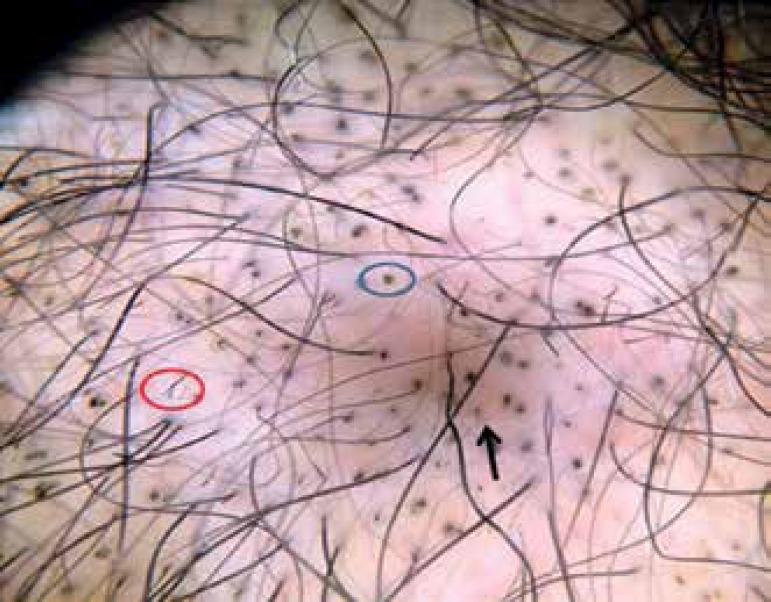
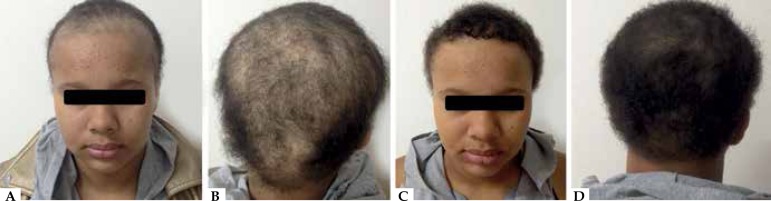
Trichotillomania is a psychodermatologic disorder characterized by uncontrollable urge to pull one's own hair. Differential diagnoses include the most common forms of alopecia such as alopecia areata. It is usually associated with depression and obsessive-compulsive disorder. Trichotillomania treatment standardization is a gap in the medical literature. Recent studies demonstrated the efficacy of N-acetylcysteine (a glutamate modulator) for the treatment of the disease. We report the clinical case of a 12-year-old female patient who received the initial diagnosis of alopecia areata, but presented with clinical and dermoscopic features of trichotillomania. She was treated with the combination of psychotropic drugs and N-acetylcysteine with good clinical response. Due to the chronic and recurring nature of trichotillomania, more studies need to be conducted for the establishment of a formal treatment algorithm.
拔毛癖是一种精神皮肤疾病,其特征是无法控制地想要拔自己的头发。鉴别诊断包括最常见的脱发形式,如斑秃。它通常与抑郁症和强迫症有关。拔毛癖治疗的标准化是医学文献中的一个空白。最近的研究表明,N-乙酰半胱氨酸(一种谷氨酸调节剂)对该疾病的治疗有效。我们报告了一名12岁女性患者的临床病例,该患者最初被诊断为斑秃,但呈现出拔毛癖的临床和皮肤镜特征。她接受了精神药物和N-乙酰半胱氨酸联合治疗,临床反应良好。由于拔毛癖具有慢性和复发性,需要进行更多研究以建立正式的治疗方案。