Kay Kendrick N, Yeatman Jason D
Center for Magnetic Resonance Research, Department of Radiology, University of Minnesota, Minneapolis, United States.
Institute for Learning and Brain Sciences, University of Washington, Seattle, United States.
Elife. 2017 Feb 22;6:e22341. doi: 10.7554/eLife.22341.
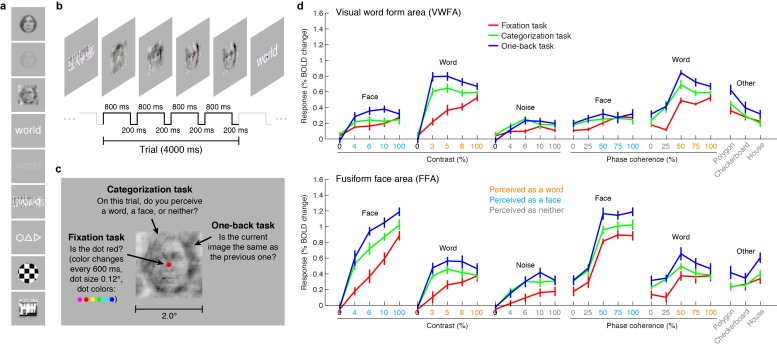
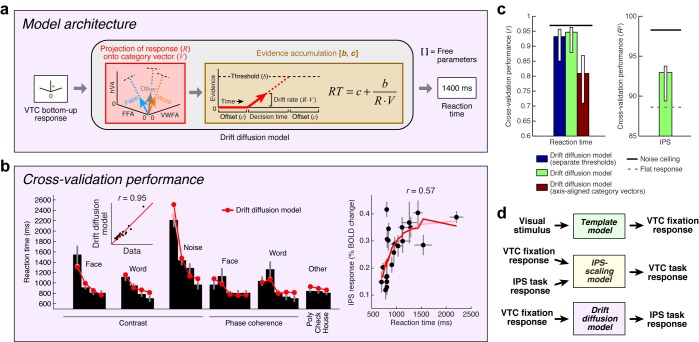
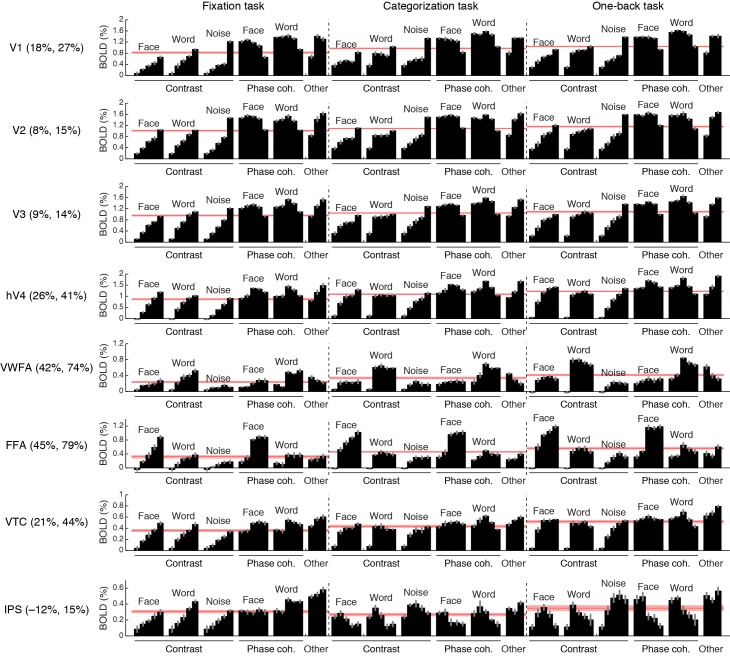
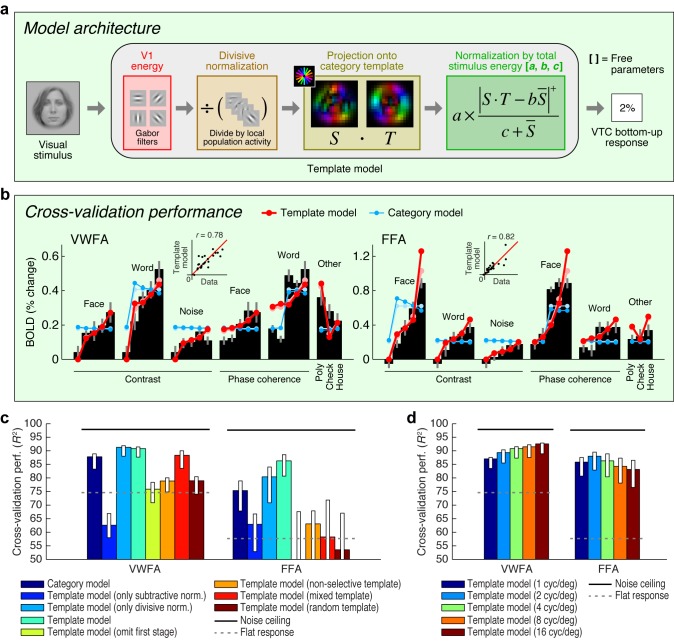
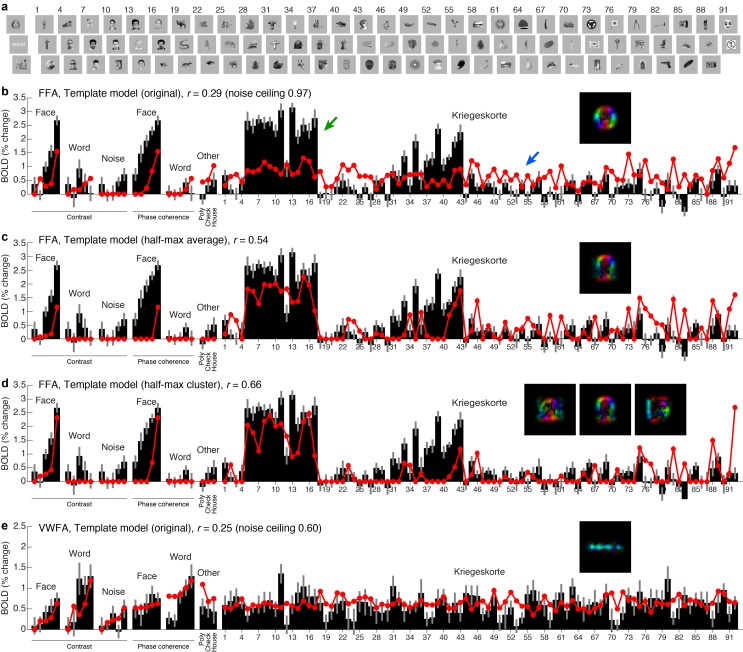
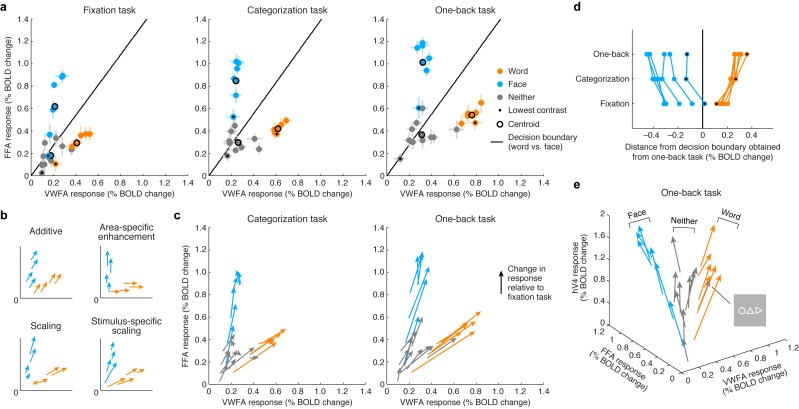
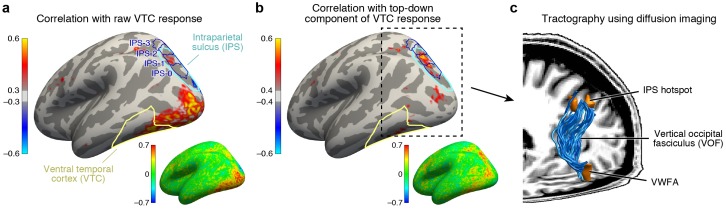
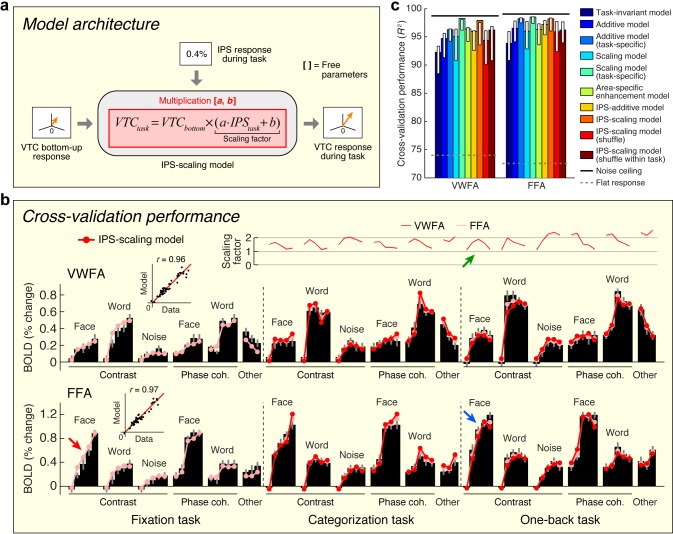
The ability to read a page of text or recognize a person's face depends on category-selective visual regions in ventral temporal cortex (VTC). To understand how these regions mediate word and face recognition, it is necessary to characterize how stimuli are represented and how this representation is used in the execution of a cognitive task. Here, we show that the response of a category-selective region in VTC can be computed as the degree to which the low-level properties of the stimulus match a category template. Moreover, we show that during execution of a task, the bottom-up representation is scaled by the intraparietal sulcus (IPS), and that the level of IPS engagement reflects the cognitive demands of the task. These results provide an account of neural processing in VTC in the form of a model that addresses both bottom-up and top-down effects and quantitatively predicts VTC responses.
阅读一页文本或识别一个人的面孔的能力取决于腹侧颞叶皮层(VTC)中的类别选择性视觉区域。为了理解这些区域如何介导单词和面孔识别,有必要描述刺激是如何被表征的,以及这种表征是如何在执行认知任务时被使用的。在这里,我们表明,VTC中一个类别选择性区域的反应可以计算为刺激的低级属性与类别模板的匹配程度。此外,我们表明,在执行任务期间,自下而上的表征会被顶内沟(IPS)缩放,并且IPS参与的程度反映了任务的认知需求。这些结果以一个模型的形式说明了VTC中的神经处理过程,该模型既考虑了自下而上的影响,也考虑了自上而下的影响,并定量预测了VTC的反应。