UCL Medical School, UCL, London, UK.
Administrative Data Research Centre England (ADRC-E), UCL, London, UK.
BMJ Open. 2017 Feb 22;7(2):e012989. doi: 10.1136/bmjopen-2016-012989.
Our aim was to determine the association between childhood academic ability and the onset and persistence of tobacco, alcohol and cannabis use across adolescence in a representative sample of English schools pupils. Previous research has produced conflicting findings.
Data from 7 years of the Longitudinal Study of Young People in England (LSYPE), 2004-2010 (age 13/14-19/20).
Self-completion questionnaires during home visits, face-to-face interviews and web-based questionnaires.
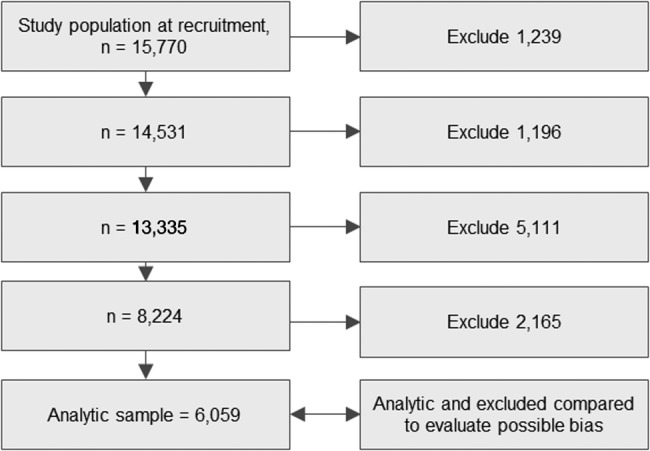
Data from 6059 participants (3093 females) with information on academic ability around age 11 and health behaviours from age 13/14 to 16/17 (early adolescence) and from age 18/19 to 19/20 (late adolescence).
Regularity of cigarette smoking, alcohol drinking and cannabis use from early to late adolescence.
In multinomial logistic regression models adjusting for a range of covariates, the high (vs low) academic ability reduced the risk of persistent cigarette smoking (RR=0.62; CI 95% 0.48 to 0.81) in early adolescence. High (vs low) academic ability increased the risk of occasional (RR=1.25; CI 95% 1.04 to 1.51) and persistent (RR=1.83; CI 95% 1.50 to 2.23) regular alcohol drinking in early adolescence and persistent (RR=2.28; CI 95% 1.84 to 2.82) but not occasional regular alcohol drinking in late adolescence. High (vs low) academic ability was also positively associated with occasional (RR=1.50; CI 95% 1.22 to 1.83) and persistent (RR=1.91; CI 95% 1.57 to 2.34) cannabis use in late adolescence.
In a sample of over 6000 young people in England, high childhood academic at age 11 is associated with a reduced risk of cigarette smoking but an increased risk of drinking alcohol regularly and cannabis use. These associations persist into early adulthood, providing evidence against the hypothesis that high academic ability is associated with temporary 'experimentation' with substance use.
我们旨在确定在具有代表性的英国学校学生样本中,儿童学业能力与青少年时期吸烟、饮酒和使用大麻的发生和持续存在之间的关联。先前的研究结果相互矛盾。
2004-2010 年(13/14-19/20 岁)英格兰纵向青少年研究(LSYPE)7 年的数据。
家庭访问、面对面访谈和基于网络的问卷调查中的自我完成问卷。
来自 6059 名参与者(3093 名女性)的数据,他们在 11 岁左右有学业能力信息,在 13/14 至 16/17 岁(青春期早期)和 18/19 至 19/20 岁(青春期后期)有健康行为信息。
从青春期早期到晚期吸烟、饮酒和使用大麻的规律。
在调整一系列协变量的多项逻辑回归模型中,高(低)学业能力降低了青春期早期持续吸烟的风险(RR=0.62;95%CI 0.48-0.81)。高(低)学业能力增加了青春期早期偶尔(RR=1.25;95%CI 0.94-1.66)和持续(RR=1.83;95%CI 0.95-3.53)规律饮酒的风险,以及青春期后期持续(RR=2.28;95%CI 0.95-5.44)但非偶尔持续规律饮酒的风险。高(低)学业能力也与青春期后期偶尔(RR=1.50;95%CI 0.94-2.38)和持续(RR=1.91;95%CI 0.95-4.27)使用大麻呈正相关。
在英格兰超过 6000 名年轻人的样本中,11 岁时的高儿童学业成绩与吸烟风险降低有关,但与定期饮酒和大麻使用的风险增加有关。这些关联持续到成年早期,这与高学业能力与物质使用的暂时“尝试”有关的假设相悖。