Wang Zigao, Xiong Lu, Wan Wenbin, Duan Lijie, Bai Xiaojing, Zu Hengbing
Department of Neurology, Jinshan Hospital, Fudan University Shanghai, China.
Department of Anesthesiology, Tinglin Hospital Shanghai, China.
Front Mol Neurosci. 2017 Feb 8;10:32. doi: 10.3389/fnmol.2017.00032. eCollection 2017.
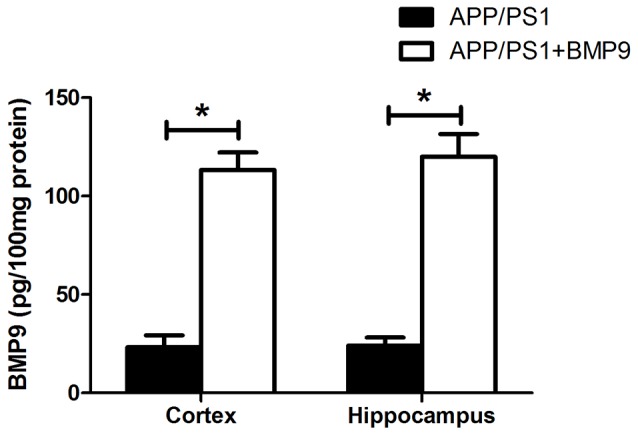
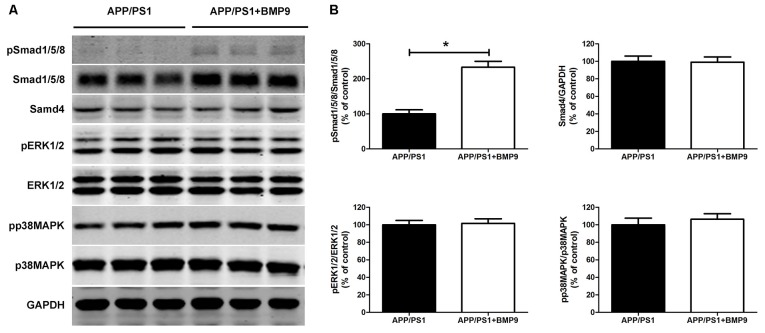
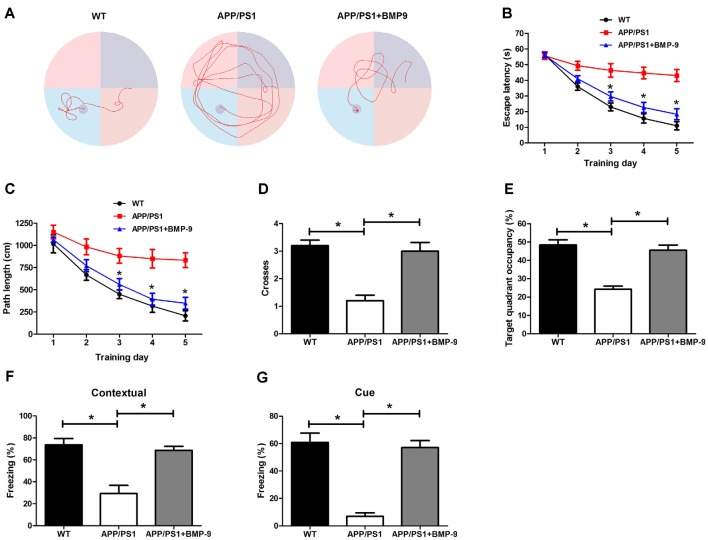
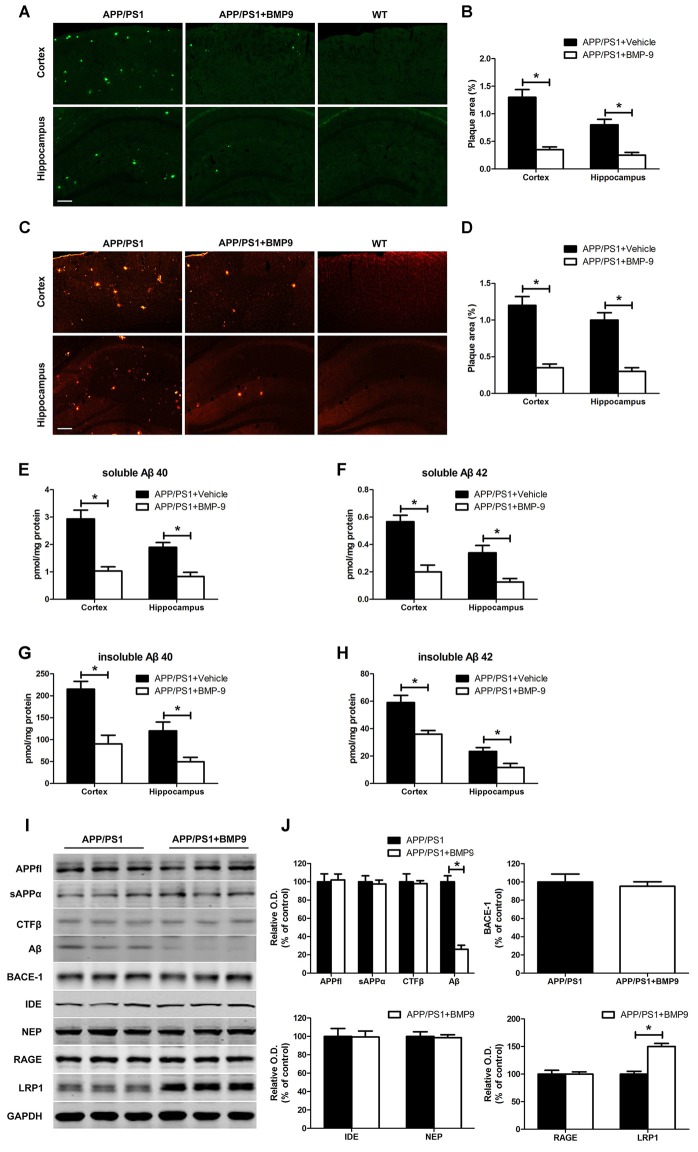
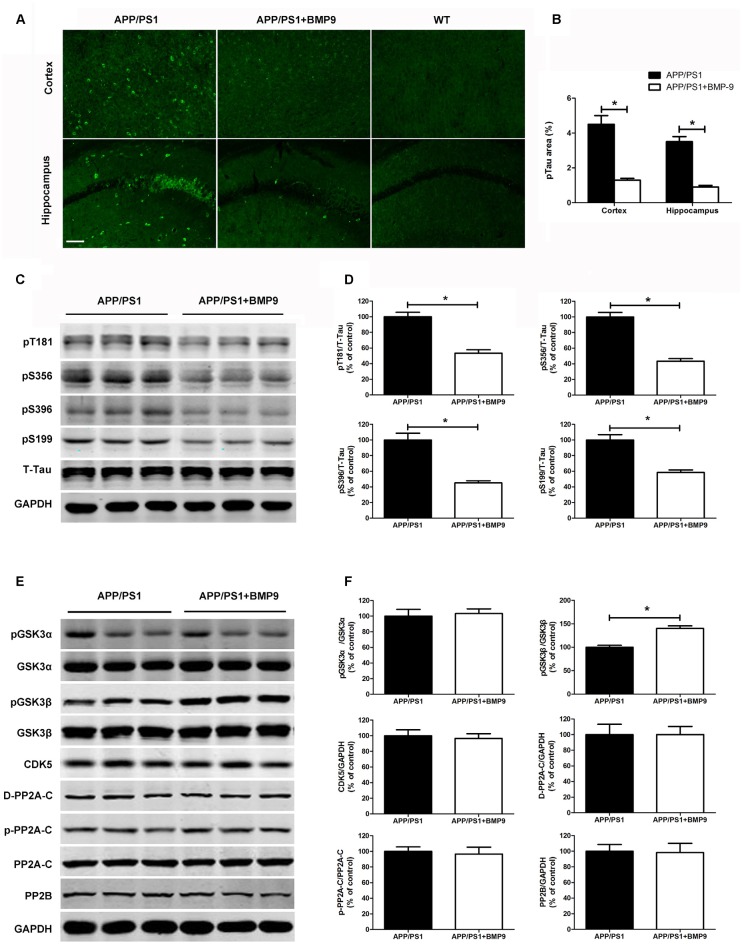
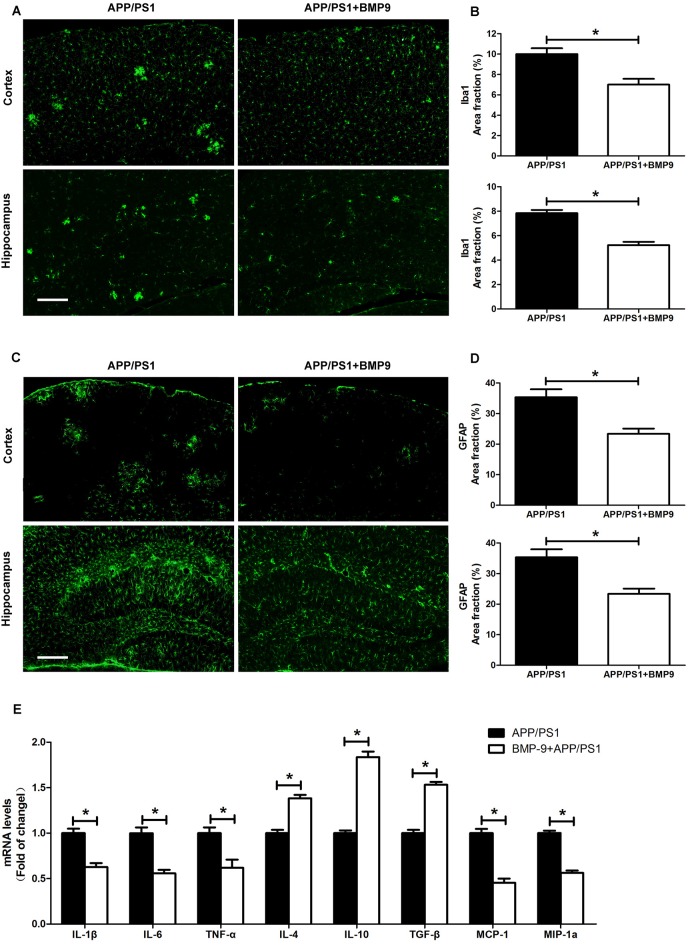
Alzheimer's disease (AD) is the most common type of dementia and has no effective therapies. Previous studies showed that bone morphogenetic protein 9 (BMP9), an important factor in the differentiation and phenotype maintenance of cholinergic neurons, ameliorated the cholinergic defects resulting from amyloid deposition. These findings suggest that BMP9 has potential as a therapeutic agent for AD. However, the effects of BMP9 on cognitive function in AD and its underlying mechanisms remain elusive. In the present study, BMP9 was delivered intranasally to 7-month-old APP/PS1 mice for 4 weeks. Our data showed that intranasal BMP9 administration significantly improved the spatial and associative learning and memory of APP/PS1 mice. We also found that intranasal BMP9 administration significantly reduced the amyloid β (Aβ) plaques overall, inhibited tau hyperphosphorylation, and suppressed neuroinflammation in the transgenic mouse brain. Furthermore, intranasal BMP9 administration significantly promoted the expression of low-density lipoprotein receptor-related protein 1 (LRP1), an important membrane receptor involved in the clearance of amyloid β via the blood-brain barrier (BBB), and elevated the phosphorylation levels of glycogen synthase kinase-3β (Ser9), which is considered the main kinase involved in tau hyperphosphorylation. Our results suggest that BMP9 may be a promising candidate for treating AD by targeting multiple key pathways in the disease pathogenesis.
阿尔茨海默病(AD)是最常见的痴呆类型,且尚无有效治疗方法。先前的研究表明,骨形态发生蛋白9(BMP9)是胆碱能神经元分化和表型维持的重要因子,可改善淀粉样蛋白沉积导致的胆碱能缺陷。这些发现表明BMP9具有作为AD治疗药物的潜力。然而,BMP9对AD认知功能的影响及其潜在机制仍不清楚。在本研究中,将BMP9经鼻给予7月龄的APP/PS1小鼠,持续4周。我们的数据表明,经鼻给予BMP9可显著改善APP/PS1小鼠的空间和联想学习及记忆能力。我们还发现,经鼻给予BMP9可总体上显著减少淀粉样β(Aβ)斑块,抑制tau蛋白过度磷酸化,并抑制转基因小鼠大脑中的神经炎症。此外,经鼻给予BMP9可显著促进低密度脂蛋白受体相关蛋白1(LRP1)的表达,LRP1是一种重要的膜受体,参与通过血脑屏障(BBB)清除淀粉样β,并且提高糖原合酶激酶-3β(Ser9)的磷酸化水平,糖原合酶激酶-3β被认为是参与tau蛋白过度磷酸化的主要激酶。我们的结果表明,BMP9可能是通过针对疾病发病机制中的多个关键途径治疗AD的有前景的候选药物。