Perfetto Rosa, Del Prete Sonia, Vullo Daniela, Sansone Giovanni, Barone Carmela, Rossi Mosè, Supuran Claudiu T, Capasso Clemente
a Istituto di Bioscienze e Biorisorse, CNR , Napoli , Italy.
b Dipartimento Neurofarba , Università degli Studi di Firenze, Sezione di Scienze Farmaceutiche, and Laboratorio di Chimica Bioinorganica, Polo Scientifico , Sesto Fiorentino , Florence , Italy.
J Enzyme Inhib Med Chem. 2017 Dec;32(1):632-639. doi: 10.1080/14756366.2017.1284069.
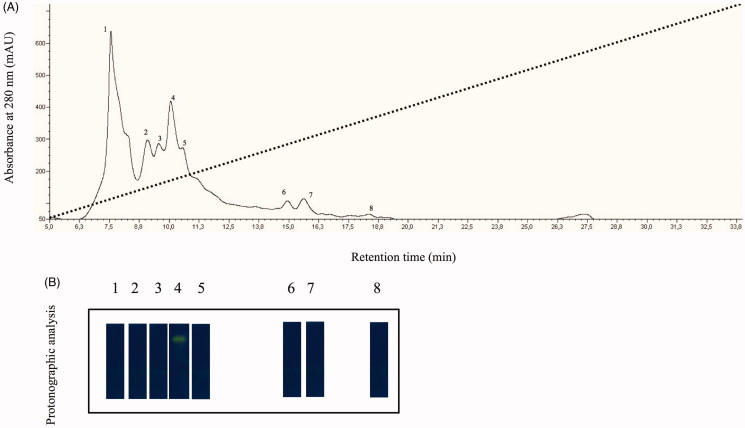
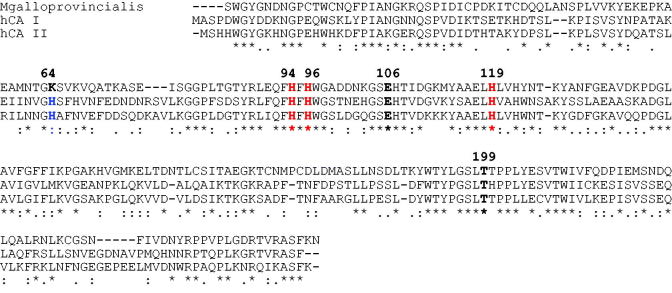
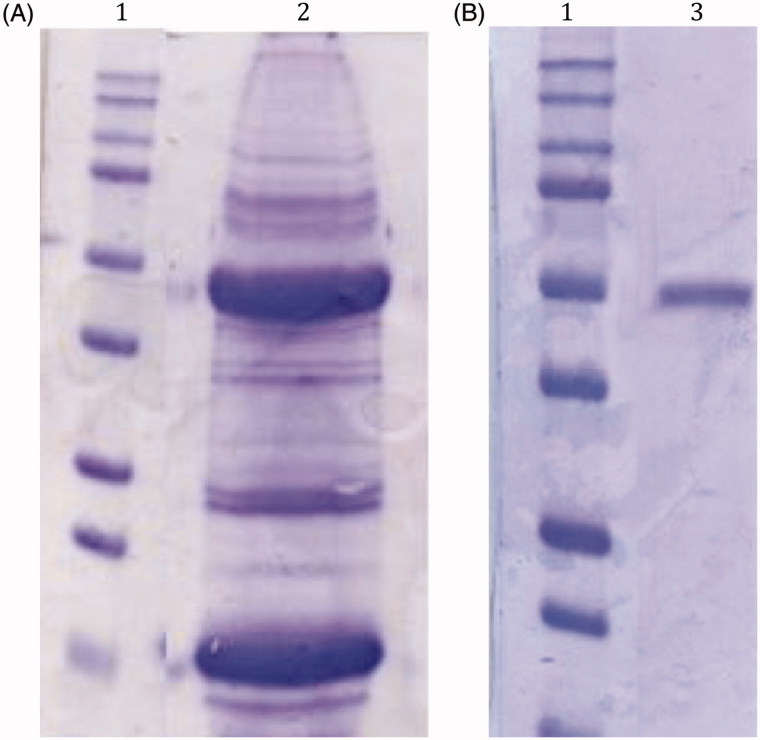
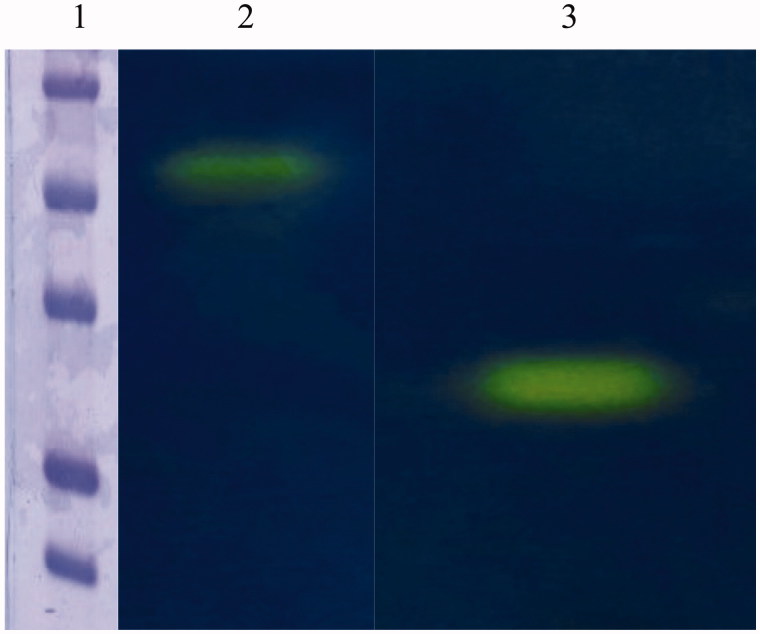
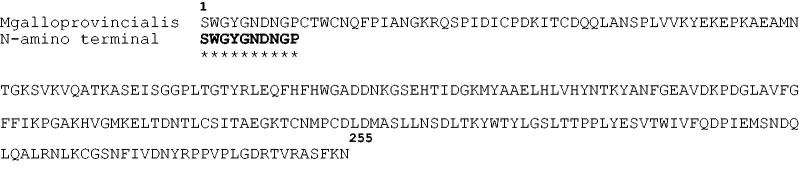
A α-carbonic anhydrase (CA, EC 4.2.1.1) has been purified and characterized biochemically from the mollusk Mytilus galloprovincialis. As in most mollusks, this α-CA is involved in the biomineralization processes leading to the precipitation of calcium carbonate in the mussel shell. The new enzyme had a molecular weight of 50 kDa, which is roughly two times higher than that of a monomeric α-class enzyme. Thus, Mytilus galloprovincialis α-CA is either a dimer, or similar to the Tridacna gigas CA described earlier, may have two different CA domains in its polypeptide chain. The Mytilus galloprovincialis α-CA sequence contained the three His residues acting as zinc ligands and the gate-keeper residues present in all α-CAs (Glu106-Thr199), but had a Lys in position 64 and not a His as proton shuttling residue, being thus similar to the human isoform hCA III. This probably explains the relatively low catalytic activity of Mytilus galloprovincialis α-CA, with the following kinetic parameters for the CO hydration reaction: k = 4.1 × 10 s and k/K of 3.6 × 10 M × s. The enzyme activity was poorly inhibited by the sulfonamide acetazolamide, with a K of 380 nM. This study is one of the few describing in detail the biochemical characterization of a molluskan CA and may be useful for understanding in detail the phylogeny of these enzymes, their role in biocalcification processes and their potential use in the biomimetic capture of the CO.
已从软体动物地中海贻贝中纯化出一种α-碳酸酐酶(CA,EC 4.2.1.1)并对其进行了生化表征。与大多数软体动物一样,这种α-CA参与了贻贝壳中碳酸钙沉淀的生物矿化过程。这种新酶的分子量为50 kDa,大约是单体α类酶分子量的两倍。因此,地中海贻贝α-CA要么是二聚体,要么类似于先前描述的巨蛤CA,其多肽链中可能有两个不同的CA结构域。地中海贻贝α-CA序列包含作为锌配体的三个组氨酸残基以及所有α-CAs中存在的守门残基(Glu106 - Thr199),但在第64位有一个赖氨酸而不是作为质子穿梭残基的组氨酸,因此类似于人类同工型hCA III。这可能解释了地中海贻贝α-CA相对较低的催化活性,其CO水合反应的动力学参数如下:k = 4.1×10 s,k/K为3.6×10 M×s。该酶活性受磺酰胺乙酰唑胺的抑制作用较弱,K为380 nM。这项研究是少数详细描述软体动物CA生化特性的研究之一,可能有助于详细了解这些酶的系统发育、它们在生物矿化过程中的作用以及它们在仿生捕获CO方面的潜在用途。