Fasano Ross M, Sullivan Harold Cliff, Bray Robert A, Gebel Howard M, Meyer Erin K, Winkler Annie M, Josephson Cassandra D, Stowell Sean R, Sandy Duncan Alexander, Roback John D
From the Center for Transfusion and Cellular Therapies (Drs Fasano, Sullivan, Meyer, Winkler, Josephson, Stowell, Duncan, and Roback) and the Department of Pathology and Laboratory Medicine (Drs Fasano, Sullivan, Bray, Gebel, Meyer, Winkler, Josephson, Stowell, Duncan, and Roback), Emory University School of Medicine, Atlanta, Georgia; and the Department of Transfusion, Tissue, and Apheresis, Children's Healthcare of Atlanta, Atlanta (Drs Fasano, Meyer, and Josephson). Dr Meyer is now with the Department of Pathology, Nationwide Children's Hospital, Ohio State University College of Medicine, Columbus.
Arch Pathol Lab Med. 2017 Mar;141(3):329-340. doi: 10.5858/arpa.2016-0277-SA.
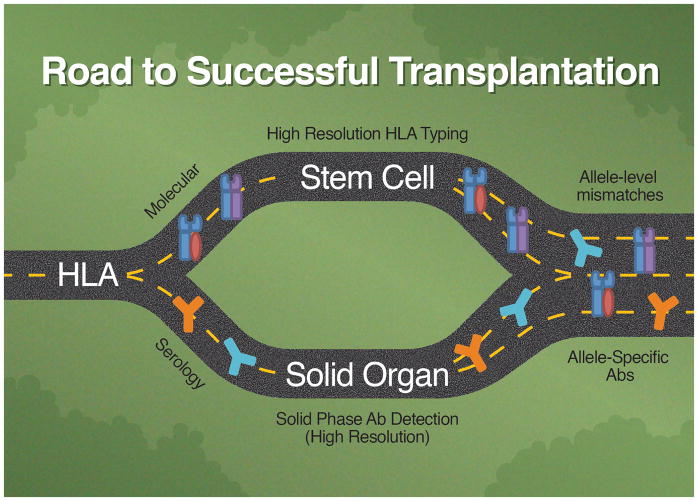
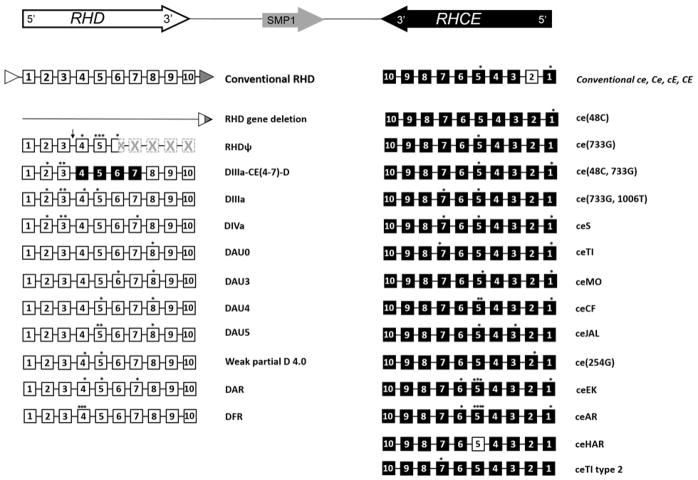
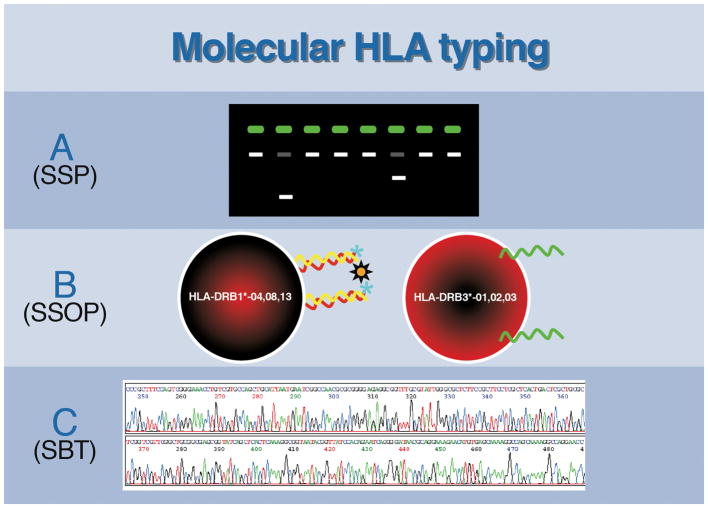
Current genotyping methodologies for transplantation and transfusion management employ multiplex systems that allow for simultaneous detection of multiple HLA antigens, human platelet antigens, and red blood cell (RBC) antigens. The development of high-resolution, molecular HLA typing has led to improved outcomes in unrelated hematopoietic stem cell transplants by better identifying compatible alleles of the HLA-A, B, C, DRB1, and DQB1 antigens. In solid organ transplantation, the combination of high-resolution HLA typing with solid-phase antibody identification has proven of value for highly sensitized patients and has significantly reduced incompatible crossmatches at the time of organ allocation. This database-driven, combined HLA antigen/antibody testing has enabled routine implementation of "virtual crossmatching" and may even obviate the need for physical crossmatching. In addition, DNA-based testing for RBC antigens provides an alternative typing method that mitigates many of the limitations of hemagglutination-based phenotyping. Although RBC genotyping has utility in various transfusion settings, it has arguably been most useful for minimizing alloimmunization in the management of transfusion-dependent patients with sickle cell disease or thalassemia. The availability of high-throughput RBC genotyping for both individuals and large populations of donors, along with coordinated informatics systems to compare patients' antigen profiles with available antigen-negative and/or rare blood-typed donors, holds promise for improving the efficiency, reliability, and extent of RBC matching for this population.
当前用于移植和输血管理的基因分型方法采用多重系统,可同时检测多种人类白细胞抗原(HLA)、人类血小板抗原和红细胞(RBC)抗原。高分辨率分子HLA分型的发展,通过更好地识别HLA - A、B、C、DRB1和DQB1抗原的相容等位基因,改善了无关造血干细胞移植的结果。在实体器官移植中,高分辨率HLA分型与固相抗体鉴定相结合,已证明对高度致敏患者有价值,并在器官分配时显著减少了不相容的交叉配型。这种基于数据库的HLA抗原/抗体联合检测实现了“虚拟交叉配型”的常规应用,甚至可能无需进行实际交叉配型。此外,基于DNA的红细胞抗原检测提供了一种替代分型方法,减轻了许多基于血凝表型分析的局限性。尽管红细胞基因分型在各种输血情况下都有用途,但在镰状细胞病或地中海贫血等输血依赖患者的管理中,它对于尽量减少同种免疫作用可能最为有用。个体和大量献血者高通量红细胞基因分型的可用性,以及用于将患者抗原谱与可用的抗原阴性和/或稀有血型献血者进行比较的协调信息系统,有望提高该人群红细胞配型的效率、可靠性和范围。