Andrade Fabiana Antunes, Beltrame Marcia Holsbach, Bini Valéria Bumiller, Gonçalves Letícia Boslooper, Boldt Angelica Beate Winter, de Messias-Reason Iara Jose
Laboratory of Molecular Immunopathology, Department of Clinical Pathology, HC/UFPR, Curitiba, PR, Brazil.
Laboratory of Human Molecular Genetics, Department of Genetics, UFPR, Curitiba, PR, Brazil.
PLoS Negl Trop Dis. 2017 Feb 27;11(2):e0005409. doi: 10.1371/journal.pntd.0005409. eCollection 2017 Feb.
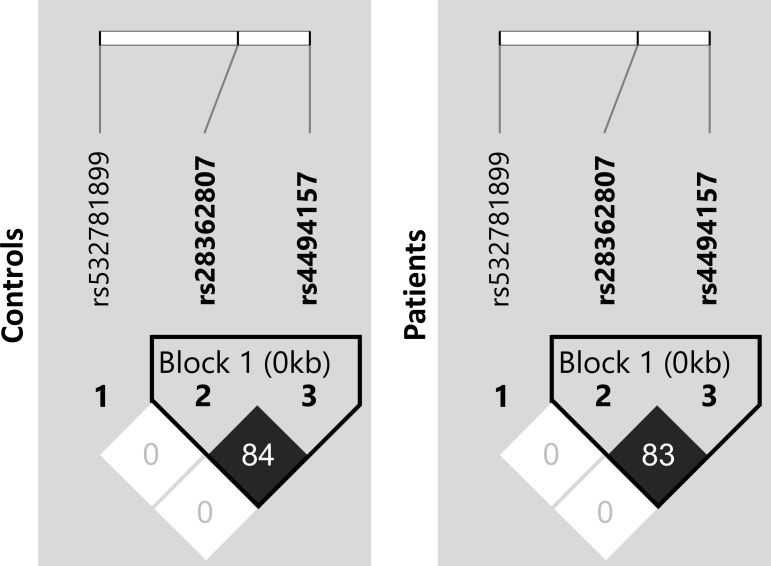
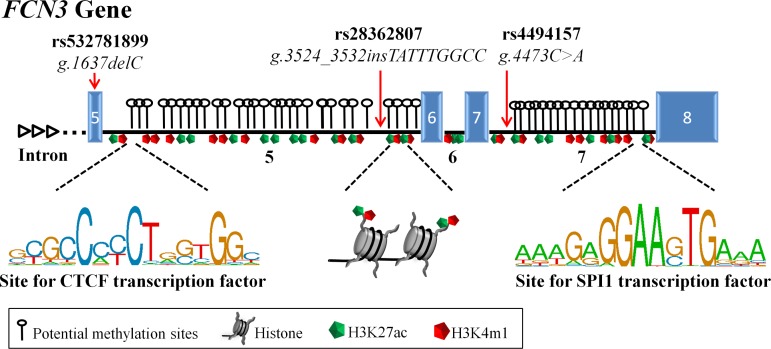
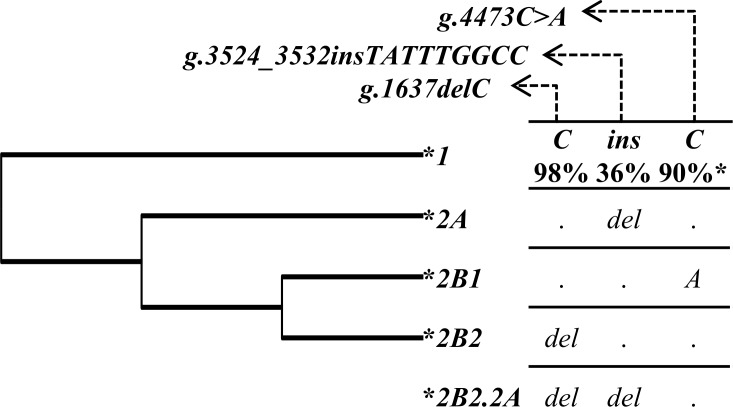
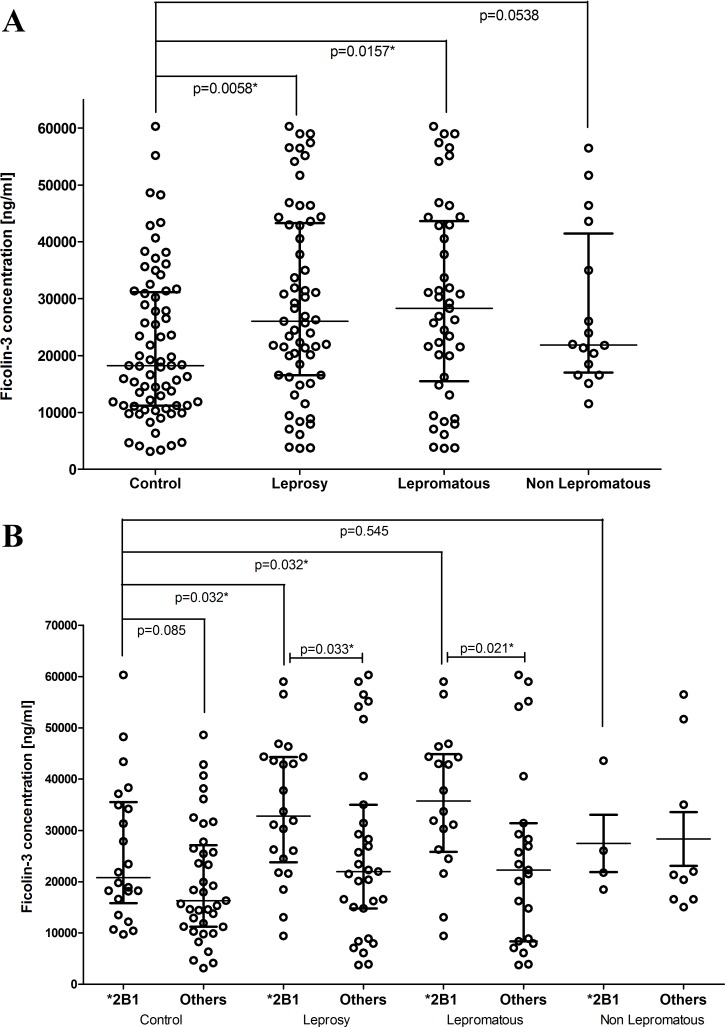
Leprosy is a chronic inflammatory disease caused by Mycobacterium leprae that mainly affects the skin and peripheral nervous system, leading to a high disability rate and social stigma. Previous studies have shown a contribution of genes encoding products of the lectin pathway of complement in the modulation of the susceptibility to leprosy; however, the ficolin-3/FCN3 gene impact on leprosy is currently unknown. The aim of the present study was to investigate if FCN3 polymorphisms (rs532781899: g.1637delC, rs28362807: g.3524_3532insTATTTGGCC and rs4494157: g.4473C>A) and ficolin-3 serum levels play a role in the susceptibility to leprosy. We genotyped up to 190 leprosy patients (being 114 (60%) lepromatous), and up to 245 controls with sequence-specific PCR. We also measured protein levels using ELISA in 61 leprosy and 73 controls. FCN3 polymorphisms were not associated with disease, but ficolin-3 levels were higher in patients with FCN3 *2B1 (CinsA) haplotype (p = 0.032). Median concentration of ficolin-3 was higher in leprosy per se (26034 ng/mL, p = 0.005) and lepromatous patients (28295 ng/mL, p = 0.016) than controls (18231 ng/mL). In addition, high ficolin-3 levels (>33362 ng/mL) were more common in leprosy per se (34.4%) and in lepromatous patients (35.5%) than controls (19.2%; p = 0.045 and p = 0.047, respectively). Our results lead us to suggest that polymorphisms in the FCN3 gene cooperate to increase ficolin-3 concentration and that it might contribute to leprosy susceptibility by favoring M. leprae infection.
麻风病是一种由麻风分枝杆菌引起的慢性炎症性疾病,主要影响皮肤和周围神经系统,导致高致残率和社会耻辱感。先前的研究表明,补体凝集素途径编码产物的基因在麻风病易感性调节中发挥作用;然而,纤维胶凝蛋白-3/FCN3基因对麻风病的影响目前尚不清楚。本研究的目的是调查FCN3基因多态性(rs532781899:g.1637delC、rs28362807:g.3524_3532insTATTTGGCC和rs4494157:g.4473C>A)和纤维胶凝蛋白-3血清水平是否在麻风病易感性中起作用。我们使用序列特异性PCR对多达190例麻风病患者(其中114例(60%)为瘤型麻风)和多达245例对照进行基因分型。我们还使用酶联免疫吸附测定法测量了61例麻风病患者和73例对照的蛋白质水平。FCN3基因多态性与疾病无关,但携带FCN3 *2B1(CinsA)单倍型的患者纤维胶凝蛋白-3水平较高(p = 0.032)。麻风病患者本身(26034 ng/mL,p = 0.005)和瘤型麻风患者(28295 ng/mL,p = 0.016)的纤维胶凝蛋白-3中位数浓度高于对照(18231 ng/mL)。此外,纤维胶凝蛋白-3水平高(>33362 ng/mL)在麻风病患者本身(34.4%)和瘤型麻风患者(35.5%)中比对照(19.2%)更常见(分别为p = 0.045和p = 0.047)。我们的结果表明,FCN3基因的多态性共同作用以增加纤维胶凝蛋白-3的浓度,并且它可能通过促进麻风分枝杆菌感染而导致麻风病易感性。