Sangare Samba Adama, Rondinaud Emilie, Maataoui Naouale, Maiga Almoustapha Issiaka, Guindo Ibrehima, Maiga Aminata, Camara Namory, Dicko Oumar Agaly, Dao Sounkalo, Diallo Souleymane, Bougoudogo Flabou, Andremont Antoine, Maiga Ibrahim Izetiegouma, Armand-Lefevre Laurence
Bacteriology Laboratory, Centre Hospitalier Universitaire Gabriel Touré, Bamako, Mali.
Bacteriology Laboratory, Centre Hospitalier Universitaire Bichat-Claude Bernard, Paris, France.
PLoS One. 2017 Feb 28;12(2):e0172652. doi: 10.1371/journal.pone.0172652. eCollection 2017.
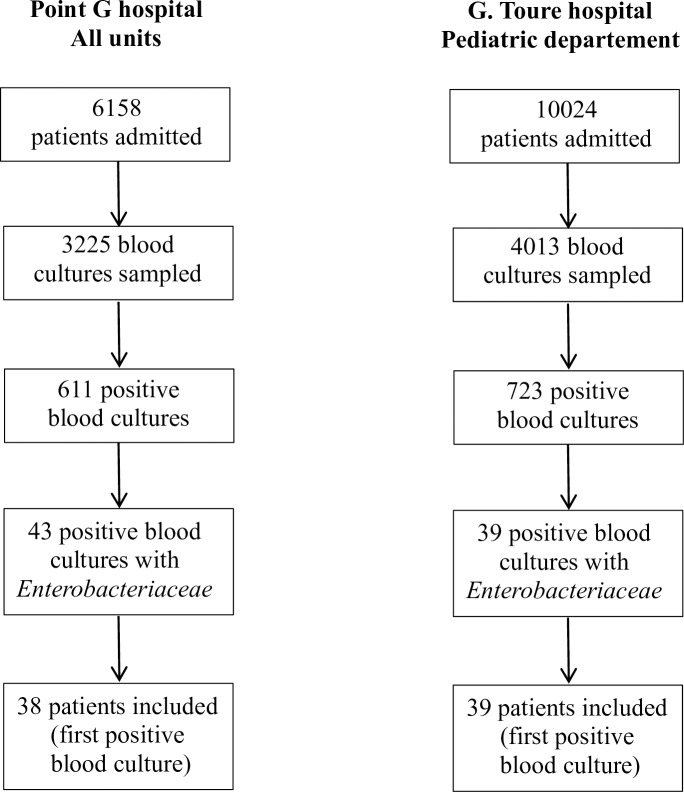
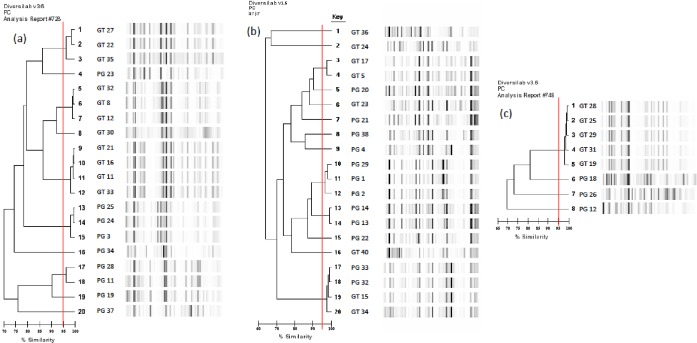
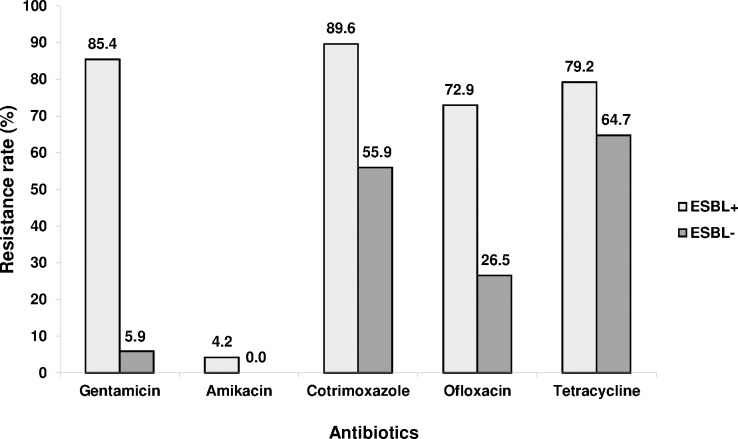
The worldwide dissemination of extended-spectrum beta-lactamase producing Enterobacteriaceae, (ESBL-E) and their subset producing carbapenemases (CPE), is alarming. Limited data on the prevalence of such strains in infections from patients from Sub-Saharan Africa are currently available. We determined, here, the prevalence of ESBL-E/CPE in bacteriemic patients in two teaching hospitals from Bamako (Mali), which are at the top of the health care pyramid in the country. During one year, all Enterobacteriaceae isolated from bloodstream infections (E-BSI), were collected from patients hospitalized at the Point G University Teaching Hospital and the pediatric units of Gabriel Touré University Teaching Hospital. Antibiotic susceptibility testing, enzyme characterization and strain relatedness were determined. A total of 77 patients had an E-BSI and as many as 48 (62.3%) were infected with an ESBL-E. ESBL-E BSI were associated with a previous hospitalization (OR 3.97 95% IC [1.32; 13.21]) and were more frequent in hospital-acquired episodes (OR 3.66 95% IC [1.07; 13.38]). Among the 82 isolated Enterobacteriaceae, 58.5% were ESBL-E (20/31 Escherichia coli, 20/26 Klebsiella pneumoniae and 8/15 Enterobacter cloacae). The remaining (5 Salmonella Enteritidis, 3 Morganella morganii 1 Proteus mirabilis and 1 Leclercia adecarboxylata) were ESBL negative. CTX-M-1 group enzymes were highly prevalent (89.6%) among ESBLs; the remaining ones being SHV. One E. coli produced an OXA-181 carbapenemase, which is the first CPE described in Mali. The analysis of ESBL-E relatedness suggested a high rate of cross transmission between patients. In conclusion, even if CPE are still rare for the moment, the high rate of ESBL-BSI and frequent cross transmission probably impose a high medical and economic burden to Malian hospitals.
产超广谱β-内酰胺酶肠杆菌科细菌(ESBL-E)及其产碳青霉烯酶子集(CPE)在全球范围内的传播令人担忧。目前关于撒哈拉以南非洲患者感染中此类菌株流行情况的数据有限。在此,我们确定了马里巴马科两家教学医院中菌血症患者的ESBL-E/CPE流行情况,这两家医院处于该国医疗保健金字塔的顶端。在一年时间里,从血流感染(E-BSI)中分离出的所有肠杆菌科细菌均来自于Point G大学教学医院和加布里埃尔·图雷大学教学医院儿科病房住院的患者。进行了抗生素敏感性测试、酶特性鉴定和菌株相关性分析。共有77例患者发生E-BSI,其中多达48例(62.3%)感染了ESBL-E。ESBL-E菌血症与既往住院相关(比值比3.97,95%置信区间[1.32;13.21]),且在医院获得性感染中更为常见(比值比3.66,95%置信区间[1.07;13.38])。在分离出的82株肠杆菌科细菌中,58.5%为ESBL-E(20/31株大肠杆菌、20/26株肺炎克雷伯菌和8/15株阴沟肠杆菌)。其余(5株肠炎沙门氏菌、3株摩根氏摩根菌、1株奇异变形杆菌和1株产酸勒克菌)为ESBL阴性。CTX-M-1组酶在ESBL中高度流行(89.6%);其余为SHV。1株大肠杆菌产生了OXA-181碳青霉烯酶,这是马里描述的首例CPE。对ESBL-E相关性的分析表明患者之间交叉传播率很高。总之,即使目前CPE仍然罕见,但ESBL菌血症的高发生率和频繁的交叉传播可能给马里医院带来沉重的医疗和经济负担。