Krüger Thomas, Luo Ting, Schmidt Hella, Shopova Iordana, Kniemeyer Olaf
Department of Molecular and Applied Microbiology, Leibniz Institute for Natural Product Research and Infection Biology, Hans Knöll Institute (HKI), Adolf-Reichwein-Str. 23, 07745 Jena, Germany.
Institute of Microbiology, Friedrich Schiller University Jena, Adolf-Reichwein-Str. 23, 07745 Jena, Germany.
Proteomes. 2015 Dec 14;3(4):467-495. doi: 10.3390/proteomes3040467.
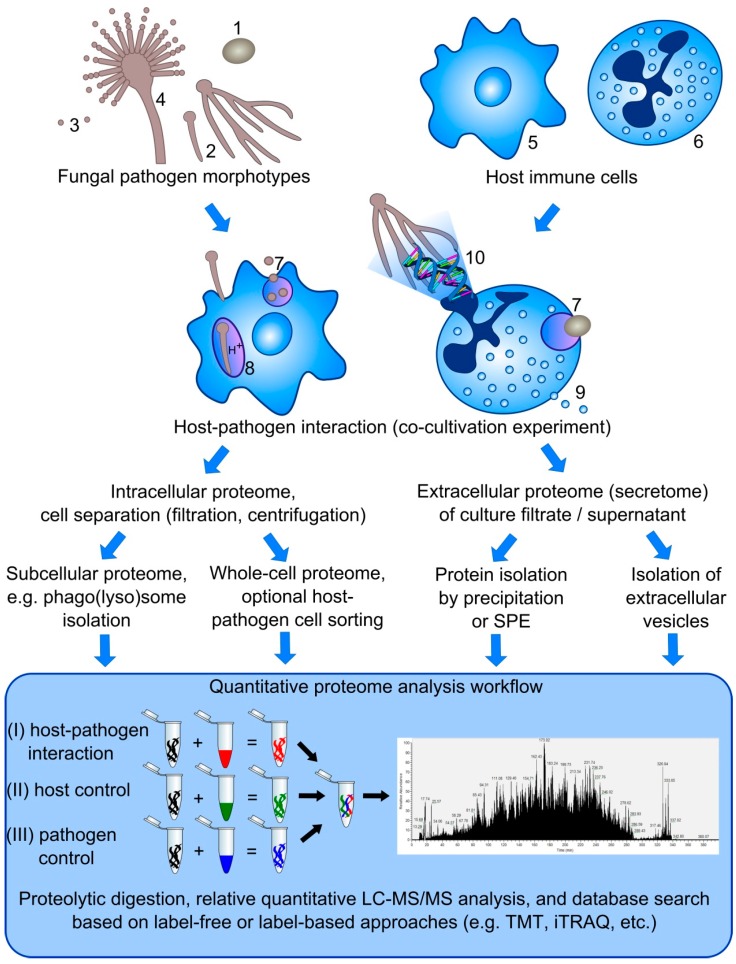
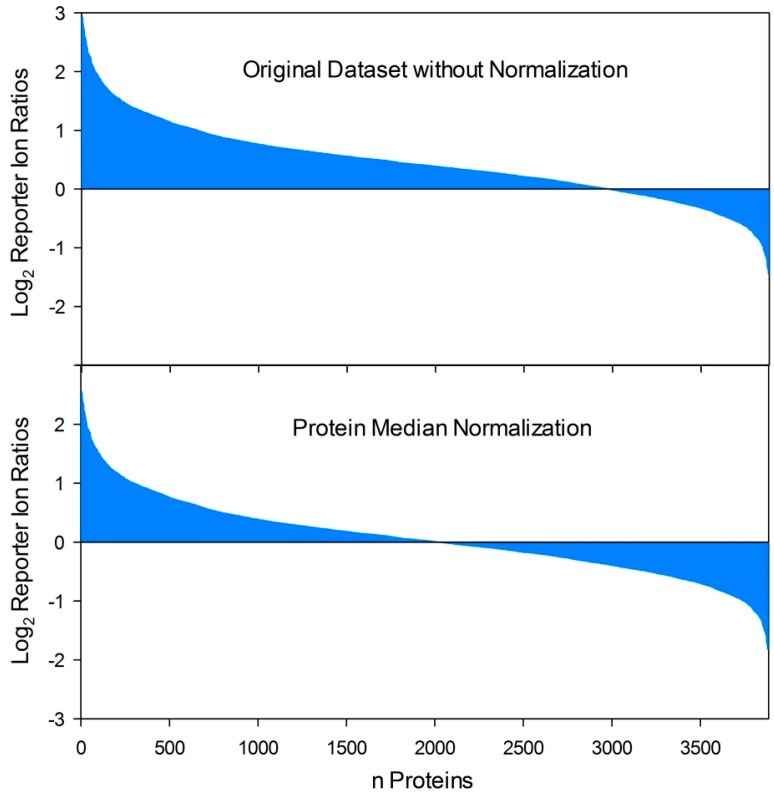
Opportunistic human pathogenic fungi including the saprotrophic mold and the human commensal can cause severe fungal infections in immunocompromised or critically ill patients. The first line of defense against opportunistic fungal pathogens is the innate immune system. Phagocytes such as macrophages, neutrophils and dendritic cells are an important pillar of the innate immune response and have evolved versatile defense strategies against microbial pathogens. On the other hand, human-pathogenic fungi have sophisticated virulence strategies to counteract the innate immune defense. In this context, proteomic approaches can provide deeper insights into the molecular mechanisms of the interaction of host immune cells with fungal pathogens. This is crucial for the identification of both diagnostic biomarkers for fungal infections and therapeutic targets. Studying host-fungal interactions at the protein level is a challenging endeavor, yet there are few studies that have been undertaken. This review draws attention to proteomic techniques and their application to fungal pathogens and to challenges, difficulties, and limitations that may arise in the course of simultaneous dual proteome analysis of host immune cells interacting with diverse morphotypes of fungal pathogens. On this basis, we discuss strategies to overcome these multifaceted experimental and analytical challenges including the viability of immune cells during co-cultivation, the increased and heterogeneous protein complexity of the host proteome dynamically interacting with the fungal proteome, and the demands on normalization strategies in terms of relative quantitative proteome analysis.
机会性人类致病真菌,包括腐生霉菌和人体共生菌,可在免疫功能低下或重症患者中引起严重的真菌感染。针对机会性真菌病原体的第一道防线是先天免疫系统。巨噬细胞、中性粒细胞和树突状细胞等吞噬细胞是先天免疫反应的重要支柱,并已进化出针对微生物病原体的多种防御策略。另一方面,人类致病真菌具有复杂的毒力策略来对抗先天免疫防御。在这种情况下,蛋白质组学方法可以更深入地了解宿主免疫细胞与真菌病原体相互作用的分子机制。这对于鉴定真菌感染的诊断生物标志物和治疗靶点都至关重要。在蛋白质水平上研究宿主 - 真菌相互作用是一项具有挑战性的工作,但目前进行的研究很少。本综述关注蛋白质组学技术及其在真菌病原体中的应用,以及在对与不同形态类型真菌病原体相互作用的宿主免疫细胞进行同步双蛋白质组分析过程中可能出现的挑战、困难和局限性。在此基础上,我们讨论克服这些多方面实验和分析挑战的策略,包括共培养期间免疫细胞的活力、与真菌蛋白质组动态相互作用的宿主蛋白质组中增加的和异质性的蛋白质复杂性,以及相对定量蛋白质组分析对归一化策略的要求。