García-Posadas Laura, Soriano-Romaní Laura, López-García Antonio, Diebold Yolanda
Ocular Surface Group, Institute for Applied Ophthalmobiology (IOBA), University of Valladolid, Valladolid, Spain.
CIBER-BBN (Biomedical Research Networking Center on Bioengineering, Biomaterials and Nanomedicine), Valladolid, Spain.
PLoS One. 2017 Mar 1;12(3):e0171099. doi: 10.1371/journal.pone.0171099. eCollection 2017.
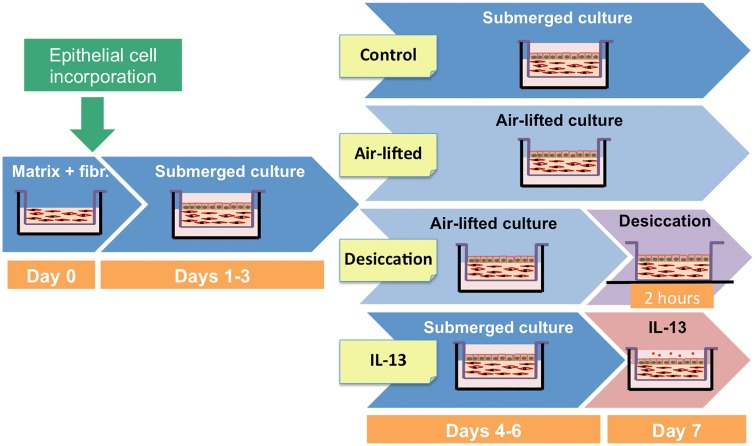
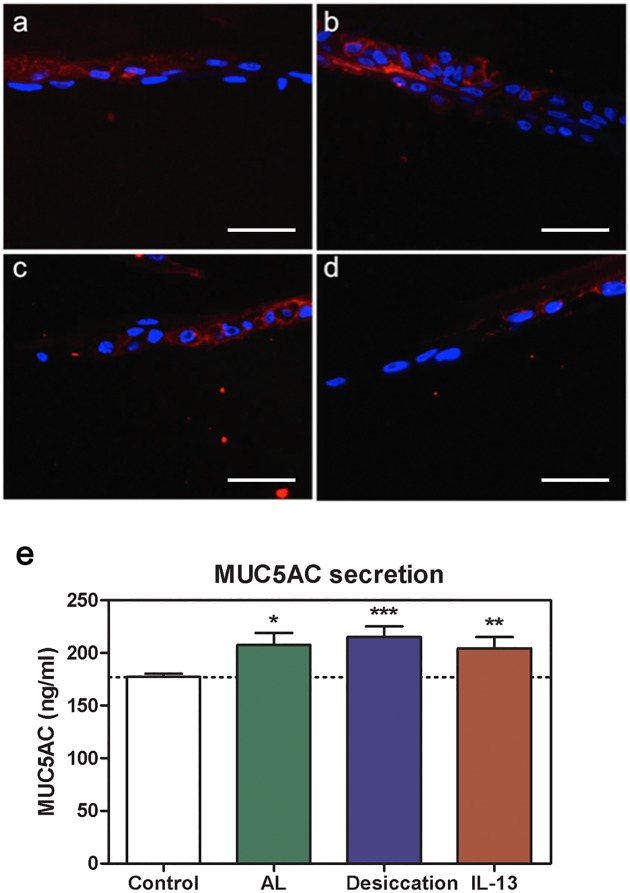
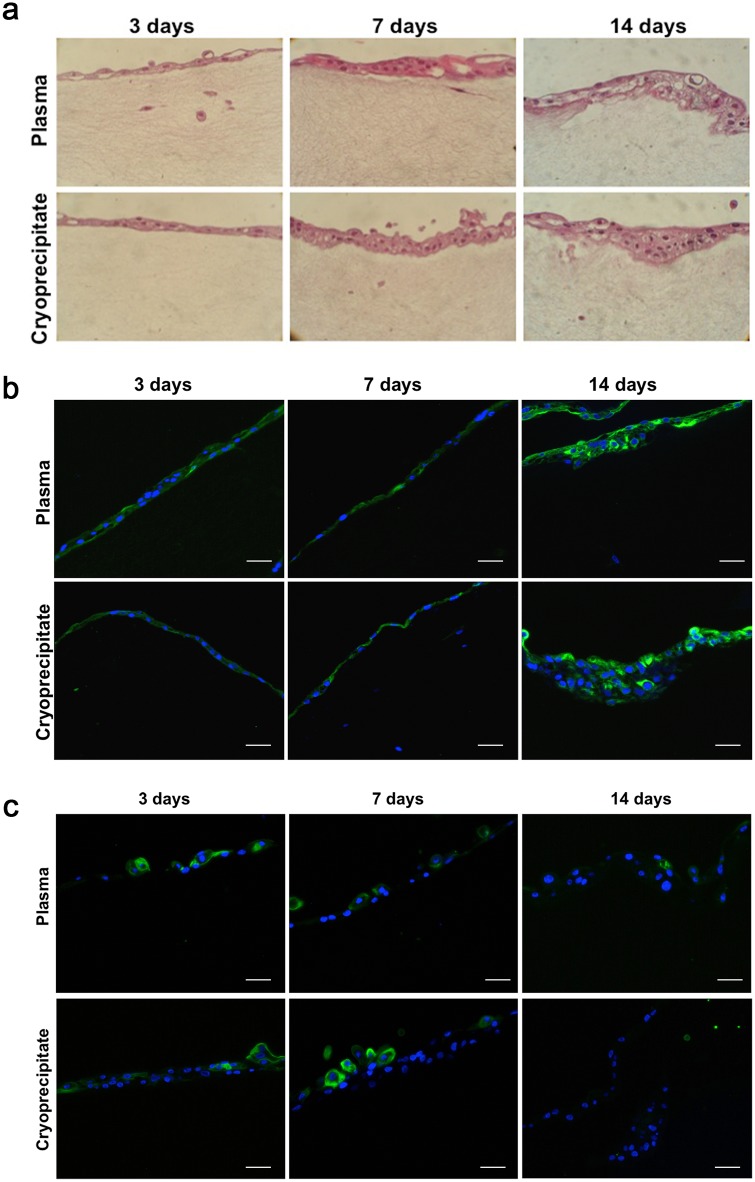
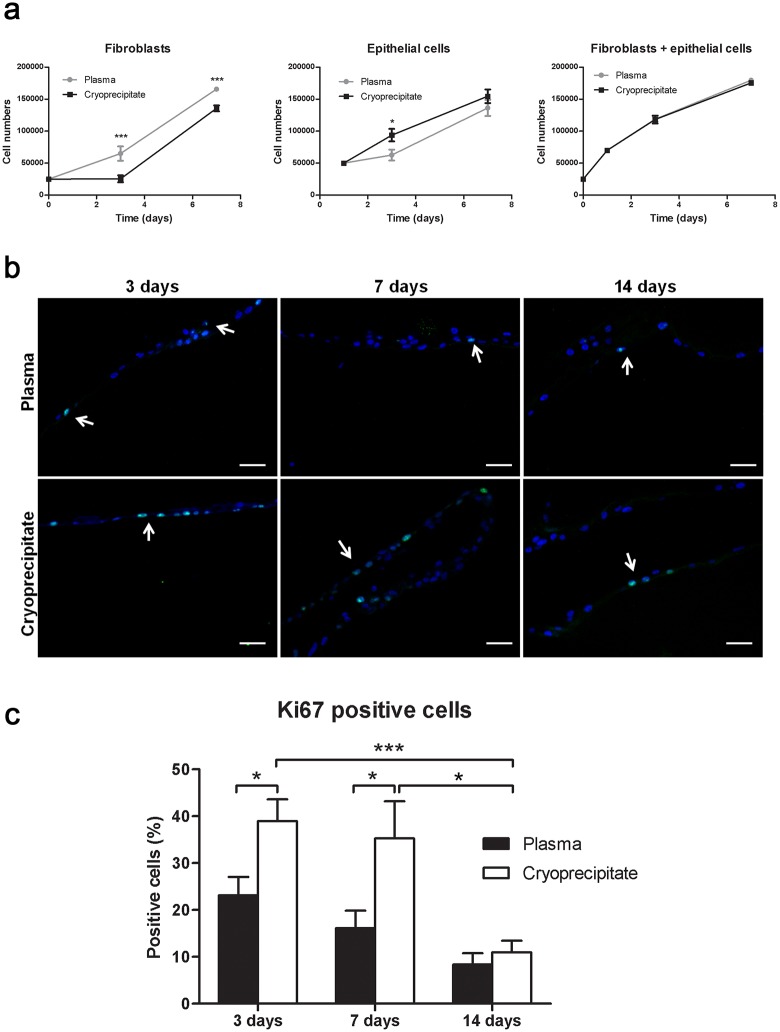
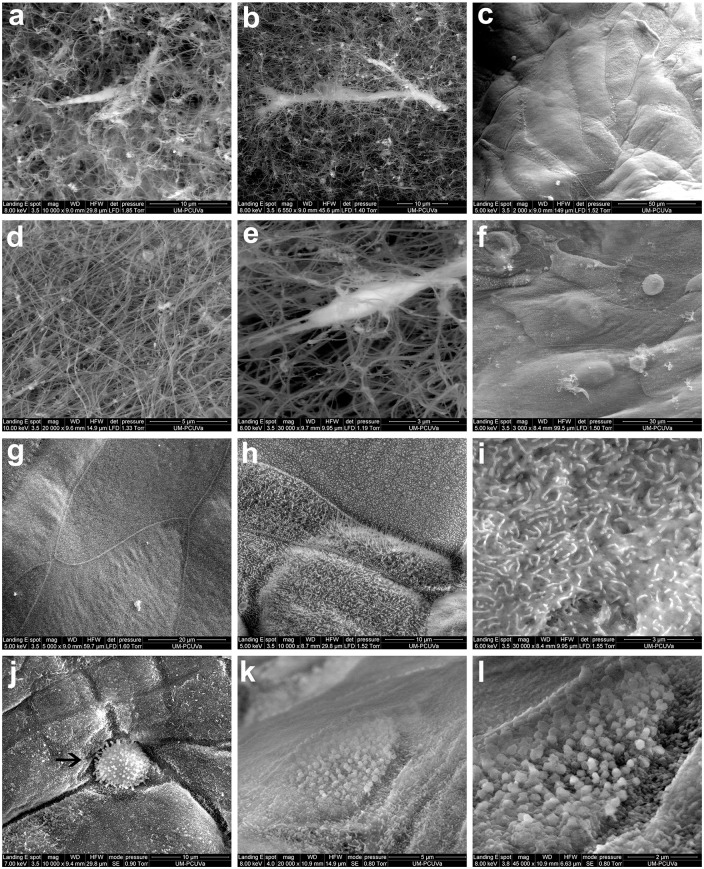
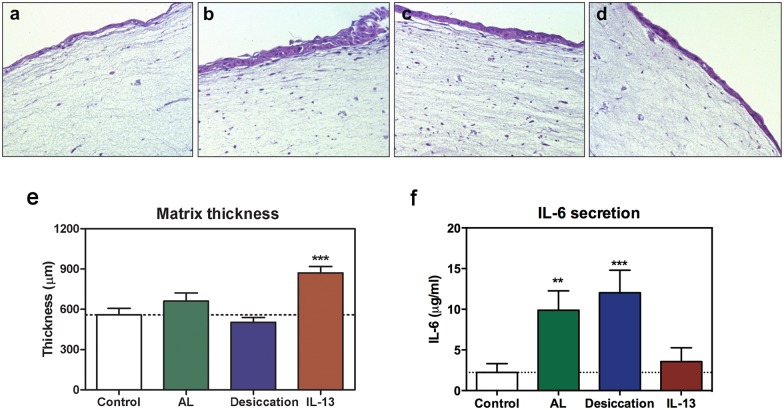
The aim of this study was to develop a three-dimensional model of the human conjunctiva that can be used to perform physiology and pathophysiology experiments. Fibrin-based matrices (derived from human plasma or plasma cryoprecipitate) were used as scaffolds, and primary cells were obtained from conjunctival tissue. Conjunctival constructs were analyzed by immunofluorescent staining and scanning electron microscopy and cell proliferation was measured with alamarBlue® assay. After characterizing the constructs, four different experimental conditions were analyzed in cryoprecipitate matrices: controls, air-lifted cultures (to increase cell stratification), partially desiccated cultures (to mimic dry eye disease), and IL-13-treated cultures (to mimic allergy). Constructs were stained with hematoxylin/eosin to observe changes in morphology. High molecular weight glycoconjugates were identified by HPA staining. MUC5AC and IL-6 secretion was evaluated by ELISA. The fibrin-based matrices supported conjunctival cell growth. Epithelial cells grew on the surface of the scaffolds and underwent stratification that increased over time. These cells had microvilli, which suggests cell polarization and functionality. Fibroblasts were integrated in the scaffold and showed elongated shape. Compared to controls, air-lifted construct had increased epithelial stratification and upregulated MUC5AC secretion. Increased MUC5AC secretion also occurred in partially desiccated and IL-13-treated cultures. The inflammatory status of cells was evaluated by IL-6 levels which were increased in air-lifted and partially desiccated cultures, but not in IL-13-treated ones. In conclusion, we have developed a new three-dimensional model of human conjunctiva that can be used to study ocular surface inflammatory diseases.
本研究的目的是建立一个可用于进行生理学和病理生理学实验的人结膜三维模型。以纤维蛋白为基础的基质(源自人血浆或血浆冷沉淀)用作支架,并从结膜组织中获取原代细胞。通过免疫荧光染色和扫描电子显微镜分析结膜构建体,并用alamarBlue® 检测法测量细胞增殖。在对构建体进行表征后,在冷沉淀基质中分析了四种不同的实验条件:对照组、气升培养(以增加细胞分层)、部分干燥培养(以模拟干眼病)和IL-13处理培养(以模拟过敏)。用苏木精/伊红对构建体进行染色以观察形态变化。通过HPA染色鉴定高分子量糖缀合物。通过ELISA评估MUC5AC和IL-6的分泌。以纤维蛋白为基础的基质支持结膜细胞生长。上皮细胞在支架表面生长并随着时间的推移发生分层增加。这些细胞具有微绒毛,这表明细胞极化和功能。成纤维细胞整合在支架中并呈现细长形状。与对照组相比,气升构建体的上皮分层增加,MUC5AC分泌上调。在部分干燥和IL-13处理的培养物中也出现MUC5AC分泌增加。通过IL-6水平评估细胞的炎症状态,IL-6水平在气升和部分干燥的培养物中升高,但在IL-13处理的培养物中未升高。总之,我们建立了一种新的人结膜三维模型,可用于研究眼表炎症性疾病。